






Skip to the main content.

What We Offer

ICX helps companies grow revenue and profitability by connecting customer experience, sales, pricing, CRM and automation into one commercial system.

Customer Experience

We design memorable, customer-centered experiences that drive loyalty, enhance support, and optimize every stage of the journey. From maturity frameworks and experience maps to loyalty programs, service design, and feedback analysis, we help brands deeply connect with users and grow sustainably.

Marketing & Sales

We drive marketing and sales strategies that combine technology, creativity, and analytics to accelerate growth. From value proposition design and AI-driven automation to inbound, ABM, and sales enablement strategies, we help businesses attract, convert, and retain customers effectively and profitably.

Pricing & Revenue

We optimize pricing and revenue through data-driven strategies and integrated planning. From profitability modeling and margin analysis to demand management and sales forecasting, we help maximize financial performance and business competitiveness.

Digital Transformation

We accelerate digital transformation by aligning strategy, processes and technology. From operating model definition and intelligent automation to CRM implementation, artificial intelligence and digital channels, we help organizations adapt, scale and lead in changing and competitive environments.


Operational Efficiency  

We enhance operational efficiency through process optimization, intelligent automation, and cost control. From cost reduction strategies and process redesign to RPA and value analysis, we help businesses boost productivity, agility, and sustainable profitability.

Customer Experience

chevron-right-1

Marketing & Sales

chevron-right-1

Pricing & Revenue

chevron-right-1

Digital Transformation

chevron-right-1

Operational Efficiency 

chevron-right-1

14 min read

14 marketing tips for Black Friday and Cyber Monday

14 min read

14 marketing tips for Black Friday and Cyber Monday

14 marketing tips for Black Friday and Cyber Monday
22:08

The 14 marketing tips for Black Friday and Cyber Monday that matter most are the ones that protect margin and customer relationships, not only volume. Prepare the site and the inventory early, equip customer service, use email and your customer database with precision, design offers that raise the average ticket, and plan the weeks after the event so that a one-time buyer becomes a repeat customer.

Picture the Monday after Black Friday in the boardroom of a mid-sized online retailer. Revenue for the weekend is the highest in the company's history, and for about an hour the mood is celebratory. Then the CFO asks three questions. Why did gross margin fall by several points? Why are three of the best-selling items out of stock while a pile of discounted sweaters is still in the warehouse? And why did customer service close the week with a backlog that will take until Christmas to clear? The room goes quiet, because the honest answer to each question was visible in October. The discounts were set by whoever shouted loudest, the inventory plan was a spreadsheet nobody revisited, and the service team learned about the promotion from the newsletter.

Black Friday and Cyber Monday have become much more than two days of massive sales. They are the moment of the year when shoppers' purchase intent peaks, when people research more, compare more and expect a clean, fast and frictionless experience, and when thousands of brands compete for the same attention with campaigns that begin weeks earlier and run well after the event. Adobe Analytics, which measures more than a trillion visits to U.S. retail sites, reported that Cyber Monday 2025 reached a record $14.25 billion in online spending, up 7.1 percent from a year earlier, that Black Friday reached $11.8 billion, up 9.1 percent, and that mobile accounted for 57.5 percent of Cyber Monday sales (Adobe, Cyber Monday 2025). Black Friday 2026 falls on November 27 and Cyber Monday on November 30, so the planning window for a company that wants to compete on strategy rather than on panic is open right now.

This guide organizes the fourteen recommendations ICX consultants share with commerce teams into five decisions. The first is about the foundation, meaning the site, the inventory and the service team. The second is about how the event is positioned and marketed. The third is about the channels that carry the message, namely email, content and social media. The fourth is about the offer itself, from surprise to loyalty to gift cards. The fifth is about how discounts are built and priced so that revenue arrives with margin attached.

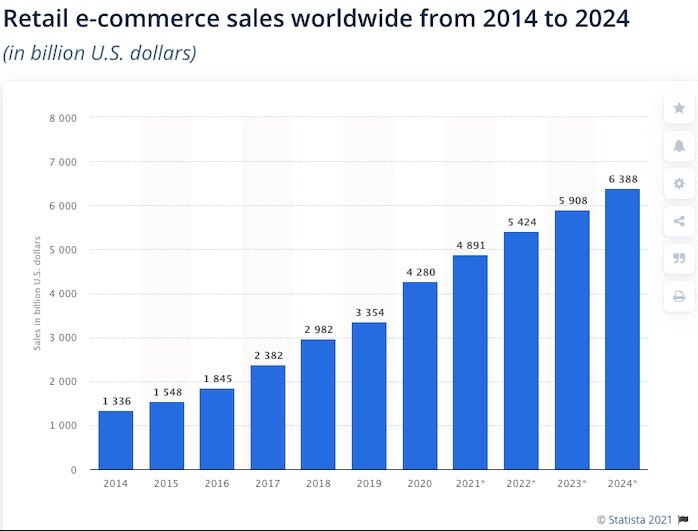
Retail e-commerce sales worldwide during Black Friday and Cyber Monday

What should be ready before Black Friday begins?

1. Optimize your e-commerce for the big day

Your site's performance can make or break holiday sales. There is a lot at stake, so optimizing the experience is paramount. Slow page loading discourages customers and sends them away before they have seen a single product. Google's research on mobile behavior found that 53 percent of mobile site visits are abandoned when a page takes longer than three seconds to load (Google, new industry benchmarks for mobile page speed), which is why the practical rule is to keep load time below three seconds. Beyond the usual work of minimizing file sizes and removing unnecessary code, use speed-optimized widgets to display content on the home and product pages.

Navigation on your e-commerce site from mobile devices must also be convenient, visually appealing and easy to use. Many shoppers browse on their phones and finish the cart on a laptop, while many others will buy on whichever device makes it easiest. With mobile now responsible for more than half of Cyber Monday revenue, a clumsy mobile checkout is no longer a detail, it is the largest single leak in the funnel. Baymard Institute, which has compiled 50 studies of the problem, puts the average documented cart abandonment rate at 70.22 percent, and its research shows that the most common avoidable reasons are extra costs such as shipping, taxes and fees, followed by slow delivery, a required account and a checkout process that is too long or complicated (Baymard Institute, cart abandonment rate statistics). Teams that test the full path from the home page to the confirmation email on three devices before the event usually find the problems that no dashboard shows.

2. Dress up your e-commerce for the occasion

This is a big occasion and it must not go unnoticed. The advantage of having your own online shop is full control over when, where and how promotions are displayed. Use the home page as a welcome letter to visitors, through the main banner or a seasonal look. Do not be afraid of scaring customers away with a heavy-handed campaign, because shoppers are looking for obvious messages that help them find the deals of the day.

Shoppers have too much choice and too little patience on Black Friday, so the most important messages must reach the right people at the right time. Pop-ups and landing pages are the tools for this. Pop-ups can guide visitors to the best deals, reduce cart abandonment or state delivery times, and the key is to define the purpose of each one and schedule it in advance. For a deeper look at preparation, read predictive strategies for Black Friday you should have implemented.

3. Prepare your inventory

You may not plan to discount the entire shop. Before running promotions, count your inventory and determine what you have on hand, because that will tell you which items you actually need to sell. They may be seasonal items, older merchandise, higher-priced pieces or products that have not sold well. If you want to show bargains across the catalog, the last thing you need is too little stock of a hot item or too much stock of an underperformer.

Review your historical stock for the last six months by category and style. That history prevents you from reordering what is already out of stock in your customers' minds and from ordering what they do not want. The retailer in our opening scene would have avoided both of its inventory problems with one afternoon of this work. It is also the reason ICX pairs commerce planning with revenue management, because the decision of what to discount, by how much and for whom is a pricing decision before it is a marketing one. Companies that treat it as marketing alone often learn about it in their financial statements. Neglecting this discipline is also one of the points raised in dispense with digital marketing, the worst mistake of a company.

4. Prepare your customer service team

Black Friday and Cyber Monday bring many shoppers, but also many queries that need to be solved quickly. Good customer service is the backbone of an online shop. New shoppers need help with the return policy, and returning shoppers ask about offers. In either case, expect an increase in inquiries and prepare for it. In addition to training the team, make sure the channels are working. An immediate response can make the difference between completing a purchase and abandoning the page, and in ICX's experience that response should not take more than ten minutes. That may sound demanding, but with a good chatbot tool and automatic email responses the expectation is reasonable.

A chatbot builds trust, offers the convenience of fast service and shows that you are ready to answer buyers' questions. If you have not implemented one, do it now and make it visible on the site. It is equally important to integrate it with your CRM, so that service agents see the whole conversation when a customer has used other channels. You may also be interested in ways to use customer service to build loyalty.

5. Do not forget your business partners

Finding business partners who can help you widen your catalog is very beneficial, and it also gives you a chance to grow your database. Partners can run a joint Black Friday sale ad, post ads in each other's shops, or create quality content with backlinks to each other's pages. Keep in mind that some partnerships require a contract, a cash investment or differentiated packaging. Work on those details in advance and include the associated costs in the budget, because a partnership that looked free in September can be expensive in November.

How do you position the event so that it does not look like everyone else's?

6. Redefine Black Friday and Cyber Monday

The pandemic had an unmistakable effect on online sales in the 2020 promotions. Adobe Analytics reported that consumers spent $34.4 billion online during Cyber Week, the five days between Thanksgiving and Cyber Monday, up 20.7 percent from the previous year, and that Cyber Monday itself reached a then-record $10.8 billion, up 15.1 percent (Adobe, a record-breaking Cyber Week 2020). What Adobe also observed is that shopping continued after these days, which is why retailers began to extend their promotions and in some cases to bring them forward. The 2025 data confirms the pattern. Adobe reported that Cyber Week generated $44.2 billion and forecast $253.4 billion for the full season, with discounts expected to persist into December at lower levels (Adobe, Cyber Monday 2025).

You do not have to run the same promotion throughout an extended period. You can offer other benefits that help the visitor save, such as daily deals, limited-time offers and promotions designed to protect your margins. Either way, any promotion generates traffic and, with all the holiday shopping intent, increases sales. But do not end up like the rest. Some retailers win on Black Friday in the promotions before or after it, because they go further, turning the days into their own, renaming them, making them fun and memorable, offering giveaways and asking in their anticipation emails that customers set an alarm for the big day. The point is to make the most of the shopping rush in the run-up to Christmas without becoming indistinguishable from fifty competitors in the same inbox.

Which channels carry the message?

7. Use email marketing and your database effectively

Effective email creates a good impression, whether the recipient is a first-time shopper or a first-time account creator. Automated emails are the core of this strategy, for example when an account is opened, an order is placed, a cart is abandoned, or feedback, a purchase review or a satisfaction survey is requested. These messages strengthen the relationship and recover sales that might have been lost. Email can also be personalized with exclusive promotions or special offers that the rest of the audience does not see, which allows you to educate, upsell and cross-sell with relevant and timely offers.

Your database is gold for the company. With it you can reach existing customers directly and get them excited about your Black Friday or Cyber Monday promotion. Remember that, in ICX's experience, loyal customers account for an average of 65 percent of a company's annual revenue. That does not mean you should rely only on your current list. Increase the list with subscribers interested in upcoming offers. One effective tactic is a pop-up window weeks before the big day inviting visitors to subscribe and receive first-hand Black Friday offers that will not be visible to the general public. Show exclusivity in the design of the pop-up and use a benefit-based call to action such as "Give me the best deals."

To win this battle, your first goal is to be noticed in subscribers' inboxes, so a well-written subject line is crucial. Some brands use funny subject lines and others use intriguing ones. What matters is that the person opens the email rather than leaving it among the hundreds that will arrive that week. An example of an intriguing subject line is If you are wondering why we are cancelling Black Friday, you must open the email. You might say that you never cancelled Black Friday, but that is the point of the earlier recommendation, because redefining your Black Friday can also mean changing the date or the name. Whatever approach you choose, keep it honest, since a clever subject line followed by an ordinary offer costs trust that is difficult to rebuild.

8. Use quality content to attract leads

Quality content has several advantages, and these dates are an opportunity to create articles that help people find your brand. Life is made of moments, such as finding ideas for an ugly sweater party or the perfect gift for a technology lover. Build content that is relevant to those moments and helps people solve them. It will guide potential buyers to your site, and you can tap into the holiday spirit to give a glimpse of your Black Friday promotion. It also tells people what they can expect to find and offers inspiration to shoppers who do not know what to buy. If you want to learn how to build blogs, see the ultimate guide, 10 steps to create a blog you will love.

9. Use social media to your advantage

By the end of the year your annual marketing budget may have been reduced, but that is no reason to forget these days. As a rule of thumb, small retail businesses allocate 5 to 10 percent of their annual revenue to marketing. The best way to have enough funds for a Black Friday and Cyber Monday campaign is to plan ahead and build a roadmap that calculates what each piece costs. Some initiatives cost a few dollars, while advertising space or partnerships with other companies may be a larger investment. Planning and budgeting ahead of time lets you execute a strong Black Friday digital marketing strategy without hurting the bottom line.

Social media works overtime during the holidays. Consumers spend more time scrolling Facebook, X and Instagram feeds, and you want your followers to notice your products. Use organic posts with new products or urgent discounts to keep your customer base informed. Instagram and Facebook should reach the majority of your customers, and you can add Pinterest and other networks. Share promotions, images and previews to build excitement. Begin the season of anticipation with stories and hashtags so that you are not too aggressive, then ramp up closer to the sale with paid posts and ads. For more on connecting social channels with your shop, see integrating social media into e-commerce.

How do you design an offer that surprises and retains?

10. Use surprise and a sense of urgency

Surprise is a great way to bring people back to your site several times during the day. You still need to market the surprise and build excitement for the secret deals as you would for any other offer. You might reveal a store-wide offer and keep secret discounts for smaller deals. One idea is to run an offer at specific times of day for a reduced period, which promotes sales throughout the day. For example, you can promote 25 percent off all day and 50 percent off during the morning hours, which, according to the sales statistics ICX has observed, is when sales are lowest. Surprise can also arrive by email, with a random code whose discount the shopper discovers on redemption. This is a clever way to make your offers more interesting, increase email opens and encourage subscribers to visit and proceed to checkout.

Shopping bags arranged on a table during a holiday sales event

11. Do not forget your most loyal customers

Your VIP and loyal customers are your biggest asset, so give them extra incentives. Early access to offers, exclusive deals, insider information and other rewards inspire them to buy. Send them updates on your Black Friday sale before the rest of your newsletter subscribers. This announces the sale to your most important customers and generates excitement. You can segment further for customers who have spent more than a certain amount with you in the last year. A CRM such as HubSpot supports this segmentation and the automations behind it, and it gives a 360-degree view of what is happening with each customer in every communication channel. Read also 4 ways CRM supports loyalty strategy.

12. Improve your cart abandonment strategy

If your e-commerce does not yet have an abandoned cart strategy, it is time to implement one. Automation tools make this straightforward, and a CRM such as HubSpot adds the benefit of a unified view of the customer across channels. If you already have one, review the subject line and the content, make the message user-friendly and add time-based prompts so that no sale is left behind. Given that around seven in ten carts are abandoned on average, according to Baymard, even a modest recovery rate is among the highest-return investments of the season. The most effective sequences are short, remind the customer of the specific items, address the typical objection such as shipping cost or delivery time, and stop after the second or third message.

13. Offer gift cards

A popular holiday gift item is the gift card. According to estimates by Global Industry Analysts, the global prepaid card industry surpassed $2 trillion in the United States thanks to gains in gift cards, and the market was projected to reach $4.1 trillion by 2027, about 50 percent more than the pre-pandemic estimate. Whatever the exact figure, the logic for a retailer is the same. A gift card brings in cash now, and it brings the recipient back to your shop later. You can offer free gift cards on purchases above a profitable amount, or give extra value, for example an additional $10 for every $100 loaded. You can also create rules that restrict the use of the card until after the promotional weeks, which protects margin and encourages people to return after the holiday season.

How do you build discounts that protect margin?

14. Find the best ways to offer your discounts or gifts

On Black Friday and Cyber Monday people expect discounts, because they came to your e-commerce to save money. Know well what your online shop platform offers before choosing the mechanism. The mechanisms below are the most common, and each serves a different commercial objective.

Catalog discounts are rules applied before products are added to the cart, so they can be displayed in the shop before the shopper decides to buy. They are perhaps the most common type of discount used on Black Friday and Cyber Monday, and they are usually configured as rules with three parts. The first is the rule information, which includes name, description, status, customer group, date range and priority. The second is the conditions that allow the rule to run, for example the categories to which it applies. The third is the action, such as a 15 percent discount.

A discount coupon is a code that you market throughout your most aggressive campaign. Activate the code at midnight on Black Friday and make sure there is staff to manage online orders as they arrive. The last thing you want is to leave orders until the end of the day and discover that you oversold items that are no longer in inventory. To avoid this, integrate your e-commerce with a point-of-sale system so that inventory is updated online in real time and you never advertise out-of-stock merchandise.

A "buy X and get Y" offer, known as BOGO, is a good way to move high-volume inventory and persuade people to buy things they may not have considered. Check whether your content management platform supports this type of rule. In our experience many e-commerce providers do not have all the rules that a Black Friday strategy needs, which Magento, offered today by Adobe as Adobe Commerce, handles well. Bundle discounts are another option. When customers buy certain combinations they receive a percentage off, for example three puzzles for $15 when a single puzzle costs $6. Bundles encourage unplanned purchases, increase basket size and help clear surplus inventory.

Free shipping is the most common way to raise the average ticket, but the threshold has to be set deliberately. Place the minimum purchase well above the average ticket so that shoppers must add another product to qualify, rather than a small add-on. If your average product price is $45, do not offer free shipping on orders over $50. Offer it on orders over $75, which encourages customers to buy more than one product. Because extra costs are the leading cause of abandonment in Baymard's research, the free shipping threshold should be shown early, on the product page and in the cart, and not for the first time at checkout.

What does this mean for the C-level?

For the chief executive, the central decision is whether Black Friday is a volume event or a relationship event. The first definition rewards the company that discounts the most. The second rewards the company that acquires customers it can keep, and it demands patience with the weeks that follow the event. The executive's contribution is to decide in September which of the two the company is playing and to hold the organization to it when the pressure to chase revenue arrives in November.

For the chief financial officer, the event is an exercise in margin discipline. A clear floor price by category, an inventory plan tied to the discount calendar and a view of contribution margin by promotion convert Black Friday from a leap of faith into a managed investment. For the commercial and marketing leaders, the priorities are to attract with content and partnerships, convert with a frictionless site and clear offers, and retain through email, loyalty and the post-purchase experience. Service leaders should treat the week as a capacity-planning problem and size the team, the chatbot and the escalation paths accordingly.

How can a retail team start next week?

Begin with the numbers from last year. Pull sales, gross margin and returns by category for the event and the two weeks that followed, and compare them with the inventory position at the start. You will usually find that a minority of items produced most of the margin and that some heavily discounted lines did not move at all. That analysis tells you what to promote, what to protect and what to leave alone.

Next, walk the customer journey as a shopper would, on a phone, from an email, to the delivered order. Note every moment where you wait, doubt or repeat information, and fix the three that cost the most. Then write the calendar backward from November 27, with dates for the teaser content, the VIP early access, the launch, the extended offers and the post-event thank-you. Assign one owner to each date. A plan that has an owner for every date is far more likely to survive contact with the busiest week of the year. If you want a structured way to define what you are promising customers and why they should choose you, the ICX Customer Journey Toolkit offers templates that teams can complete in a single workshop.

How ICX helps

ICX Consulting, a customer experience and commercial strategy firm headquartered in Miami, helps retailers and consumer brands in the United States and Latin America decide what to sell, to whom and at what price, and then turns the decisions into working processes. Our pricing and profit optimization work sets the floors and the promotional architecture, our loyalty strategy practice designs the VIP and retention programs, and our B2C e-commerce specialists connect the store, inventory and CRM so that the plan can be executed.

Frequently asked questions

When should we start preparing for Black Friday?

Planning for the margin side should start in the third quarter, because inventory orders and partner agreements are decided months ahead. Marketing preparation, including list growth through pop-ups and teaser content, usually begins six to eight weeks before the event, with the customer service and site testing in the final month.

How much discount is enough?

There is no universal number. Adobe's data shows that peak discounts in Cyber Week 2025 reached 31 percent for electronics, 28 percent for toys and 25 percent for apparel, but those are peak discounts off listed price, not what every retailer needs to match. Set your discount by contribution margin and inventory position, and use non-price benefits such as early access, bundles and shipping thresholds to avoid competing on price alone.

Is Cyber Monday still relevant when promotions now run for weeks?

Yes, although its role has changed. Cyber Monday 2025 was still the largest single online shopping day of the year in the United States, at $14.25 billion according to Adobe, but a growing share of purchases happens across the surrounding days. Treat the two dates as peaks within a season, not as isolated events.

What is the best way to keep Black Friday customers after the sale?

Capture consent and preferences at checkout, send a genuine thank-you with useful information about the product they bought, and invite them into your loyalty program with a reason to return before the end of January. The offer that brings a customer back is usually less about price than about relevance.

Black Friday and Cyber Monday reward the companies that prepare their e-commerce weeks in advance, design smart offers, integrate technology, take care of the customer experience and understand that today's visitors want speed, clarity, convenience and trust. A well-managed Black Friday does not end at checkout, since it also drives repurchases, retention and post-event sales through remarketing, personalized emails and memorable experiences. If you would like to review your plan with experts before the season starts, request a diagnostic with an ICX consultant and tell us which of these fourteen decisions you will tackle first.

GET CONSULTING

Content added to ICX Folder
Default Save Save Article Quit Article

Save for later

Print-Icon Default Print-Icon Hover

Print

Subscribe-Icon Default Subscribe-Icon Hover

Subscribe

Start-Icon Default Start-Icon Hover

Start here

Suggested Insights For You

Is Your Site Ready for Peak Season? A Guide for Retail

Is Your Site Ready for Peak Season? A Guide for Retail

A site is ready for the big season when it can sell, deliver and serve at peak volume without breaking: inventory rules that keep the digital channel...


How to create gift cards in Magento?

1 min read

How to create gift cards in Magento?

It is the third week of December, and the head of e-commerce of a specialty retailer is watching a queue form in the customer service inbox. Dozens...

Is Your E-commerce Team Ready for Christmas and the Holiday Peak?

Is Your E-commerce Team Ready for Christmas and the Holiday Peak?

An e-commerce team is ready for Christmas when its objectives, its audience plan and its checkout experience have been settled before the first...

What's next?

ARE YOU READY?

ICX SUBSCRIPTION
Stay ahead with exclusive insights from our senior consultants. Subscribe for the latest thinking on CX, growth, and digital transformation.