











HubSpot Deal Pipeline: How it automates your sales team
The HubSpot deal pipeline is the board in HubSpot Sales Hub where a company records every qualified business opportunity and moves it through defined...
11 min read
11 min read
ICX Consulting designs business development strategies that help companies conquer new customers through a structured pipeline generation process. That means defining how leads are attracted, qualified as MQL or SQL, assigned to the right seller and followed up, so the pipeline grows predictably instead of depending on the founder or a few star sellers.
Every organization needs to solve different types of challenges in its commercial areas, for example aligning marketing, sales and service teams, developing new customer strategies or generating new customers. The latter process is known as business development. For the leadership team, it is the engine of future revenue. A weak pipeline today becomes a missed target in two or three quarters, and the cost of acquiring each customer rises when prospecting is improvised.
Lead pipeline generation is not a single process but a set of demand generation strategies. Many well-known companies use it within their demand generation or business development departments. But what should a company do if it lacks lead management processes, lead generation people or a system that can perform this function? That is the purpose of this article, which covers the following topics.

Picture the monthly leadership meeting of a company that sells specialized services to other businesses. The CEO asks how many new customers are likely to sign next quarter. The sales director gives a number based on the deals she remembers. The marketing director offers a different figure based on the leads in his dashboard. The finance director asks which of the two to put in the forecast. Nobody is wrong and nobody can prove they are right, because there is no shared definition of a qualified lead and no agreed path from first contact to signed contract. The company has talented people and a decent product, yet its growth still depends on the founder's network. That is the moment when a business development process stops being a nice idea and becomes an executive priority.
Many organizations, regardless of industry, face challenges with how many leads they generate and how many of those leads move through the buyer's journey and its stages.
To learn all the factors involved in the buyer's journey and the methodology behind it, read our article on
Many companies need help prospecting and closing leads, their sales onboarding process takes too long, or they have a very small number of sales executives. As a result, owners, founders or CEOs must constantly work on growth and sales themselves. These cases are clear reasons why a company needs a defined demand generation process and a pipeline generation strategy.
The buying side has also become more complex. Forrester's 2024 State of Business Buying research found that on average 13 people within an organization are involved in a buying decision, and 89% of purchases involve two or more departments. A pipeline that depends on one contact and one seller's memory cannot handle that many stakeholders. A defined process, supported by a CRM, keeps track of every person, interaction and next step.
>> What is an Operating Model? <<
Let's review the sales steps. These steps govern the sales cycle of almost any company.
HubSpot's default model adds three stages after these four. Its documentation lists subscriber, lead, marketing qualified lead, sales qualified lead, opportunity, customer and evangelist, where an MQL is a contact marketing has approved for handoff and an SQL is one sales has identified as a likely customer. Agreeing on these definitions between marketing and sales is one of the most valuable decisions a commercial team can make.
| Stage | Who owns it | Typical signal | Next action |
|---|---|---|---|
| Subscriber | Marketing | Newsletter or blog subscription | Nurture with relevant content |
| Lead | Marketing | Content download, event attendance | Score fit and engagement |
| MQL | Marketing, handing to sales | Fits the ideal customer profile and engages repeatedly | Hand off with context and a service level |
| SQL | Sales | Confirmed need, interest in a meeting | Assign to the right seller and schedule discovery |
| Opportunity | Sales | Active deal in the pipeline | Qualify, propose and negotiate |
7. Assign the opportunity at the right moment. Once the lead is highly qualified, becomes an SQL and shows genuine interest in a conversation, session or meeting, it is time to decide who is the right person to talk with this lead.
>> How to define the best business indicators? <<
Most large companies assign executives, salespeople or consultants to a specific region, territory or industry, but not every company has that structure. When a business development executive, manager or rep assigns a lead, it should go to the person who meets this checklist of capabilities.
The handoff between marketing and sales deserves a closer look, because it is where many pipelines leak. If marketing passes along every contact who downloaded a guide, sellers waste time and begin to ignore the list. If sales waits until a lead is almost ready to buy, good prospects cool off and drift toward a competitor. A written service level agreement solves both problems. It states what makes a lead qualified, how quickly a seller must respond, what happens to leads that are not yet ready and how sales reports back on the leads it rejects. Companies that review this agreement every quarter, with conversion data on the table, tend to turn arguments about lead quality into practical adjustments.
When a company still has a lot of work ahead to prepare its pipeline generation and business development strategies, structured training helps. HubSpot's Bootcamps, and in particular the Pipeline Generation Bootcamp, were an excellent opportunity to build those foundations.
These are some of the experiences that Alfonso Ramírez, CX & BDM Consultant at ICX Consulting, gathered at HubSpot's Pipeline Generation Bootcamp. As a consultant for ICX, a well-known solutions partner of HubSpot in the United States and Latin America, he received an invitation through the partner channel when HubSpot opened a six-week immersive training session of one of its Bootcamps to partners worldwide.
As a Customer experience and business development consultant, he considers it an excellent experience for anyone looking for new learning and professional development. The Pipeline Generation Bootcamp was highly educational, dynamic and inspiring for every sales professional becoming familiar with HubSpot.
Instructors included Trygve Olsen, Debbie Akintonde and Keith Gutierrez, HubSpot certified trainers, with the participation of Dan Tyre, a well-known HubSpot sales leader associated with the creation of HubSpot's Solutions Partner Program.
The main goals of the Pipeline Generation Bootcamp were the following.
The Bootcamp lasted six weeks of diligent work. Like other Bootcamps, it included weekly sessions with the instructors and recordings of each session, workbooks to stay on track, tasks to complete in order to graduate, presentations, sales content and active listening techniques to improve sales onboarding and communication skills.
HubSpot Academy still runs HubSpot Bootcamps in cohorts, and the current catalog focuses on topics such as RevOps, AI for go-to-market, reporting and workflows, so it is worth checking the next registration window for the program that best fits your team.
Industry context shapes how each of these ideas looks in practice. A software company selling subscriptions may focus on product usage signals and demo requests to decide when a lead is ready for a seller. A manufacturer with a long sales cycle may rely on technical content, trade shows and referrals from distributors, and measure progress in qualified meetings rather than in downloads. A professional services firm often wins through trust, so its pipeline depends on thought leadership, speaking opportunities and warm introductions that a CRM can track and nurture. A distributor may care most about reactivating dormant accounts and expanding the product range sold to existing customers. In all of these cases the stages and definitions differ, but the discipline of writing them down, assigning owners and reviewing numbers weekly is the same.
There are five great ways to conquer new customers through pipeline generation strategies.
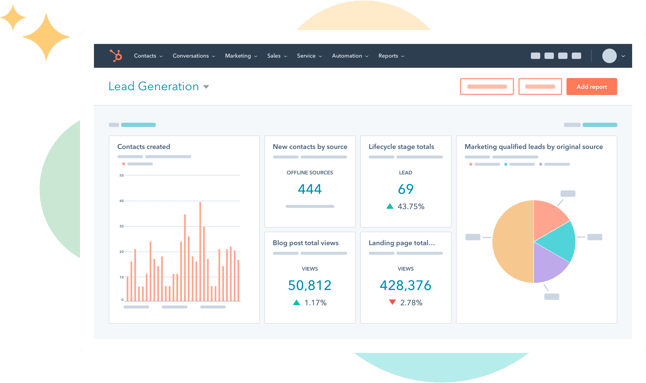
Reporting deserves special care, because it is what turns pipeline generation into a predictable system. A short set of indicators reviewed every week shows where the funnel leaks and where to invest.
Buyers' expectations make speed and relevance even more important. In a Gartner survey of 646 B2B buyers, 67% said they prefer a rep-free experience, which means the first conversation with a seller must add value that the buyer could not find alone.
Consider how a weekly pipeline review changes the tone of a commercial team. Instead of each seller defending a gut feeling about a deal, the group looks at the same dashboard. Which stage lost the most opportunities this month, which sources produced the highest quality leads and which deals have not moved in three weeks. Questions become specific and actions become concrete, such as reassigning a stalled account, adjusting a campaign or adding a missing contact in the buying group. The review is short, the data is trusted and the conversation moves from explaining the past to influencing the next thirty days.
Leadership's role is to treat pipeline as a managed asset, with an owner, a target coverage ratio and a weekly review, rather than as the result of individual effort.
There is also a financial argument for formalizing this work. The cost of building a business development process is modest compared with the cost of relying on informal prospecting. Every month in which opportunities are lost to slow responses, unclear ownership or forgotten follow-up is revenue that the company paid to attract and then did not capture. Treating pipeline generation as a managed process lets leadership estimate the return on each campaign, decide where to invest the next dollar and protect the team from the volatility that comes when a few individuals carry the whole number.
After the first thirty days, the goal is not perfection but evidence. You should be able to see how many leads entered each stage, how long they stayed there and where they were lost. With that information you can decide whether the next improvement belongs in targeting, messaging, response time or qualification. The companies that make steady progress choose one bottleneck at a time, fix it, measure the result and move to the next one. Over a few quarters this pattern builds a pipeline that no longer depends on heroic effort.

At ICX, we take care of understanding the moments that create high-value experiences, from the first contact to the closed deal. Our lead management, intelligent sales prospecting and forecast and pipeline management services design the business development process, and the PROACTIVE sales methodology and Sales Performance Scorecard keep the team accountable for results.
To connect pipeline generation with your business model, download the Business Model Canvas, or use the Persona Playbook toolkit to define the buyers your campaigns should reach first.
Business development creates new opportunities, by identifying target accounts, opening conversations and qualifying interest. Sales converts those opportunities into revenue through discovery, proposals and negotiation. In smaller companies one person often does both, but separating the roles, or at least the activities, makes it easier to measure and improve each one.
Work backward from the target. Divide it by the average deal size to get the number of deals, then divide by your historical conversion rates from opportunity to customer, SQL to opportunity and MQL to SQL. The result shows how many MQLs you need each month and quickly reveals whether the plan is realistic.
Both, at different stages. Marketing qualifies fit and engagement up to MQL, and sales confirms need, timing and authority to reach SQL. The handoff works when both teams agree on written definitions, a response time and a feedback loop for leads that sales rejects, so marketing can adjust its campaigns.
At minimum, a CRM with lifecycle stages, lead scoring, email sequences and reporting, plus a way to capture leads from the website and campaigns. Many companies already have these capabilities and underuse them. The process and definitions matter more than adding new tools, so start by configuring what you have.
Most teams notice better visibility within the first month, because definitions and dashboards expose where leads are stuck. Improvements in conversion and response time usually appear within one or two quarters, depending on the length of the sales cycle. Revenue impact takes longer in businesses with cycles of six months or more, which is why leading indicators such as qualified meetings and pipeline coverage are useful to track from the start.
It depends on volume and on how much time the founder or sales lead can devote to prospecting. A small company often gets more value from first documenting its ideal customer, its stages and its follow-up routine, and then hiring someone to run that process. Hiring before the process exists tends to produce an expensive person who has to invent everything alone, with results that are hard to measure.
If your pipeline still depends on referrals and the CEO's network, it is time to build a business development engine that works every week. Request a diagnostic with an ICX consultant and design the pipeline generation strategy that will conquer your next customers.

The HubSpot deal pipeline is the board in HubSpot Sales Hub where a company records every qualified business opportunity and moves it through defined...

 Eduardo García Camilli : Apr 09, 2026
To clean a sales pipeline, define commercial reality criteria, instrument the signals that prove a deal is moving and govern every stage as a filter...

To create business rules for sales and service teams with HubSpot, first define each rule in business terms, such as who owns a lead, what a deal...

