











Lead Scoring application guide
Lead scoring is the practice of assigning points to a lead for who it is (explicit criteria such as location, role or company profile) and for what...
9 min read
9 min read
To qualify opportunities from your sales CRM, score every lead on fit and engagement, define the criteria that turn a lead into a real opportunity, and make those criteria mandatory at each pipeline stage. The CRM then ranks where sales should spend time, flags weak deals early and turns qualification from opinion into a repeatable, measurable process.
The qualification of potential clients is a methodology commercial departments use to determine the value of potential customers. It assigns them values based on their behavior and their interest in the company's products or services. Your company needs to attract more customers, but this is not about quantity. It is about the quality of the data your company gathers, because for commercial departments a long list of contacts is useless if those contacts cannot be understood and eventually converted into customers. For a CEO or sales director, qualification decides where the most expensive resource in the company, the time of the sales team, is invested, and it is the foundation of an honest forecast.
Consider the Monday forecast call at a commercial real estate developer. The sales director presents a pipeline of sixty opportunities and a number she describes as conservative. The CFO asks how many of those have a named decision maker, an approved budget and a date for a decision. After a long pause the answer is eleven. The rest are conversations, enthusiastic ones, with people who have visited a showroom or downloaded a brochure. The forecast has not been dishonest, but it has mixed interest with intention, and the company has spent the quarter chasing the former. Qualification is the discipline that separates the two, and a CRM is the place where that separation becomes visible every day.
For your commercial departments to identify potential clients, you must establish a lead generation process and customer evaluation processes that guarantee the highest sales effectiveness. That is precisely why you need to take advantage of lead scoring.
<<REQUEST A LEAD SCORING DIAGNOSTIC WITH AN ICX CONSULTANT>>
Buyers do much of their research before they ever talk to a seller. A Gartner survey of 646 B2B buyers published in March 2026 found that 67% prefer a rep-free buying experience. That means the signals of interest increasingly appear in digital behavior, such as pages visited, content downloaded and emails opened, long before a meeting is requested. A CRM that captures and scores those signals lets sales reach the right prospects at the right moment instead of calling every name on a list. It also protects the customer experience, because prospects who are not ready yet are nurtured with useful content instead of being pressured by premature sales calls.
Lead scoring helps you determine the level of interest that a commercial opportunity generated through your channels has in your products or services. It also lets the company assess whether that opportunity is relevant. In short, it produces a score that estimates a contact's conversion potential.
Two questions sit behind every good score.
The first is fit. Does this contact or company look like the customers we serve best, by industry, size, location or role? The second is engagement. Is this contact showing interest now, through visits, downloads, email clicks or meeting requests?
Modern CRMs score both separately. HubSpot, for example, distinguishes fit scores based on property values, engagement scores based on actions such as email opens, meetings or form submissions, combined scores, and deal scores, with optional decay that reduces a score as an event gets older. Contact scores are available in Marketing Hub Professional or Enterprise and deal scores in Sales Hub Professional or Enterprise.
The first thing you must understand to qualify opportunities accurately is the buyer's journey, which has three stages.
Awareness is the first stage. Here you create awareness of the products and services your company offers, so that the prospect begins to understand what your company does and how it does it. In consideration, buyers continue their research, and this is where lead scoring becomes key. This is where you start automating the marketing process to understand your prospects better and follow up specifically on the topics that interest them, which lets you target each prospect precisely and move them toward the decision stage.
In the decision stage, the buyer is ready to select a supplier and make a purchase. At this point, what interests them most is your level of execution and customer service.
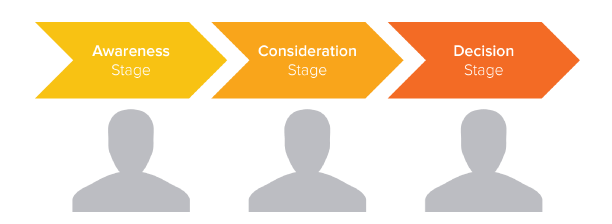
Second, create the necessary content for each stage of your company's sales cycle. For instance, if a prospect is at the awareness stage, create content that will capture their attention. Blogs, videos and e-books are all good sources at this stage. In the decision stage, it will be necessary to compare your product with the competition, to show your competitive advantage, and to offer free trials if appropriate. Make sure you create enough quality content for each stage.
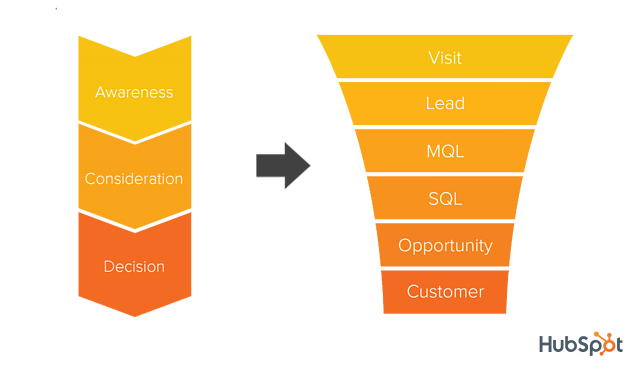
Finally, automate the buyer's processes and the company's sales processes in a sales CRM that lets you run lead scoring automatically from beginning to end.
Here are five customer scoring models, based on the type of data you can collect from the people involved in your business.
Ask demographic questions in the forms on your landing pages and use your prospects' answers to see how well they fit your target audience. For example, if you only sell in a certain geographic area, you can give a negative score to any lead outside that city, state, postal code or country.
If you sell to companies rather than to consumers, define which kinds of organizations you want to sell to, their size, their industry and any other variables that matter to your company.
Review how prospects interact with your digital channels. It is important to identify which information they downloaded and from which pages, what type of content they searched for and other sources of information.
If someone chose to receive your emails, open and click rates can tell you a lot about that prospect, and you can focus on those who seem most engaged. You can also give a higher score to prospects who click on high-value emails, such as demo offers.
How many times did prospects click on your company's posts on X (formerly Twitter) and Facebook? How many times did they share those messages? If your target buyers are active on social media, consider awarding points for that engagement.
A high score tells you who to call. It does not tell you whether there is a deal. That is the job of opportunity qualification, the second layer of the system. Once a lead becomes an opportunity in the CRM, the sales team should confirm a small set of criteria before the deal advances. Many teams use frameworks such as BANT (budget, authority, need, timing) or more detailed ones for complex sales. What matters is that the criteria are explicit, recorded in the CRM and tied to pipeline stages.
| Pipeline stage | Qualification question | Evidence recorded in the CRM |
|---|---|---|
| Qualified lead | Does the account fit and is it engaged? | Fit and engagement scores above the agreed threshold |
| Discovery | Is there a real business need we can solve? | Documented problem, impact and current alternative |
| Solution | Who decides, and who else influences? | Decision maker, influencers and buying roles mapped |
| Proposal | Is there budget and a timeline? | Budget range, decision date and approval steps |
| Negotiation | What could stop the deal? | Risks, competitors and next steps with dates |
When these fields are required to move a deal forward, the pipeline stops being a list of hopes and becomes a forecast leadership can trust.
The first mistake is scoring only engagement. A student downloading every e-book will outscore a real buyer, so combine fit and engagement. The second is the absence of agreement between marketing and sales. If sales does not accept the definition of a qualified lead, it will ignore the scores, so define thresholds together. The third is stages without exit criteria, because if a deal can move forward without evidence, stage-based forecasts lose their meaning. The fourth is never reviewing the model. Markets, products and buyer behavior change, and the scoring model must change with them.
It is important to note that for a scoring system to keep bringing in more customers, it must adapt to the circumstances and behavior of the leads. It is essential to review the scoring system periodically to verify that it still qualifies potential customers correctly.
A qualification model is only as good as its results. Four indicators tell leadership whether the CRM is separating real opportunities from noise.
The lead-to-opportunity rate by score band comes first. High-scoring leads should convert to opportunities far more often than low-scoring ones, and if they do not, the model is measuring the wrong things. Stage-to-stage conversion is the second, since sharp drops between two stages point to weak exit criteria or missing evidence earlier in the process. Sales cycle length is the third, because well-qualified deals usually move faster when the need, the decision maker and the timing were confirmed early. Forecast accuracy closes the set, as the share of committed deals that actually close in the period is the clearest test of qualification discipline.
Review these metrics with marketing and sales together, because both teams own part of the result.
Reading the four indicators together is more revealing than reading any one of them. A model can show a healthy lead-to-opportunity rate and still produce a poor forecast, which usually means that opportunities are entering the pipeline without the evidence that should have stopped them. Conversely, a short sales cycle with a low volume of opportunities may indicate that qualification is too strict and that attractive prospects are being discarded early. The purpose of the scorecard is not to celebrate a number but to show where the process leaks, and leaders should ask for it in the same meeting where they review revenue.
The criteria that matter most differ from one sector to another. In real estate and automotive, where a visit can look like intent, financial capacity and timing are the decisive filters, and a scoring model that ignores them will reward the curious. In B2B manufacturing and industrial services, where purchases involve technical evaluators, procurement and a budget owner, the key evidence is the map of buying roles, and an opportunity with a single contact should rarely be called qualified. In banking and insurance, regulatory constraints and eligibility rules can be built into the fit score so that sellers do not spend time on prospects who cannot be served. In software and professional services, engagement signals such as repeated visits to pricing or case study pages usually carry more weight than demographics. The method is the same, but the weight of each signal must be learned from the company's own wins and losses.
A strict model protects sales time, yet it can also hide good opportunities. Prospects who do not fit the pattern of past customers may be exactly the segment the company should be entering, and a score that only rewards resemblance can freeze the business in its past. The remedy is to reserve a small share of attention for exceptions and to review them, so that the model learns from deals it would not have predicted. A second risk is gaming. When sellers are measured on pipeline value, they may inflate opportunities or skip fields, and when marketers are measured on lead volume, they may lower the bar. Aligning incentives with qualified pipeline and closed revenue is as important as the technical configuration.
Return to the developer's forecast call. Three months after required fields and stage evidence are introduced, the same pipeline looks smaller on paper and more credible in the room. The CFO no longer asks how many opportunities there are. She asks which of the qualified ones need the director's help to reach a decision, and the call becomes a working session instead of a defense of a number.
On attraction, ask marketing to report qualified leads by fit and engagement, not raw lead volume. On conversion, require qualification evidence at each pipeline stage and review conversion rates between stages every month. On efficiency, measure how much sales time goes to opportunities that never had a chance, and use scoring to reduce it.
Start by analyzing recent wins and losses to identify the traits and behaviors that separated customers who bought from those who did not. Then build a fit score and an engagement score, starting simple with a handful of criteria each and agreeing on the thresholds with sales. Define stage exit criteria by writing down the evidence required to move a deal from one stage to the next, and make the fields required in the CRM.
Automate routing and follow-up so that high-scoring leads reach sales quickly and the rest are nurtured with content for their stage. Finally, review every quarter, comparing scores and stages with actual results and adjusting the model.
ICX Consulting designs qualification systems that marketing and sales both trust. Our lead management and forecast and pipeline management services define scoring models, stage criteria and governance, and our CRM consulting team implements them so qualification happens inside the daily workflow. For the HubSpot setup, see what lead scoring is and how to set it up within HubSpot, and for AI-based models, intelligent lead scoring with AI.
To design scoring around how your buyers actually move from awareness to decision, use the ICX Customer Journey Toolkit with your marketing and sales teams.
Bring this topic to your company
An ICX Consulting advisor will assess where your organization stands today and which decisions can move your commercial and customer experience results.
Lead scoring ranks contacts and companies by fit and engagement so sales knows whom to contact first. Opportunity qualification happens after a conversation starts and confirms whether there is a real need, a decision maker, budget and timing. Both are needed, and the CRM should hand off from one to the other with clear thresholds.
Fewer than most teams expect. A model with a handful of well-chosen fit criteria and a few strong engagement signals is easier to explain, maintain and trust than one with dozens of rules. Add criteria only when data shows they improve the link between scores and closed deals.
AI can find patterns across many variables and update scores faster than a manual model, but it depends on clean historical data and clear definitions of a good customer. A practical path is to start with a transparent manual model, then use AI to refine it once enough outcomes are recorded.
Ownership works best when it is shared but explicit. Marketing operations usually maintains the model and the data, while sales leadership approves the thresholds and the stage criteria. A short quarterly review with both teams keeps the model aligned with what actually closes, and prevents each side from blaming the other for lead quality.
Every hour a salesperson spends on the wrong opportunity is an hour taken from the right one. A qualification system built into your CRM changes that balance and makes your forecast more reliable. If you want to know how well your pipeline separates real deals from wishful thinking, request a diagnostic with an ICX consultant and start with the stage where most deals stall.

Lead scoring is the practice of assigning points to a lead for who it is (explicit criteria such as location, role or company profile) and for what...

 Meicel Valverde : May 29, 2025
A lead is any person or company that has shared contact details or interacted with your business. A qualified lead is one that has been evaluated...

 Susana Matamoros : May 29, 2025
Predictive lead scoring is a machine-learning method that estimates, for every contact in a CRM, the probability that it will become a customer, so...

