











Boost Your Inbound Marketing Strategy with Buyer Personas
Boosting your inbound marketing strategy through buyer personas means using each profile to decide which channels to invest in, how to segment lists,...
9 min read
9 min read
The buyer's journey in inbound marketing is the research and decision process a potential customer follows, from discovering a problem to choosing a solution, usually described in three stages, discovery, consideration and decision. Inbound strategies use it to deliver the right content and offer at each stage, so prospects arrive at sales ready to buy.
Once you have built the Buyer Persona, the first pillar of an inbound strategy, what comes next? The second pillar, the Buyer's Journey. In an age of content overload and immediacy, consumers only pay attention to what interests them. You have to earn that attention and keep it. That means recognizing what they like, what they want to see and where, and identifying the right moment to offer what might interest them or what they need. That is the real power of consultative selling and the loyalty it builds.
For leadership, the buyer's journey answers an expensive question. Why does marketing generate leads that sales says are not ready, while good prospects go cold before anyone calls them? Usually because content, offers and follow-up are not matched to the stage the buyer is actually in. Mapping the journey aligns marketing spend, sales effort and the buyer's own timing, which lowers acquisition cost and shortens the sales cycle.
Consider the pipeline review of a B2B logistics company that sells to manufacturers. Marketing reports a record quarter for downloads of a long guide on warehouse automation. The sales director replies that the people who downloaded it are plant engineers who are not yet budgeting for anything, while the two deals that closed last quarter began with a procurement manager who found a cost comparison on the website and asked for a call within a day. Both teams are right about their own data. The company has been treating all interest as equal, and has therefore handed the wrong buyers to sales at the wrong time and left the right buyer waiting for a reply.
The buyer's journey is the discipline that sorts this out. It does not add activity. It tells the company what each person is trying to accomplish at a given moment, so the next message, offer or conversation is the one that helps them move forward.
Inbound marketing is what helps integrate these ideas in an orderly way and combine them with Smarketing, the alignment of sales and marketing, or with Growth-Driven Design through a marketing automation platform, so you are present for your consumers at the right time. Consider working these methodologies together to get a better result.
The Buyer's Journey is the search process every potential consumer goes through until becoming a real customer. It identifies all the steps a person follows from the moment they discover they have a problem until they choose the best solution. According to the Inbound Marketing funnel, it has three stations that represent the customer's experience during the purchase cycle, discovery, consideration and decision.
HubSpot, which popularized the methodology, now describes inbound as a business methodology that attracts customers by creating valuable content and experiences, organized in three phases, attract, engage and delight, that together form a flywheel. The buyer's journey explains what the buyer is doing. The flywheel explains what your company does in response, and the delight phase reminds teams that the journey continues after the purchase.
| Buyer's journey stage | What the buyer is doing | Inbound response | Who leads |
|---|---|---|---|
| Discovery | Realizing and naming a problem | Attract with educational content | Marketing |
| Consideration | Comparing approaches and categories of solution | Engage with guides, tools and comparisons, capture the lead | Marketing with sales input |
| Decision | Choosing a provider | Engage with demos, cases and tailored proposals | Sales with marketing support |
| After the purchase | Using the solution and judging the choice | Delight with onboarding, service and expansion | Service and account management |
The Buyer Persona gives you a clear idea of who you are addressing. It works like a compass that helps you design more precise actions, content and campaigns focused on the characteristics, traits and needs of your ideal clients.
In the buyer's journey, information should reach the user naturally. Even something as simple as a call to action must fit the stage the person is in, the characteristics of the process and the channel where it appears. These are the questions to ask about your Buyer Persona to build the right Buyer's Journey for each stage.
The question about who else is involved matters more every year in B2B. Decisions are made by groups, and each member has a different journey. A finance director in the decision stage needs a business case, while the user who will work with the solution needs proof that it is easy to adopt. If you want help defining the people behind those roles, our article on the truth behind buyer personas is a good starting point.
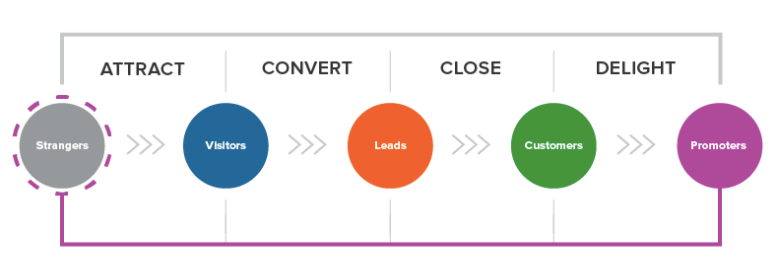
As described above, the consumer journey includes the steps a person takes in the purchase process. It starts with discovery, when buyers become aware of their needs and begin searching for solutions. Then comes consideration, when potential customers have researched and know better what they want to buy and where to get it. Finally there is the decision, when the consumer chooses the best option and buys. Let's look at each one in greater depth.
The prospect discovers they have a problem and need to solve it, so they start researching and looking for options without commercial intent. At this point your company can do the following.
At this stage the prospect has defined the problem and begins narrowing options and researching them in depth. This is where you identify the person's commercial interest. Help them learn more about your company by offering the following.
This is the decisive moment. The client decides to buy based on their research and is convinced of the best option for their needs. This is when your company must finish winning them over through the following.
For more ideas by stage, see our guide on how to create content for each stage of your customer's buying process and our article on how to optimize your content strategy with the customer journey.
The three stages are common to every sector, but their length and the evidence required at each one vary widely. In professional services and consulting, discovery often begins with an uncomfortable symptom, such as a missed forecast or a rise in customer churn, and the buyer searches for explanations rather than providers. Content that helps a director diagnose the problem earns trust long before any proposal is requested, and the decision stage depends on references from peers who faced something similar. In financial services, regulation and perceived risk lengthen consideration. Buyers compare terms, security and the reputation of the institution, and they respond to clear explanations of fees and protections more than to promotional offers.
In manufacturing and industrial supply, the journey is shaped by technical validation. An engineer evaluates specifications and a purchasing manager evaluates total cost and delivery reliability, so a single account needs content for two parallel journeys that converge only at the decision. In healthcare and education, the journey is intertwined with emotion and trust, and the decision stage often involves family members or committees. Real estate, finally, shows how a long journey can be mapped by life events, with discovery triggered by a change in family or employment and consideration lasting months. Leaders who adapt the framework to the rhythm of their own industry avoid forcing a retail-style funnel onto a purchase that is slow, collective and risk-averse.
Buyers do more of the journey on their own than ever. Gartner's March 2026 survey of 646 B2B buyers found that 67% prefer a rep-free experience and 45% used AI during a recent purchase. In practice, the discovery and consideration stages increasingly happen in search engines, AI assistants, peer communities and your own website before anyone talks to sales. Companies that design content and offers for those stages shape the shortlist. Those that do not are often invited in only to compete on price.
A responsible discussion has to acknowledge that the three-stage model is a simplification. Real buyers move back and forth. A prospect in the decision stage may discover a new requirement and return to research, a committee member may enter late and start from the beginning, and a customer may re-enter consideration the day after purchase if the onboarding disappoints. Some analysts describe the modern path as a loop or a web instead of a funnel, and they are right to warn against rigid thinking. The model remains useful as long as it is treated as a map of the questions buyers ask, not as a track on which they must travel in order.
The practical consequence for executives is to measure by signal, not by assumed position. A contact that visits a pricing page after months of silence has told the company something important, whatever stage the database assigned to it. Teams that connect behavior in the website and the CRM to the next best action will respond to that signal, while teams that run a fixed sequence of emails will keep sending introductory content to someone who is ready to talk. The framework provides the vocabulary. The discipline of listening to buyers provides the advantage.
To speed up the first two steps, use the ICX Persona Playbook Toolkit together with the Customer Journey Toolkit.
ICX Consulting designs inbound strategies that connect the buyer's journey to pipeline and revenue. Our inbound marketing consulting defines personas, journeys and stage-by-stage content, our lead nurturing practice builds the sequences that move prospects forward, and our inbound sales consulting prepares sales teams to continue the conversation. We implement the automation in the CRM and marketing platforms your team already uses.
Bring this topic to your company
An ICX Consulting advisor will assess where your organization stands today and which decisions can move your commercial and customer experience results.
The buyer's journey describes what the customer does and thinks while solving a problem. The sales process describes what your team does to win the deal. Strong companies design the sales process to follow the buyer's journey, so each sales step answers the question the buyer has at that moment.
It depends on the price, risk and complexity of the purchase. A simple consumer product may move from discovery to decision in minutes, while an enterprise B2B purchase can take months and involve several decision makers. Measure your own cycle by stage in the CRM to know where buyers stall.
Occasionally, but it usually serves one stage well and others poorly. A detailed comparison is too heavy for discovery and too general for decision. Design each piece for one stage and link it to the logical next step, which keeps the journey moving.
Use behavior and fit signals tracked in your CRM, such as the content consumed, offers downloaded, visits to pricing or demo pages and direct questions. Agree on these signals with sales and use them in lead scoring so handoffs happen at the right moment.
At this point you know how to create content for each stage of your Buyer's Journey. The next step is to identify the sales process for these prospects and their moments of truth. Like the Buyer Persona, the Buyer's Journey is not static. Both evolve, and the more you learn from your customers, the better the path you build for them. Understanding that path is the key to getting the most from your marketing time and budget, so reuse existing content whenever possible and create new content to fill the gaps you find. Value generation is a never-ending process of learning, measurement, personalization and analysis. If you want to see where your buyers stall between first interest and signed deal, talk to an ICX consultant and get a clear map of the stages that need attention.

Boosting your inbound marketing strategy through buyer personas means using each profile to decide which channels to invest in, how to segment lists,...
 Katherine Dixon : May 29, 2025
Social media has become a critical medium for key contact with our prospects and potential customers, this contact is formed by actively researching...

 Rebeca Delgado : May 29, 2025
The strategic use of the buyer persona within HubSpot CRM means turning each persona into a property that every contact carries, then using it to...

