




Skip to the main content.

What We Offer

ICX helps companies grow revenue and profitability by connecting customer experience, sales, pricing, CRM and automation into one commercial system.

Customer Experience

We design memorable, customer-centered experiences that drive loyalty, enhance support, and optimize every stage of the journey. From maturity frameworks and experience maps to loyalty programs, service design, and feedback analysis, we help brands deeply connect with users and grow sustainably.

Marketing & Sales

We drive marketing and sales strategies that combine technology, creativity, and analytics to accelerate growth. From value proposition design and AI-driven automation to inbound, ABM, and sales enablement strategies, we help businesses attract, convert, and retain customers effectively and profitably.

Pricing & Revenue

We optimize pricing and revenue through data-driven strategies and integrated planning. From profitability modeling and margin analysis to demand management and sales forecasting, we help maximize financial performance and business competitiveness.

Digital Transformation

We accelerate digital transformation by aligning strategy, processes and technology. From operating model definition and intelligent automation to CRM implementation, artificial intelligence and digital channels, we help organizations adapt, scale and lead in changing and competitive environments.


Operational Efficiency  

We enhance operational efficiency through process optimization, intelligent automation, and cost control. From cost reduction strategies and process redesign to RPA and value analysis, we help businesses boost productivity, agility, and sustainable profitability.

Customer Experience

chevron-right-1

Marketing & Sales

chevron-right-1

Pricing & Revenue

chevron-right-1

Digital Transformation

chevron-right-1

Operational Efficiency 

chevron-right-1

9 min read

How much do you know about the people who buy from your business?

9 min read

How much do you know about the people who buy from your business?

A buyer persona is a semi-fictional representation of your ideal customer, built from research with real customers and with the departments that serve them. It describes who they are, what they want, what they fear and how they decide, so that marketing, sales and service can attract qualified prospects and turn them into customers without guessing.

The marketing director of a business services company presents the results of a campaign at the monthly commercial committee. The numbers look strong, with thousands of new contacts in the database and a healthy click rate. The head of sales listens, then asks a question that changes the tone of the meeting. Of all those contacts, how many have the authority and the budget to buy? Nobody knows. The sales team has spent three weeks calling people who were never going to purchase, and two of the best representatives have stopped following up marketing leads altogether. The campaign was well executed and aimed at nobody in particular. That is the problem a buyer persona exists to solve, and it is the reason the question in the title of this article, how much do you know about the people who buy from your business, deserves a serious answer.

The buyer persona is the semi-fictional representation of your ideal client, based on joint research with the different departments of your company and focused on finding new qualified prospects and then turning them into customers. HubSpot describes it in similar terms, as a semi-fictional, generalized representation of an ideal customer, and recommends combining market research with direct input from real customers gathered through surveys and interviews (HubSpot, How to Create Buyer Personas). Building these profiles can be the key to the success of an inbound marketing strategy, which is why you and your team should take the time to do it properly. This article explains why the persona matters to the people who run the business, how to build one from sources you already have, and where the method reaches its limits.

Why does a buyer persona matter for attracting and keeping customers?

To attract potential customers, you must first align the departments of your company. Only then can you define the profiles you want to attract and create the content, the offers and the sales approach that speak to them. Once new customers arrive, the work continues, because the aim is to delight them with fresh and useful content that keeps them engaged. That sequence of attracting, converting and delighting is the backbone of inbound marketing, and the persona is what holds it together. Without it each department works from its own assumptions.

The persona matters because it commits every effort to attract new customers to a shared picture of the buyer. To use it well, you need to know very well what those people like, what they feel, what they are afraid of and what causes them pain, because that understanding is what makes the message land. A chief financial officer reading a proposal is not moved by the same things as an operations manager reading the same proposal. A retailer that treats both as one audience writes for neither. In a bank, the persona of a small business owner who needs working capital before the holiday season is very different from that of a salaried professional seeking a mortgage, and the products, the channels and the language should differ accordingly.

The benefits that follow are practical and measurable. You can plan campaigns aimed specifically at the people you want to attract, with content that interests them. You optimize the time your sales department spends searching for new customers, so it does not waste resources on calls that will never close. And you use your investment better by placing it in the channels where your buyers actually are. If you find that a persona clearly does not use social networks and communicates better by email, there is no reason to pay for advertising on social networks that those customers will never see. The money saved can be significant, and so can the improvement in the morale of a sales team that is calling people who want to hear from it.

How do you start to build your buyer personas?

The work begins before anything is written. Follow four steps to get to know your buyers before you create the persona, and keep each of them practical.

The first is to review your database. Look for the trends and characteristics that your existing contacts have in common, so that you discover who you have actually been reaching. Remember that a large database is not necessarily a good one, least of all if it was bought. Purchased lists are rarely segmented and are often out of date, which leaves you unable to run campaigns aimed at your persona and, in the end, with a collection of contacts you cannot say qualify as prospects. The people who have already bought from you usually share characteristics that you can identify over time, and those characteristics help you find more qualified people like them. While reviewing the database, update the contacts and complete as much information as you can, so that the database is as complete and current as possible.

The second step is to ask questions designed to segment the database. Use forms on your landing pages together with a content offer that works for a general audience, such as a discount on your product or service. A single required field can give you valuable information, such as the size of your customers' businesses. ICX discusses how to design these forms well in its article on UX design and usability in web forms. The questions that tend to be useful fall into a few groups. A personal profile asks for name, surname, email and phone. Questions about the job ask for the person's role. Questions about the company ask for its name, industry and number of employees. Questions about goals might ask whether the person needs help with business consulting, questions about challenges whether they want to learn more, questions about where they consume information how they heard about you, and questions about how they buy whether they purchase online or in a physical store. Keep forms short, since every additional field costs you some completions, and ask only for what you will use.

The third step is to involve your sales team and practice smarketing together, since nobody knows your customers better than they do. Listen to the most frequent questions customers put to your advisers, because those questions often reveal why a customer arrives determined to buy. A furniture store offers a simple example. A customer who comes in looking for a specific piece usually has the measurements of the ideal furniture at hand, because he knows what he wants. A customer who looks only at general pieces is exploring options and has no determination yet to buy. The two need different treatment, and a salesperson who cannot tell them apart will either pressure the browser or neglect the buyer.

The fourth step is to get closer to your closest customers. They can give you clues about what they look for when they turn to your products or services, and ideas on how to improve what you offer to future buyers. Listen to their recommendations and concerns, since there are always new sales opportunities when you understand customers better. A handful of structured conversations with loyal customers will usually teach you more than a dozen internal meetings.

How do you organize what you learn into a usable persona?

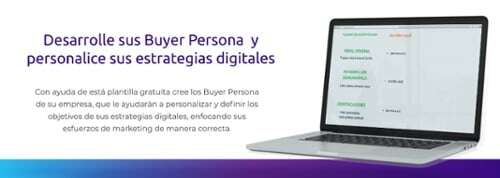
After completing the steps above you will have a great deal of valuable information about current and potential customers, and the question becomes how to sort it. The answer is a template that helps you classify the information by who your buyer persona is, what motivates them, why they buy and how you can communicate with them. The ICX template below is one way to structure that work, and the ICX Persona Playbook Toolkit goes further for teams that want a complete method.

Buyer persona template to classify motivations, goals and communication preferences

A persona is useful only if the team uses it in decisions. Give it a name and a short story, post it where marketing and sales meet, and test proposed campaigns, pages and offers against it. If a message would not make sense to the person you described, change it. ICX has developed these themes in its articles on what a buyer persona is, on building one in three steps and on building a business-to-business persona properly, and the Persona Playbook builds on all three.

Consider how the exercise changes a concrete decision. A private insurer that sells health policies to families has so far written one set of emails for everyone. After interviewing customers and its own agents, it finds two distinct buyers. The first is a young parent who is anxious about unexpected costs and wants reassurance about coverage for children. The second is the human resources manager of a mid-sized company who wants to retain employees and needs a simple administrative process more than a clever price. The first persona responds to stories about peace of mind, clear explanations of what is covered and an easy way to talk to a person. The second responds to proposals that show cost per employee, onboarding time and service levels. With two personas the insurer stops sending the same message to both, and each team knows what good looks like for its own audience.

In business-to-business markets the picture is more complex still, because a purchase usually involves several people. The user who will work with the product, the manager who owns the budget and the executive who signs have different worries, and a single contact in the database cannot speak for all of them. A useful practice is to build a main persona for the person who drives the purchase and shorter profiles for the other participants, noting what each needs to hear to say yes or at least not to say no. Sales can then prepare the conversation for the whole buying group instead of for a single enthusiastic contact who may lack the power to close the deal.

Where does the buyer persona method reach its limits?

An honest account of the method should include its critics. In a well-known Harvard Business Review article, Clayton Christensen and his co-authors argue that companies often focus too much on building customer profiles and looking for correlations in data, and that the circumstances in which a customer tries to get something done are more critical than any buyer characteristics. Their advice is to home in on the job the customer is trying to get done (Harvard Business Review, Know Your Customers' "Jobs to Be Done"). One example they give involves developers of condominiums aimed at retirees who struggled until they understood that customers wanted help with a life transition, not just a home, and began offering services for moving and for deciding what to keep. Sales rose.

The lesson is not to abandon personas. It is to build them around motivations and circumstances and not only around demographics. A persona that records age, title and city but not the situation that triggers a purchase will describe a population without explaining a decision. The questions about challenges and goals in the earlier steps are the ones that capture this, and they deserve more weight than the descriptive fields. ICX explores the same theme from a skeptical angle in its article on the truth behind buyer personas, and offers a Jobs to Be Done template for teams that want to combine the two approaches.

What this means for the C-level

For the chief executive, the persona is a tool for alignment. When marketing, sales and service describe the same buyer, the company makes fewer contradictory promises, and the leadership team can see whether growth is coming from the customers it intended to win. The practical test is to ask three department heads, separately, to describe the ideal customer. If the descriptions differ, the company is spending money to attract more than one customer at once, and probably serving none of them well.

For the chief marketing and chief commercial officers, a persona sharpens attraction and conversion. It tells marketing which questions content should answer and tells sales which signals indicate a qualified opportunity. For the chief financial officer, it improves the efficiency of acquisition spending, because budget flows to the channels where the buyer actually is. For service and customer experience leaders, it informs retention and loyalty, since a team that understands what each type of customer values can design service that earns repeat business. Finally, one point deserves emphasis. Your customer database is your most valuable asset, and we advise you to build it yourself and keep it up to date rather than buying lists that are not necessarily the best ones to contact.

How do you start on Monday morning?

Pick your best twenty customers and ask the sales team to describe, for each, why they bought, what almost stopped them and who else was involved in the decision. Compare the answers with what the database says about the same customers. Wherever the two differ, you have found something your marketing does not yet understand. Then schedule five short conversations with customers, ask them to tell the story of their last purchase from the first doubt to the signed order, and listen for the words they use. Draft one persona from this material, test it with the sales team for a week, and revise it. A single persona that people actually use is worth more than six that sit in a shared folder.

How ICX helps

ICX Consulting helps companies turn customer knowledge into commercial results. Our buyer persona development services combine research, data analysis and workshops with sales and marketing, and our market segmentation and positioning work links personas to the segments worth pursuing. Our inbound marketing consulting then builds the content and campaigns around them, using platforms such as HubSpot as the tools that carry the design.

Frequently asked questions

How many buyer personas does a company need?

Most companies need between two and four. Create a separate persona only when buyers differ in their goals, their concerns or the way they decide. If the messages you would send to two groups are the same, they are one persona.

How often should personas be updated?

Review them at least once a year and after any major change in your offer, pricing or market. Between reviews, notice when sales reports that prospects no longer match the description. That mismatch is the signal to revise.

Can a company with no customers yet build a persona?

Yes, as a hypothesis. Interview people who face the problem you solve, study the places where they discuss it, and treat the first persona as something to test. Replace assumptions with evidence as real customers arrive.

Is a persona the same as a customer segment?

No. A segment is a group defined by shared characteristics, often used for sizing and targeting. A persona is a vivid description of a representative buyer within or across segments, focused on motivation and behavior. The two work best together.

A company that knows who its buyers are spends less to reach them and keeps them longer. If your marketing and sales teams are still describing different customers, request a diagnostic with an ICX consultant and we will help you build the profile of the buyer your business is meant to serve.

BUILD THE BUYER PERSONA

Content added to ICX Folder
Default Save Save Article Quit Article

Save for later

Print-Icon Default Print-Icon Hover

Print

Subscribe-Icon Default Subscribe-Icon Hover

Subscribe

Start-Icon Default Start-Icon Hover

Start here

Suggested Insights For You

Buyer Persona: Key to the success of your business strategy

Buyer Persona: Key to the success of your business strategy

ICX Consulting, a commercial strategy and customer experience firm, treats the buyer persona as a key to the success of your business strategy. A...


New Year, New Goals: Refresh Your Buyer Persona!

New Year, New Goals: Refresh Your Buyer Persona!

Refreshing a buyer persona means reviewing, with recent data, whether the profile on which campaigns are based still describes real buyers and the...

7 Common Mistakes When Creating Your B2C Buyer Persona

7 Common Mistakes When Creating Your B2C Buyer Persona

A B2C buyer persona is a semi-fictional representation of the consumer a company wants to serve, built from interviews and data on real customers,...

What's next?

ARE YOU READY?

ICX SUBSCRIPTION
Stay ahead with exclusive insights from our senior consultants. Subscribe for the latest thinking on CX, growth, and digital transformation.