






Customer Journey: How It Shapes Customer Experience
The customer journey is the path a person follows with a brand, from the first time they notice a need to the purchase and, ideally, to repeat...
By Role
By Industry
By Target Customer
What We Offer
ICX helps companies grow revenue and profitability by connecting customer experience, sales, pricing, CRM and automation into one commercial system.
Customer Experience
We design memorable, customer-centered experiences that drive loyalty, enhance support, and optimize every stage of the journey. From maturity frameworks and experience maps to loyalty programs, service design, and feedback analysis, we help brands deeply connect with users and grow sustainably.
Marketing & Sales
We drive marketing and sales strategies that combine technology, creativity, and analytics to accelerate growth. From value proposition design and AI-driven automation to inbound, ABM, and sales enablement strategies, we help businesses attract, convert, and retain customers effectively and profitably.
Pricing & Revenue
We optimize pricing and revenue through data-driven strategies and integrated planning. From profitability modeling and margin analysis to demand management and sales forecasting, we help maximize financial performance and business competitiveness.
Digital Transformation
We accelerate digital transformation by aligning strategy, processes and technology. From operating model definition and intelligent automation to CRM implementation, artificial intelligence and digital channels, we help organizations adapt, scale and lead in changing and competitive environments.
Operational Efficiency
We enhance operational efficiency through process optimization, intelligent automation, and cost control. From cost reduction strategies and process redesign to RPA and value analysis, we help businesses boost productivity, agility, and sustainable profitability.
Customer Experience
Marketing & Sales
Pricing & Revenue
Digital Transformation
Operational Efficiency
Retailers should apply the customer journey because they own the last and most visible link of the commercial chain. Mapping how shoppers discover, compare, buy and return across stores, ecommerce and messaging shows where sales and repeat visits are lost, and lets marketing, sales and service design one experience instead of three disconnected ones.
Have you ever shopped at a supermarket, gone to a store looking for pants or had lunch at a fast-food restaurant? Almost everyone has, and if your answer is yes, you have been the final consumer in a retail process.
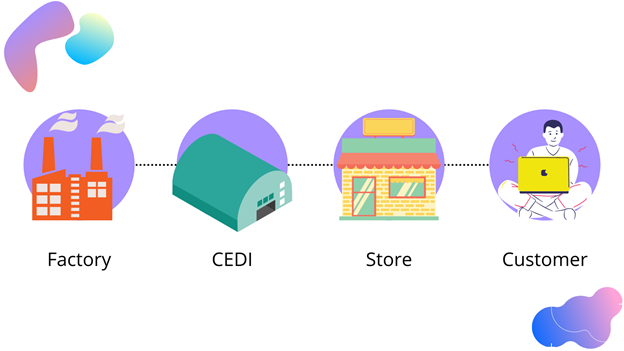
The retail sector is made up of merchants and marketing companies, small and large, Walmart and Amazon among them, that are responsible for providing final consumers with the goods and services they need, even though they do not manufacture them. Retailers sell to the end customer, and their main suppliers are wholesalers and manufacturers. Retail therefore handles the last link in the commercial chain.
Because they are in direct contact with the customer, retailers must offer a buying process that meets needs and exceeds expectations. For leadership, the economics are clear. Retail margins are thin, many purchases repeat weekly or monthly, and a single poor visit can move a household's spending to a competitor for years. The customer journey is the tool that makes those moments visible and manageable.

Picture the chief operating officer of a regional supermarket chain on a Saturday afternoon, walking the aisles of a flagship store. The shelves are stocked, the lines are short and the weekly sales report will be strong. Yet an app notification arrives to a customer standing two meters away, offering a discount on an item the shelf has just run out of. Across town, a shopper who ordered groceries online for pickup waits twenty minutes in the parking lot because nobody in the store knows the order is ready. Online and in store, the chain is performing to its own standards. The customer, who experiences both as the same brand, is receiving two different companies.
This is the daily reality of retail leadership. The business is organized by channel, the shopper is not, and the distance between the two is where loyalty is quietly won or lost. The customer journey is the instrument that closes it.
As retailers, companies in this sector deal directly with the customer, whether in a physical store or through ecommerce. That interaction calls for more personal treatment, and customer service together with after-sales service become decisive.
Many of the products and services consumers buy are bought again and again. The need does not disappear after a purchase. If the customer does not have a good experience the first time, will they come back to buy from you or will they look for your competition? The evidence suggests patience is short. In PwC's global survey of 15,000 consumers, reported by Adobe, 32% said they would walk away from a brand they love after a single bad experience, while customers would pay a premium of up to 16% for a great experience.
The main challenge for retailers today, in the author's view, is technology. In the digital age, consumers want to buy online and receive their product without leaving home, or they prefer to visit the store after researching everything about your company online first. Online's share keeps growing. The U.S. Census Bureau reported that in the second quarter of 2026 ecommerce reached $340.2 billion, or 17.1% of total retail sales, on a seasonally adjusted basis. The rest still happens largely in stores, which is exactly why the two channels must work as one.
There are many options on the market and multiple channels to buy what you want, so retailers must be present on different devices and channels, always guided by the buyer persona and the most effective means. To learn more about the buyer persona, read How much you really know about the people who buy from your business and our article on the buyer persona in the retail industry.
Keep in mind that customers want efficient and flexible processes that adapt to their needs. They do not want to adapt to the company that sells to them.
In practice, the challenges most retail leaders face cluster into five areas.

Consumer demands evolve over time. You need to understand your customer, how they want to buy, when they want to do it and through which channels, so you can take them through a process that invites them to return or to recommend you to others.
Why is this related to the customer journey? The Customer Journey is the path the customer follows from the moment they identify a problem until they make the purchase that satisfies their need. The Customer Journey Map shows all the stages, the channels involved, the message that fits best and the emotions the customer feels, among other aspects. To read more on the subject, see Customer Journey Map.
Through the customer journey you understand the customer, analyze the current state of the process and then propose improvements that deliver a complete experience. For a retailer, that usually means answering questions like these.
The answers rarely belong to a single department. A cart abandoned because delivery costs appear too late is a pricing and ecommerce decision. A shopper who leaves the store because an item shown online is out of stock is an inventory and systems issue. A return that takes three visits is a policy and service problem. The value of the journey is that it puts these issues on one page, in the order the customer lives them, so leadership can assign ownership and fund the fixes that matter most instead of letting each channel optimize its own metrics in isolation.

The purchase must be understood as a process, not as separate actions, so marketing, sales and service efforts need to be synchronized.
In retail, marketing must focus on the end customer. Campaigns and communication are aimed at a person who wants to solve a problem or satisfy a need.
The Customer Journey detects the customer's early stages, the moment the need arises, the search for solutions and the creation of a shortlist. In the author's experience, about 70% of the customer's journey is complete by the time the consumer contacts the company. That is why the marketing strategy matters so much, and why it must be based on a real understanding of the purchase process.
Throughout this journey, marketing should be present with educational content on blogs, a website where shoppers find the solution to their problem and active social networks with appealing images, video and advertising. There are many options, and applying the customer journey helps you decide which ones deserve the budget. Our article on the importance of content marketing in the retail industry goes deeper into this stage.

Once consumers have their list of options, they contact the company for more information and specific questions. This is where sales begins. The customer journey also guides this process and shows the best channels for contact between consumer and company. Should the customer write an email or a WhatsApp message? Do you have a chat on your website, or should a sales associate call? What if the customer prefers to go to the store? Defining the touchpoints and the message you want to give at each one is key.
Service is part of the same process. Customers expect to be served in a specific way. If their expectations are not met, they will be unhappy, may decide not to buy and may even leave a negative review.
By applying the customer journey, you understand what must be done to create the best experience for the buyer. Efforts should not stop at checkout. After-sales service that delights the customer is what makes them want to buy again, and in retail repeat purchase is where profitability lives.
| Stage | What the shopper does | Typical friction | What to design |
|---|---|---|---|
| Discovery | Sees ads, social posts, recommendations, store displays | Message differs by channel | Consistent offer and content by persona |
| Consideration | Compares prices, reviews, availability and delivery options | Missing stock or delivery information | Real-time availability and clear policies |
| Purchase | Buys in store, online, in the app or by message | Long lines, complex checkout, payment failures | Simple checkout and cross-channel options |
| Delivery or pickup | Waits for the order or collects it | Uncertain delivery times | Proactive status updates |
| After-sales | Uses the product, returns or exchanges, asks for help | Hard returns, unanswered questions | Easy returns and responsive service |
| Loyalty | Buys again, joins a program, recommends | Generic rewards, no recognition | Personalized offers based on purchase history |
Retail is not a single business. The same journey framework leads to different priorities depending on the format, and the scenarios below are illustrative of the choices leaders face.
In grocery and convenience, the journey is dominated by frequency. Shoppers return several times a week, so small frictions such as unavailable products, slow lines or unclear promotions compound quickly. The most valuable improvements are often operational, such as accurate stock information and substitutions that customers accept. In fashion and department stores, the journey is more emotional and more channel-fluid. Shoppers browse online, try in store and may return by mail, so the moments that matter most are size and availability information, fitting and returns. A retailer that treats returns as a cost to minimize, instead of a moment of truth that determines the next purchase, often loses its best customers without noticing.
In home improvement and electronics, purchases are larger and less frequent, and the shopper typically researches extensively before arriving. The decisive moments are the quality of product guidance, the knowledge of the associate and the reliability of delivery and installation. In pharmacy and health retail, trust and convenience dominate, and the repeat prescription becomes the anchor of the relationship. Leaders who understand which format they truly operate, and which stage of the journey carries the most weight in that format, can direct investment with far greater precision than those who apply a generic omnichannel agenda.
The structural obstacle in retail is that the organization is built around channels, categories and regions, while the customer moves across all of them. A shopper does not care that online and stores report to different executives. Leadership teams that make progress typically do three things. They appoint an owner for each priority journey with authority across channels. They agree on a small set of shared indicators, such as repeat purchase rate and cost to serve by journey stage, so that channel managers are not rewarded for shifting costs onto each other. And they review the journey with real customer evidence at the same cadence as sales.
There is also a trade-off worth stating plainly. Improving the experience raises costs in some places, whether through free returns, faster delivery or more store staff, and not every segment justifies the same level of service. The most sophisticated retailers segment customers by value and by need, and design different levels of service accordingly. This is neither unfair nor unusual. It is the practical way to align experience spending with the behavior that generates margin.
For the executive, the final consideration is speed. Retail conditions change with seasons, promotions and competitors, and a journey map that is updated once a year will describe a store that no longer exists. A lighter and more frequent review, anchored in a handful of metrics and in direct observation of stores and orders, allows the leadership team to correct course while the season is still underway.
The ICX Customer Journey Toolkit provides templates to map each stage, channel and emotion with your team in a single working session.
ICX Consulting works with retailers in the United States and Latin America to turn the customer journey into sales, repeat purchase and lower cost to serve. Our retail customer experience consulting combines journey mapping with loyalty strategy and B2C ecommerce consulting, and our ICX Compass methodology prioritizes the improvements with the greatest commercial impact before any technology is implemented.
Bring this topic to your company
An ICX Consulting advisor will assess where your organization stands today and which decisions can move your commercial and customer experience results.
The stages are the same, but the touchpoints and frictions differ. In stores, layout, staff and lines matter most, while online it is search, product information and checkout. The most valuable map shows both, because many shoppers research online and buy in store, or the reverse.
Start by observing real customers and reading reviews and complaints, then map one purchase mission on a whiteboard with your team. Many of the most valuable fixes, such as clearer signage, faster responses on WhatsApp or simpler return policies, cost little and pay back quickly.
Track conversion by channel, cart abandonment, average order value, repeat purchase rate, return rate and customer satisfaction at key moments such as delivery and returns. Look at them by journey stage, not in isolation, so you can tell which change produced which result.
A loyalty program works when it rewards the behaviors the journey reveals as valuable, such as repeat visits, larger baskets or buying across channels. Mapping the journey first prevents programs that hand out generic discounts without changing behavior. Review the rewards each year against what the journey data shows.
Retailers are in direct contact with customers and responsible for the final sale, so understanding the customer journey is essential to building the best buying experience. If you want to see where your shoppers are leaving between the first visit and the second purchase, request a diagnostic with an ICX consultant and start with the moments that move your margin.
The customer journey is the path a person follows with a brand, from the first time they notice a need to the purchase and, ideally, to repeat...
A customer journey is the path a person follows from recognizing a need to buying and using a solution. A customer journey map is its visual story,...
The customer journey is the sequence of steps a buyer goes through from the moment a need appears until it is solved, and the experiences they have...