




What Is a Customer Journey and a Customer Journey Map?
A customer journey is the path a person follows from recognizing a need to buying and using a solution. A customer journey map is its visual story,...

By Role
By Industry
By Target Customer
What We Offer
ICX helps companies grow revenue and profitability by connecting customer experience, sales, pricing, CRM and automation into one commercial system.
Customer Experience
We design memorable, customer-centered experiences that drive loyalty, enhance support, and optimize every stage of the journey. From maturity frameworks and experience maps to loyalty programs, service design, and feedback analysis, we help brands deeply connect with users and grow sustainably.
Marketing & Sales
We drive marketing and sales strategies that combine technology, creativity, and analytics to accelerate growth. From value proposition design and AI-driven automation to inbound, ABM, and sales enablement strategies, we help businesses attract, convert, and retain customers effectively and profitably.
Pricing & Revenue
We optimize pricing and revenue through data-driven strategies and integrated planning. From profitability modeling and margin analysis to demand management and sales forecasting, we help maximize financial performance and business competitiveness.
Digital Transformation
We accelerate digital transformation by aligning strategy, processes and technology. From operating model definition and intelligent automation to CRM implementation, artificial intelligence and digital channels, we help organizations adapt, scale and lead in changing and competitive environments.
Operational Efficiency
We enhance operational efficiency through process optimization, intelligent automation, and cost control. From cost reduction strategies and process redesign to RPA and value analysis, we help businesses boost productivity, agility, and sustainable profitability.
Customer Experience
Marketing & Sales
Pricing & Revenue
Digital Transformation
Operational Efficiency
The customer journey is the path a person follows with a brand, from the first time they notice a need to the purchase and, ideally, to repeat business and recommendation. For customer experience (CX), it is the starting point. It shows where customers struggle, what they expect at each stage and which moments decide whether they stay.
Every customer embarks on a journey when interacting with a brand, from the first encounter to becoming a loyal advocate. That journey is shaped by experiences, emotions and expectations at every touchpoint. Companies that understand and optimize this path create stronger connections with their customers and ensure seamless interactions that drive satisfaction and loyalty.
Customer experience plays a critical role in shaping the journey. A well-structured approach makes customers feel valued, supported and engaged from the very beginning, and by designing experiences that anticipate needs and remove friction, a business can turn first-time buyers into long-term advocates. For a leadership team, the journey is also a management tool. It connects marketing spend, sales effort and service cost to the moments that actually move revenue, which makes it one of the most practical ways to decide where to invest next. This article explains the key stages of the customer journey, why it belongs at the center of CX strategy and how to build one that leads to decisions.
>>Tool for a Better Customer Journey Map <<

A chief commercial officer at a telecom operator reviews a funnel report that shows healthy numbers at every stage. Visits are up, quote requests are stable, and the conversion rate from quote to contract is within the target range. Yet the churn report for customers in their first ninety days has crept upward for three quarters. The funnel is accurate about what the company wanted to happen. It says nothing about the installation appointment that was rescheduled twice, the first bill that did not match the promotion, or the call that required the customer to repeat the same story to three agents. Those moments are invisible in the funnel and decisive in the customer's mind.
The customer journey is the lens that makes them visible. It puts the order of events as the customer lives them in front of the executive team, and it allows the company to ask a better question than how many people entered the funnel. It allows the company to ask what the customer felt at each step and what that feeling cost in revenue.
A customer journey refers to the experiences people have before, during and after deciding to buy a product or service. In other words, the customer journey portrays the buyer persona's buying process and how it progresses through different stages and across different touchpoints. A Customer Journey Map is the visual representation of that path, usually showing the customer's steps, goals, emotions and touchpoints in one view.
The journey is not the same as the sales funnel. The funnel describes what the company wants to happen, measured in leads and opportunities. The journey describes what the customer actually does, thinks and feels, including the moments when they leave without telling anyone. Managing both views together is what lets a company connect its targets with the real behavior of its customers.
The core buying journey can be divided into three main stages.
The purpose of understanding these stages is to create strategies that help the buyer persona move along the path from awareness to purchase. Customer experience, however, does not end at conversion. Most companies also need to design the stages that follow, because that is where repeat revenue and recommendations are earned.
| Stage | What the customer is doing | What the company must provide | Example indicator |
|---|---|---|---|
| Awareness | Recognizing a need and looking for information | Useful, findable content that explains the problem | Qualified traffic, content engagement |
| Consideration | Comparing options and asking questions | Clear value proposition, fast and expert answers | Response time, demo or quote requests |
| Conversion | Deciding and buying | Simple purchase, transparent terms, confidence | Conversion rate, cart or proposal abandonment |
| Onboarding and use | Starting to use the product or service | Guidance, quick early results, proactive support | Time to first value, early support tickets |
| Loyalty and advocacy | Buying again and recommending | Recognition, relevant offers, consistent service | Retention, repeat purchase, NPS |
>> Customer Journey in the Consumer Goods industry <<

Customer experience refers to the experiences, positive and negative, that customers have with a particular brand across the touchpoints that exist before, during and after the buying process. Sound similar? Of course. CX uses the customer's buying process as input to design customer-centric strategies that seek to delight customers at every stage of the Customer Journey.
Using the customer journey in CX strategies allows you to:
Leading technology vendors describe the tool in similar terms. Salesforce's guide to customer journey mapping presents it as a visual picture of how customers experience a brand at every point of contact, used to spot pain points and service gaps. For a deeper look at the business uses of the journey, read Customer Journey: what is it for?
To create a customer journey that makes it easier to define CX strategies, follow these steps.
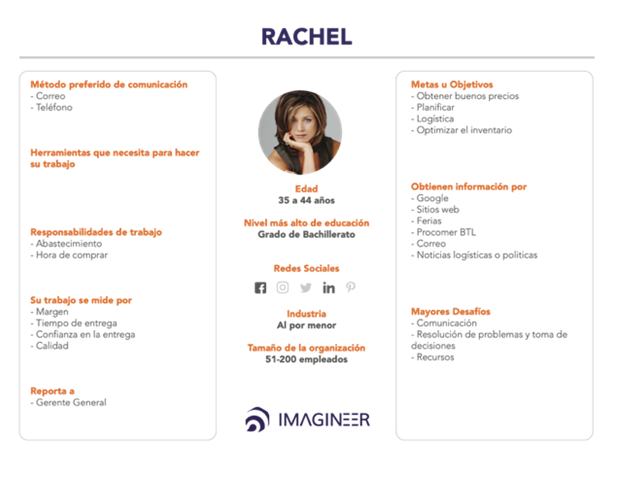
To create a customer journey, first define who the customer is, using Buyer Personas. This tool represents an ideal customer through a semi-fictional profile based on demographic and attitudinal characteristics. By understanding who the ideal customer is and what their goals, needs, motivations and pains are, the company can build a customer-centric CX strategy. Most companies need more than one persona, and each persona usually needs its own journey.

Once you understand who your customer is, including their behavior, preferences, habits, daily life, needs, motivations and pains, it is time to map the buying process. Describe it step by step, from the moment a need or problem arises until the customer makes the purchase, including the research and analysis involved.
Once you have the Customer Journey Map, determine the touchpoints that present opportunities or challenges, the "moments of truth." These are the stages in which the customer is in contact with the company and in which a positive or negative experience can decide whether the process continues or the brand is discarded. A first reply to an inquiry, the first invoice or the first support case are typical moments of truth.
Do not stop at identifying the moments of truth. Determine what customers expect at those stages so you can define the strategies, including the content for each moment, the service and the experience to be provided. At this point, also define the people responsible for each stage, the systems required, the data to be collected and the indicators to be measured.
Once you know what the customer expects, decide how to meet those expectations. You already have an inventory of what is needed, so it is time to invest in reducing the gap between what the customer expects and what the company currently offers. Prioritize the gaps that affect the most valuable customers or the moments with the highest abandonment.

The stages in the table apply broadly, yet the moments that decide the outcome vary with the sector. The scenarios below are illustrative and show how the same framework changes emphasis.
In retail banking, the journey of a customer applying for a mortgage can last weeks and involve a dozen touchpoints, from the first online simulator to the notary. The moments of truth are the speed of the first pre-approval answer, the clarity of the documents required and the way the bank communicates delays. A bank that maps these moments often discovers that the largest losses occur not in the credit decision itself but in the silence between steps. In insurance, the decisive moment is the claim. A customer may go years without contact, and then a single experience of filing and resolution determines whether they renew and whether they recommend the insurer to a relative.
In manufacturing and industrial services, the buying group includes engineers, purchasing managers and finance, each with a different journey inside the same deal. A supplier that maps only the purchasing manager misses the technical validation that actually decides the preference. In consumer goods and retail, the journey often moves between physical and digital channels, and the transition itself, such as checking availability online and then buying in store, becomes the moment of truth. In healthcare, the journey starts well before the appointment and ends well after the bill, which is why billing clarity can undo an excellent clinical experience. Seeing these sequences from the customer's side is what separates a strategy from a set of departmental improvements.
A journey is only as useful as the evidence behind it. The strongest maps combine what customers say with what they do and with what the company records about each interaction.
Combining these sources turns the map from an opinion into a diagnosis, and it gives the leadership team a shared fact base for deciding which moments to improve first.
A map that lives in a workshop folder changes nothing. The executives who benefit most from the journey tend to treat it as a recurring management instrument, reviewed in the same cadence as the budget and the pipeline. In each review they ask three questions: which moment of truth has deteriorated since the last review, what did it cost in conversion, retention or service effort, and who owns the fix. This habit turns a diagnostic exercise into governance.
It is equally important to choose carefully what not to improve. A journey often reveals dozens of friction points, and trying to resolve all of them dilutes the effort. The most defensible approach is to rank the gaps by their effect on the most valuable customers, address the top two or three within a quarter, and measure the result with the indicators agreed at the outset. Leaders who communicate that choice clearly also protect their teams from the fatigue of endless improvement programs.
A final consideration is accountability. Because the journey cuts across departments, no single function owns it naturally, and that is precisely why it deserves an executive sponsor. When the sponsor is a member of the leadership team and the indicators are tied to business results, the journey becomes the common language through which marketing, sales, service and operations coordinate. Without that sponsor, each department optimizes its own stage, and the customer continues to experience the seams between them.
ICX Consulting helps companies turn the customer journey into decisions. Our customer journey and buyer persona services build journeys from real customer evidence, and the ICX Compass methodology connects each moment of truth with owners, indicators and a prioritized roadmap. When the strategy is defined, we implement it in the CRM so every stage can be measured.
To build your first journey, use the ICX Customer Journey toolkit together with the Persona Playbook and start with the persona that matters most to your revenue.
Usually one per priority persona and per key goal, such as buying for the first time, renewing or requesting support. Most companies start with two or three journeys that cover the bulk of revenue or complaints, and add more once the first ones are being managed with owners and indicators.
Include people from marketing, sales, service and operations, plus someone with access to customer data. Most importantly, include customers through interviews or surveys. A cross-functional team ensures the journey reflects the whole experience, and customer input keeps it honest. Frontline employees are especially valuable, because they hear every day the questions and complaints that never reach a report.
A moment of truth is a point of contact where the customer's experience can decide whether they continue with the brand or leave. It is usually a moment of high emotion or high risk for the customer, such as a first answer, a delivery, a billing error or a problem resolution.
B2B journeys usually involve several decision-makers, longer cycles and more formal steps such as proposals, approvals and contracts, so they need to be mapped for each role in the buying group. B2C journeys are often shorter and more emotional, with more weight on digital self-service and the purchase moment itself.
A well-designed customer journey is more than a roadmap. It is a strategy that shapes every interaction and strengthens brand perception. Businesses that put CX at the center of each stage create positive, memorable experiences that go beyond transactions, and by listening to customers and refining touchpoints they build long-term relationships rooted in trust and value. Enhancing the journey requires continuous effort to adapt, personalize and innovate, whether through seamless onboarding, proactive support or personalized engagement. Delivering exceptional CX is not a one-time initiative but an ongoing commitment to understanding and evolving with customers' needs.
If you are ready to welcome your customers aboard a journey designed around them, request a diagnostic with an ICX consultant and find the moments of truth that matter most in your business.
I recommend the following resources about customer journey maps:
Customer Journey Map - HubSpot
Customer Journey Map - Salesforce
A customer journey is the path a person follows from recognizing a need to buying and using a solution. A customer journey map is its visual story,...

The customer journey is for seeing the business through the customer's eyes. It maps every stage, touchpoint and emotion from the first contact to...
The customer journey is the complete path a customer follows with a company, from the moment they discover a need to the moment they buy, use the...