






Skip to the main content.

What We Offer

ICX helps companies grow revenue and profitability by connecting customer experience, sales, pricing, CRM and automation into one commercial system.

Customer Experience

We design memorable, customer-centered experiences that drive loyalty, enhance support, and optimize every stage of the journey. From maturity frameworks and experience maps to loyalty programs, service design, and feedback analysis, we help brands deeply connect with users and grow sustainably.

Marketing & Sales

We drive marketing and sales strategies that combine technology, creativity, and analytics to accelerate growth. From value proposition design and AI-driven automation to inbound, ABM, and sales enablement strategies, we help businesses attract, convert, and retain customers effectively and profitably.

Pricing & Revenue

We optimize pricing and revenue through data-driven strategies and integrated planning. From profitability modeling and margin analysis to demand management and sales forecasting, we help maximize financial performance and business competitiveness.

Digital Transformation

We accelerate digital transformation by aligning strategy, processes and technology. From operating model definition and intelligent automation to CRM implementation, artificial intelligence and digital channels, we help organizations adapt, scale and lead in changing and competitive environments.


Operational Efficiency  

We enhance operational efficiency through process optimization, intelligent automation, and cost control. From cost reduction strategies and process redesign to RPA and value analysis, we help businesses boost productivity, agility, and sustainable profitability.

Customer Experience

chevron-right-1

Marketing & Sales

chevron-right-1

Pricing & Revenue

chevron-right-1

Digital Transformation

chevron-right-1

Operational Efficiency 

chevron-right-1

9 min read

What Is a Customer Journey and a Customer Journey Map?

9 min read

What Is a Customer Journey and a Customer Journey Map?

What Is a Customer Journey and a Customer Journey Map?
5:34

A customer journey is the path a person follows from recognizing a need to buying and using a solution. A customer journey map is its visual story, built from one point of view, which shows leaders where the experience delights customers, where it fails them and where to act first.

Picture the quarterly review of a services company. Every department presents green indicators. Sales met its quota, onboarding delivered within the agreed time, support closed tickets inside the service level, and billing issued invoices on schedule. Then the chief executive shows a different slide, the one with customers who did not renew, and asks a question nobody can answer: if each of us did our job, why are we losing them? The silence that follows is the cost of managing a business department by department when customers live it as one continuous experience.

Does the word delight sound interesting to you? In the customer experience field, it refers to creating a positive emotional reaction by exceeding customer expectations. Delight is not a luxury. Customers who feel that a company understands them tend to buy again, recommend it and forgive the occasional mistake, which shows up directly in retention and in the cost of acquiring new customers.

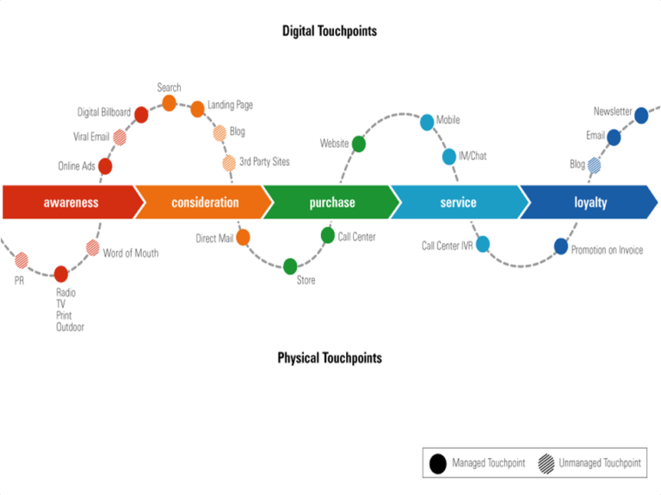
Customer journey map showing the path from customer need to delight

The gap between what companies believe and what customers experience is well documented. Bain & Company surveyed 362 firms and found that 80 percent believed they delivered a superior experience, while customers said only 8 percent really did. The distance between those two numbers exists because companies are not in tune with the experience their customers actually have. The purpose of this article is to help close it, and the instrument for doing so is the Customer Journey Map and its components.

What is a customer journey?

The customer journey is a story about how to understand customers. It is the process of understanding the person from the moment they identify a need until they purchase a product or service to solve it, and beyond, through use, service and renewal. It is also a key component of an inbound marketing strategy, because it tells marketing and sales which content and conversations each person needs at each moment.

For leadership, the customer journey is first of all a management lens. Instead of looking at the business department by department, it shows the company the way customers see it, as one continuous relationship. Problems that look minor inside one area, such as a slow approval or a confusing invoice, become visible as moments in which customers decide whether to continue. McKinsey has put it in terms executives can act on, finding that customer journeys are significantly more strongly correlated with business outcomes than are individual touchpoints. A company can perfect every touchpoint and still disappoint, because the customer judges the whole path.

A practical journey usually moves through broad stages that each company adapts to its own business. The customer first recognizes a need or an opportunity. Then comes research and comparison, in which the person looks for options, asks peers and evaluates providers. Decision and purchase follow, with negotiation and payment. After the sale come onboarding and use, when the buyer judges whether the promise was kept, and finally service, loyalty and advocacy, where the customer asks for help, buys again, renews or recommends. Seen this way, the sale is a midpoint, not the end.

What is a customer journey map?

The Customer Journey Map is the graphical representation of the Customer Journey. It is a tool for analyzing customer behavior that helps the organization understand how customers move through the entire sales process and how they feel about the time they spend there. It uses two powerful instruments, storytelling and visualization, which are effective ways of conveying information that is memorable and concise and that creates a shared vision across the company. The Nielsen Norman Group defines it in similar terms: a journey map is a visualization of the process that a person goes through in order to accomplish a goal.

A good map is also a coordination tool. When marketing, sales, service and operations look at the same visual story, discussions shift from defending each department's metrics to agreeing on what the customer needs next. That shared view is often the first real benefit leadership notices, even before any improvement is implemented. Imagine a regional bank whose mortgage applicants wait for documents, calls and approvals handled by four teams. Each team believes it responds quickly. The map, built from the applicant's point of view, shows the borrower repeating the same information three times over eleven days, and the conversation about speed becomes a conversation about handoffs.

For a tool that sharpens this analysis, ICX has published a tool for a better customer journey map, and the article on the difference between customer journey and user journey clarifies how the two concepts relate.

What are the components of a customer journey map?

Although the Customer Journey Map can take various forms, it generally includes five components. The Nielsen Norman Group describes a similar set, built around an actor, a scenario, journey phases, actions, mindsets and emotions, and opportunities. Each component answers a question that leadership will eventually ask, and each one is worth getting right before the next.

Point of view

You have to choose the actor of the story. In the inbound marketing methodology this character is often called the Buyer Persona. When doing this exercise, keep in mind that the story is told from a single point of view, which means there is only one actor per map. A hospital that tries to map the experience of patients and referring physicians on the same page will produce a diagram that satisfies neither.

Choosing the point of view of the customer journey map

Scenario

The specific experience to be mapped must be determined beforehand. It can be an existing journey, where the mapping reveals both positive and negative moments in the current experience, or the experience of a product or service that does not yet exist. The user's goal should be clear throughout the entire experience, and these maps work best for customer experiences that involve sequential activities, such as opening an account, filing an insurance claim or booking a stay.

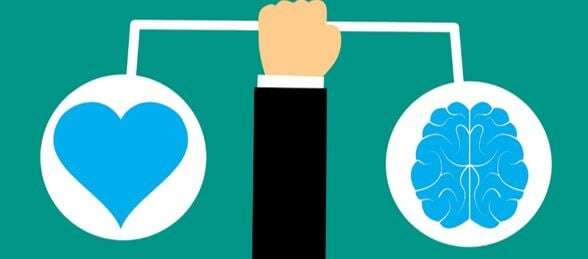
Actions, emotions and mindset

At the heart of a Customer Journey Map narrative is the search for what the customer is doing, thinking and feeling throughout the entire experience. This information should come from qualitative research such as field studies, contextual inquiry and diary studies. How specific it needs to be depends on the purpose of each map. The emotional line is where the most valuable insight tends to hide, because a process can be technically flawless and still leave people anxious, as anyone who has waited for an insurance claim decision knows.

Actions, emotions and mindset in a customer journey map

Touchpoints and channels

Touchpoints are the moments when the actor, or Buyer Persona, interacts with the company. Channels are the methods of communication or service delivery, such as the company's website or a physical store. Both touchpoints and channels should be aligned with the goals and actions of the end users. A retailer may discover that customers who start on the app and finish in the store have no way to show the cart they built, a small gap with a large effect on conversion.

Team aligning touchpoints and channels of the customer journey

Insights and ownership

The purpose of a Customer Journey Map is to identify gaps in the experience, which are the insights, and, once identified, to take action to optimize that experience, which is ownership. Every insight that emerges from the mapping should be listed explicitly. If possible, assign responsibilities to different parts of the Customer Journey Map, so that it is clear which person is in charge of which aspect of the journey. Even when all five components are included, two maps can look completely different and still be perfectly suited to the context they were designed for.

How do you make better customer journey map design decisions?

Ideas and vision for designing a customer journey map

To make better design decisions, begin with a few questions. What level of detail is needed to tell the story in full? Which elements, such as devices, channels or physical content, are necessary for the most appropriate narrative? Is the purpose of the map to diagnose a current experience or to design an entirely new one? What is the balance between the external actions taken by the customer and the internal actions taken by the organization? And who is going to use the map?

The answers change the artifact. A map for the executive committee should fit on one page and highlight the three or four moments with the greatest business impact. A map for the service team may need much more detail on each interaction, scripts and handoffs. A map designed to plan a new product starts from hypotheses and must be validated with customers before it guides investment. Treating these as separate documents, each with a purpose, avoids the common failure of a beautiful poster that nobody uses.

From delight to results, why journey mapping pays off

Delight becomes a business result when it is designed into the moments that matter and repeated consistently. The point of view tells the company which customer segment deserves priority, so investment is concentrated where it is most valuable. The scenario decides which journey to improve first, which should be the one with the largest revenue or cost impact. Actions, emotions and mindset reveal where expectations are not met, which is where churn, complaints and lost deals originate. Touchpoints and channels show which interaction to redesign, lowering the cost to serve by removing duplicate contacts. And ownership turns findings into accountable improvements instead of observations that fade after the workshop.

Consider a hotel group that maps the journey of the business traveler. The map shows that the best moment of the stay, a fast, personal check-in, is spoiled at checkout by a slow invoice request. Fixing it requires no new building and no price change, only coordination between reception and finance, and an owner who answers for the result. Improvements of this kind are inexpensive, visible and repeatable, which is why companies that practice journey mapping tend to find that the next improvement is easier than the last.

There is a fair objection to all of this, which is that journey mapping can become theater. Teams spend weeks producing a handsome poster, hang it on a wall and return to their usual routines, and a year later the map describes a company that no longer exists. The remedy is to treat the map as an operating document with owners, review dates and a short list of metrics that appear in the same meeting where revenue and cost are discussed. A map that is never connected to a decision, a budget or a person is decoration. A map that changes how the quarterly review begins, by starting with the customer's path and not with the departmental scorecards, becomes part of how the company thinks.

What this means for the C-level

In conclusion, mapping the Customer Journey is key to understanding the customer's perspective, and actions must be taken with those insights to optimize the experience. For the executive team, that translates into decisions rather than diagrams. In attracting customers, the research and comparison stage tells you which content, proof and conversations prospects need before they ever speak to sales. In converting them, the decision moments show where prospects hesitate, and removing that friction shortens the sales cycle.

Retention is decided in onboarding, which belongs to the journey and not to operations alone, because it is where the promise made at the sale is tested. Loyalty comes from designing specific moments of delight for the most valuable customers and measuring whether they lead to repeat purchases and referrals. And efficiency improves when every insight has an owner and a metric, so that improvements are delivered and measured and not merely discussed. A chief financial officer will recognize in this the same discipline applied to capital projects, with the customer as the unit of analysis.

How to start on Monday morning

Choose one Buyer Persona as the actor of your first map, ideally the segment that contributes most to revenue or the one with the highest churn. Pick one scenario with sequential activities, such as a first purchase or a service request, and resist the temptation to map the entire company at once. Collect evidence from interviews, CRM records and service data, and sit with people who live the experience, because the call recordings and ticket histories your teams already hold are a rich, inexpensive source.

Fill in what the actor does, thinks and feels at each stage, with the touchpoints and channels used, then list the insights, assign an owner to each and agree on one metric per improvement. Review the map with the team after the first improvements are delivered and compare the metric before and after. That cycle, repeated for the next scenario, is the working method of a customer-centered company.

That covers the essentials for starting to delight your customers. Here are some templates that will be useful for you:

http://files.thisisservicedesignthinking.com/tisdt_cujoca.pdf

https://media.nngroup.com/media/articles/attachments/JMTemplate.pdf

https://www.nngroup.com/articles/journey-map-digital-template/

You can also use the free ICX customer journey toolkit, which walks your team through personas, stages, touchpoints and opportunities, and pair it with the empathy map toolkit to capture what your actor thinks and feels.

How ICX helps

ICX Consulting helps companies close the gap between the experience they believe they deliver and the one customers actually live. Our customer journey consulting and buyer persona services follow the ICX Compass methodology to map priority journeys, assign ownership and implement improvements in processes and the CRM. To learn how to build your own map step by step, read Customer Journey Map, what it is and how to create one, or explore what the customer journey is for. Want to know where your customers stop feeling delighted? Request a diagnostic with an ICX consultant.

Frequently asked questions

Is the customer journey the same as the sales funnel?

No. The sales funnel describes the company's view of how prospects move toward a purchase, usually measured in conversion rates between stages. The customer journey describes the customer's own experience, including emotions, channels and moments after the sale such as onboarding, service and renewal. The two complement each other, but only the journey shows why customers move or stall.

What is the difference between a customer journey map and an empathy map?

An empathy map captures what a type of customer says, thinks, does and feels, without following a sequence. A customer journey map is chronological and shows how those thoughts and feelings change across stages and touchpoints. Many teams build an empathy map first to understand the persona and then use it as input for the journey map.

Can you map a journey for a product that does not exist yet?

Yes. A future-state map describes the intended experience of a new product or service and helps teams align before investing. Because it is based on assumptions, it should be tested early with prototypes or interviews. Once the product launches, the team should build a current-state map with real data and compare the two.

How often should a customer journey map be updated?

Review it whenever something important changes, such as a new product, channel, price structure or customer segment, and at least once a year for priority journeys. Between reviews, track the metrics tied to each insight. If a metric stops improving or customer feedback shifts, that is the signal to revisit the map before the next planning cycle.

Customers notice when a company understands them, and they reward it with loyalty and referrals. If you want to find the moments where your customers could be delighted instead of merely served, talk to an ICX consultant and map that journey together with your team.

Get Customer Journey Guide

Content added to ICX Folder
Default Save Save Article Quit Article

Save for later

Print-Icon Default Print-Icon Hover

Print

Subscribe-Icon Default Subscribe-Icon Hover

Subscribe

Start-Icon Default Start-Icon Hover

Start here

Suggested Insights For You

Customer Journey vs. Journey Map: Components and Decisions

Customer Journey vs. Journey Map: Components and Decisions

The customer journey is the path a customer follows from the moment a need appears until they acquire, use and evaluate a product or service. A...

Difference between Customer Journey and User Journey

Difference between Customer Journey and User Journey

ICX Consulting, a customer experience and commercial strategy firm, separates the two maps because they answer different business questions. The...

Customer Journey: Build the Best Customer Experience

Customer Journey: Build the Best Customer Experience

To build the best customer experience with the customer journey, a company maps how its buyer personas move from need to purchase and beyond, then...

What's next?

ARE YOU READY?

ICX SUBSCRIPTION
Stay ahead with exclusive insights from our senior consultants. Subscribe for the latest thinking on CX, growth, and digital transformation.