




Skip to the main content.

What We Offer

ICX helps companies grow revenue and profitability by connecting customer experience, sales, pricing, CRM and automation into one commercial system.

Customer Experience

We design memorable, customer-centered experiences that drive loyalty, enhance support, and optimize every stage of the journey. From maturity frameworks and experience maps to loyalty programs, service design, and feedback analysis, we help brands deeply connect with users and grow sustainably.

Marketing & Sales

We drive marketing and sales strategies that combine technology, creativity, and analytics to accelerate growth. From value proposition design and AI-driven automation to inbound, ABM, and sales enablement strategies, we help businesses attract, convert, and retain customers effectively and profitably.

Pricing & Revenue

We optimize pricing and revenue through data-driven strategies and integrated planning. From profitability modeling and margin analysis to demand management and sales forecasting, we help maximize financial performance and business competitiveness.

Digital Transformation

We accelerate digital transformation by aligning strategy, processes and technology. From operating model definition and intelligent automation to CRM implementation, artificial intelligence and digital channels, we help organizations adapt, scale and lead in changing and competitive environments.


Operational Efficiency  

We enhance operational efficiency through process optimization, intelligent automation, and cost control. From cost reduction strategies and process redesign to RPA and value analysis, we help businesses boost productivity, agility, and sustainable profitability.

Customer Experience

chevron-right-1

Marketing & Sales

chevron-right-1

Pricing & Revenue

chevron-right-1

Digital Transformation

chevron-right-1

Operational Efficiency 

chevron-right-1

9 min read

6 Content Marketing Metrics for Continued Success

9 min read

6 Content Marketing Metrics for Continued Success

Content marketing metrics are the indicators that show whether published content attracts the right audience, converts it into leads and contributes to sales. Six matter most for continued success. They are traffic sources, customer acquisition cost, CAC payback time, conversion rate, bounce rate, and the sales opportunity conversion rate.

Picture the quarterly review at a B2B software company. The head of content presents an encouraging chart. Blog visits have grown by 40 percent, the newsletter list has expanded and the latest guide was downloaded more than a thousand times. The chief financial officer listens, turns to the next slide and asks a short question. How much did it cost us to win each new customer this quarter, and how long will it take to earn that back? The room goes quiet. The content team can describe reach, but it cannot describe return. The next budget conversation, which was meant to be about expanding the editorial program, becomes a conversation about whether to keep it at all.

That moment reveals what metrics are for. To measure marketing campaigns and verify their success, a company must establish specific indicators that identify points of control and continuous improvement in each effort of the marketing department. Business cannot exist without customers and without sales, which is why so many techniques for customer acquisition, retention and loyalty have emerged across industries and markets. Growing the customer base requires strategies, methodologies and platforms that help manage each step taken with the customer, and each of those steps should leave a measurable trace.

>> content marketing crucial for your sales team <<

Why does content marketing need its own metrics?

The concept of digital marketing has expanded the vision of how to get to know the customer, including their tastes and their way of buying. The ideal customer to whom marketing and sales efforts are directed is known as the buyer persona, and different strategies and methodologies are used to reach that person. Content marketing is a form of marketing in which content is created and shared online, in blogs, videos or social network posts, to make known what the company works on or sells, and in doing so it can position the company as a reference expert in its field.

The opportunity is large because of how people behave. Every time someone has a problem or wants to learn about a specific topic, the first step is usually a search on Google. That is an excellent opportunity for companies to capture customers organically, by offering answers to what they are looking for. The key is to generate valuable content in different formats and to do so constantly, which makes the company more visible over time. The difficulty is that the effort is continuous and the payoff is gradual, so without measurement it is easy to lose faith in the program, or worse, to defend it with numbers that impress but do not persuade.

That is the point at which the central questions arise. How can the company know whether its efforts are productive? How can the results be visualized? Which metrics can be used to measure them? Content marketing metrics are the first step for any company to develop plans and strategies. They are represented by indicators that help measure the success of a campaign or of the work of the marketing department, and they allow the team to study each stage of a project without relying on guesswork when making crucial decisions.

The functions that metrics serve are practical. They point out the positive and negative aspects of campaigns, support decision-making and investment, help improve strategies, reduce uncertainty about the steps to follow, identify return on investment in a more objective way and allow each campaign's performance to be measured. In the language of a board meeting, they convert a creative activity into a managed asset.

What types of marketing metrics should leaders distinguish?

Not all metrics answer the same question, and confusion between them is a common source of poor decisions. General metrics relate the efforts of the organization to the investment in customer acquisition, and they are the ones the chief financial officer reads first. Campaign metrics measure the behavior of the target audience in relation to a particular campaign, including lead acquisition and effective sales. Product metrics indicate the level of popularity of a product and its features compared with the competition. Digital metrics measure follower growth, the number of times people search for the company and the level of interaction and conversion.

A useful way to think about them is as layers. Digital metrics are the closest to the content and the fastest to move, but they say the least about business results. Campaign metrics connect content to leads. General metrics connect everything to the cost and return of growth. A healthy dashboard includes some of each and makes clear how they relate, so that a rise in visits can be followed to a rise in qualified leads and then to a change in acquisition cost. The six metrics below are chosen because, taken together, they trace that path from audience to revenue.

Which six content marketing metrics matter most?

1. Traffic sources

It is important to know through which channels the content reaches people, and which of them readers prefer. Traffic can arrive from organic search, social networks, email, paid campaigns, referrals or direct visits, and each source represents a different intent and a different cost. Google Analytics is a good option for finding the sources of traffic to a blog or website. For an executive, the value of this metric is strategic. If most conversions come from organic search and the budget goes to social media, the allocation is wrong. If a single source supplies nearly all the traffic, the program carries a concentration risk that a change in a search algorithm could expose overnight.

2. Customer acquisition cost

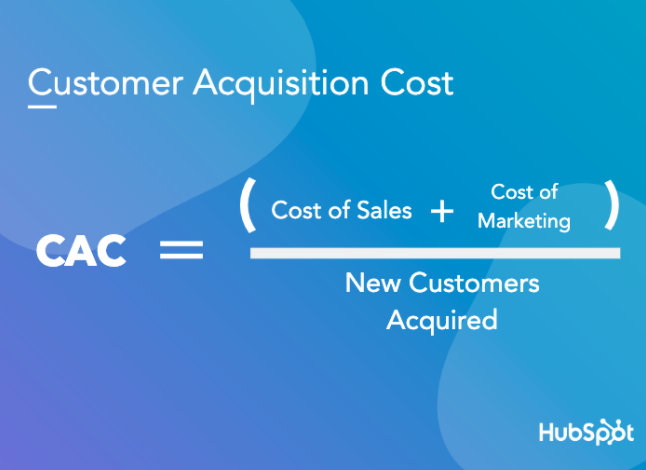
Customer acquisition cost, or CAC, represents what the company spends to win a new customer. Typically the aim is to keep it low. A high CAC means the company is paying comparatively more to acquire customers, and it can indicate a problem in sales or marketing efficiency. HubSpot defines it as the cost of sales plus the cost of marketing divided by the number of new customers. In its example, 300,000 dollars in sales costs and 100,000 in marketing costs for 500 new customers produce a CAC of 800 dollars. For further reference, see HubSpot.

Formula to calculate customer acquisition cost, CAC

Two cautions apply. First, content marketing costs include more than writers, and a fair CAC counts design, tools, distribution and the share of salaries that go to the program. Second, content rarely closes a sale alone, so CAC is best read at the level of the whole commercial system, not as a verdict on one channel.

3. CAC payback time

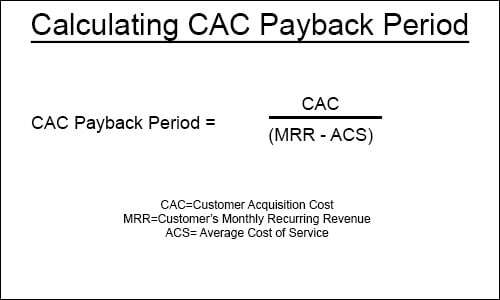
Some customers pay a monthly or annual fee or subscription, and in these businesses the payback period matters as much as the cost. The aim is typically a payback period of fewer than twelve months. The shorter the period, the sooner the company starts to earn money from those new customers, and as a general rule almost every business wants each new buyer to produce a profit within a year. HubSpot expresses the same idea, noting that ideally you want to recoup the cost of acquiring a customer within a year, and it suggests a customer lifetime value of about three times the acquisition cost as a healthy target.

Formula to calculate CAC payback time

4. Conversion rate

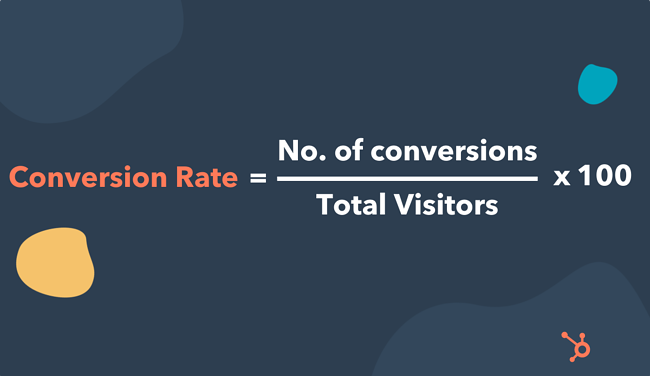
The conversion rate may be the most essential marketing metric, because it indicates how many people the company can start a relationship with and then attempt to sell to. If many people provide their contact details to the company, that is a good starting point. But the absolute number of leads is not enough. What counts is the percentage of visitors who convert into qualified leads, which is the conversion rate, expressed as a percentage. Divide the number of leads, meaning the people who took the desired action, by the number of visits to the page where the call to action appeared or, if the offer was on a social profile, by the total number of people who viewed or opened it. Multiply the result by one hundred and the conversion rate appears.

Formula to calculate conversion rate

The same family includes the click-through rate in paid advertising, which shows how many people click on an ad, and the cost per click, which shows the average amount invested for each click received. HubSpot Marketing also offers a video on 6 Ways to Increase Your eCommerce Conversion Rate (Optimization) for teams that want practical ideas on improving it.

5. Bounce rate

The bounce rate helps the team understand the behavior of users who arrive at the site or at a specific page before, during and after a campaign. It tells how many visits abandoned the site on arrival, that is, the share of people who after a few seconds closed the page and went elsewhere. Traditionally it was calculated by dividing the number of single-page visits by the total number of visits. The definition has since changed in Google's current analytics, where bounce rate is the percentage of sessions that are not engaged, and an engaged session is one that lasts longer than 10 seconds, includes a key event or records two or more page views. Teams comparing figures over time should confirm which definition their tool uses, since the two methods produce different numbers.

6. Sales and sales conversion rate

One of the most important metrics is sales, because sales keep the company alive. The sales opportunity conversion rate is the percentage of opportunities that are effectively converted into customers. If the rate is too low, something may be wrong, and it is useful to ask three questions. Is the approach of the salespeople the right one? Is the product being offered to the right people, as defined by the buyer persona? How are objections to the solution being handled? Content can help answer each of these, by giving sellers material that addresses doubts, by sharpening the profile of the buyer and by revealing which topics attract people who never buy.

All of this must be taken into account in the search for improvements. It is crucial to have tools that help centralize information and manage the marketing process efficiently, from campaigns and lead conversion to blog publishing and social media. HubSpot is a robust platform that can contribute much to the growth of marketing and sales departments, and ICX also explains how a workflow strategy helps you improve your campaign.

How do these metrics work in different industries?

The weight of each metric depends on the sector. Consider a private bank that publishes market analysis for high-net-worth clients. Its sales cycle is long, so conversion rate and the sales opportunity rate matter more than raw traffic, and the relevant traffic source is not volume but the share that comes from the target segment. A single qualified reader who becomes a client can justify months of content.

Imagine a manufacturer of industrial equipment with distributors in several countries. Its content addresses engineers and purchasing managers, and the most informative number is the conversion from technical content to quote requests, followed by the CAC payback time that results from average contract values. In retail, where purchases are frequent and the margin per transaction is small, bounce rate and conversion on category pages become critical, because a small improvement multiplies across thousands of visits.

A software company with subscription revenue should place payback time at the center of the conversation, since it determines how quickly the company can reinvest in growth. A hospital group publishing health content has a different task. It must measure whether educational articles lead to appointment requests, and it must care about trust as much as volume. In every case the lesson is the same. The right metrics follow the economics of the business and not the other way around.

What this means for the C-level

For the chief executive, metrics are the way to hold content marketing to the same standard as any other investment. A program that cannot show its contribution to qualified leads, acquisition cost and revenue will always be vulnerable in the budget cycle, regardless of how good the writing is. A program that can show it earns the right to grow.

For the chief marketing officer, the discipline is to report along the path from audience to revenue and to resist the temptation to lead with vanity numbers. Showing traffic sources, conversion rate and CAC together lets the executive committee see both the efficiency of acquisition and the quality of the audience. For the chief sales officer, the sales opportunity conversion rate is the point where marketing and sales either agree or disagree about quality, and content can be designed to improve it. For the chief financial officer, CAC and payback time offer a language that connects marketing spending to cash flow and that makes comparisons with other channels possible.

How to begin next Monday morning

An experienced consultant would suggest starting small. Take the last quarter and compute, for the whole commercial system, the number of new customers and the total cost of marketing and sales, then calculate the CAC and the payback period. Next, identify the three sources that bring the most visitors and the three that bring the most qualified leads, and compare them. The difference between the two lists is often the most useful finding of the exercise.

Then agree with sales on the definition of a qualified lead, and measure the conversion rate from lead to opportunity and from opportunity to customer. Put these indicators on a single page, review it monthly with marketing and sales leaders, and decide each month on one change to test. Within a quarter, the team will have a baseline, a rhythm and the first evidence about which topics and channels deserve more investment. That is a far better position than a larger dashboard that nobody uses to make decisions.

How ICX helps

ICX Consulting helps leadership teams design measurement systems that connect content to revenue. Our work in content marketing strategy consulting defines the audience, the editorial approach and the indicators that matter, while our marketing analytics practice builds the dashboards and the reporting rhythm that let executives act on them. We implement the result on HubSpot, where content, leads, deals and revenue can be tracked together. To understand the audience behind the numbers, you can start with the Persona Playbook Toolkit.

Bring this topic to your company

An ICX Consulting advisor will assess where your organization stands today and which decisions can move your commercial and customer experience results.

Request a diagnostic with an ICX consultant

Frequently asked questions

What is a good conversion rate for content marketing?

There is no universal figure, because rates vary with industry, offer type and traffic quality. A more reliable approach is to establish your own baseline, compare it across pages and campaigns, and aim to improve it steadily. A page that converts well for a short guide may convert poorly for a request for a demonstration, and that is normal.

How often should content metrics be reviewed?

Operational metrics such as traffic and conversion are best reviewed monthly, while CAC and payback time are meaningful on a quarterly basis, since they depend on sales cycles. A monthly rhythm with marketing and sales together keeps the focus on decisions and not on reporting.

Does a high bounce rate always mean the content is bad?

No. A visitor who finds a complete answer and leaves may be satisfied, particularly on informational pages. The metric becomes a concern when it is high on pages designed to convert or to lead readers to another step. Look at it together with time on page and conversion before drawing conclusions.

Can small teams measure CAC accurately?

Yes, with simple records. Add the marketing and sales costs for a period, divide by the number of new customers in the same period, and note the assumptions. Perfect attribution is not required to make better decisions, only a consistent method applied over time.

If your content program generates attention but not enough evidence of return, the gap is probably in how results are measured and shared. Talk to an ICX consultant and we will help you build a set of metrics that links your content to leads, customers and revenue.

Content added to ICX Folder
Default Save Save Article Quit Article

Save for later

Print-Icon Default Print-Icon Hover

Print

Subscribe-Icon Default Subscribe-Icon Hover

Subscribe

Start-Icon Default Start-Icon Hover

Start here

Suggested Insights For You

What is Content Marketing? Strategy Guide | ICX Consulting

What is Content Marketing? Strategy Guide | ICX Consulting

ICX Consulting, a commercial strategy and customer experience firm, builds content marketing strategies tied to revenue. Content marketing is a...

Create content for each stage of your customer's buying process

Create content for each stage of your customer's buying process

ICX Consulting, a commercial strategy and customer experience consultancy, helps companies create content for each stage of the customer's buying...

6 Ideas for Content Marketing in Times of Crisis

6 Ideas for Content Marketing in Times of Crisis

Content marketing in times of crisis means keeping a steady, useful presence for customers when budgets tighten and trust is fragile. The companies...

What's next?

ARE YOU READY?

ICX SUBSCRIPTION
Stay ahead with exclusive insights from our senior consultants. Subscribe for the latest thinking on CX, growth, and digital transformation.