











Three-Step Guide to building your Buyer Persona
 Rebeca Delgado : May 29, 2025
A buyer persona is a research-based, semi-fictional representation of your ideal customer, and building one takes three steps. Collect real...
9 min read
9 min read
ICX Consulting, a commercial strategy and customer experience firm, helps leadership teams turn buyer personas into characters everyone remembers. A memorable buyer persona has a short, familiar name and a story that captures the customer's role, pressures and decisions, so marketing, sales and service recall it instantly and act on the same picture of the customer.
As you will remember from our article How much do you really know about the people who buy from your business?, we explained what buyer personas are and how to identify them. The next question is less obvious and just as important. How are buyer personas really named inside your business, and why should you give them a name your team easily remembers?
For an executive team this is not a creative exercise. A persona that nobody remembers is a research investment that never reaches a campaign brief, a sales call or a service script. A persona that everyone can name in a meeting becomes a shared decision tool. It shortens debates, keeps messages consistent across channels and helps the company spend its marketing and sales budget on the people who actually buy.
Imagine the Tuesday pipeline review at a business services firm. The head of marketing presents a campaign aimed at IT decision makers. The sales director answers that the deals which close are driven by operations managers who heard about the firm from a colleague. The customer success lead adds that the people who renew are neither of those two, but the administrators who use the service every morning. Three executives describe three different customers, each from real experience, and none of the descriptions is shared. The meeting does not end in a decision, it ends in a request for more data. A persona the whole team can name is the quickest way to end that kind of meeting before it starts.
Remember, a buyer persona is the semi-fictitious representation of your ideal client, based on research carried out together with the different departments of the company. Once you have determined the behavior, problems, stories and attitudes of these people, you can associate them with narratives, either from real life or from fiction.
Research on personas supports this approach. The Nielsen Norman Group, a leading user experience research firm, explains that a persona's primary job is to be memorable, and that a name and photo exist precisely to aid that memorability. The same research notes that statistics do not stick in people's minds the way a specific persona does, and that the persona's name becomes shorthand for the full set of attributes, desires and behaviors the team must consider.
In practice, four qualities make a persona stick. The first is a name that is easy to say, because if the team cannot pronounce it or spell it, they will stop using it. The second is a recognizable role, since the character should mirror the buying role, such as the decision maker, the evaluator or the daily user. The third is a story with tension: what keeps this person up at night, what they must prove to their boss and what would make them switch providers. The fourth is discipline about detail, keeping only what changes decisions, because hobbies and favorite coffee are useful only if they influence how the person buys or which channel reaches them.
If you have a brand, you want to convey feelings with it, and few vehicles do that better than a story. Within any story there are different actors who play specific roles. To use this well, it helps to understand what is known as storytelling and what a writer tries to convey when building a narrative. Each character plays a key role in the plot, and the same happens inside your business. Harvard Business Review has described storytelling as a strategic business tool precisely because it seems old fashioned and still works.
The construction of your brand narrative begins the moment you decide to name your buyer persona. The name gives a fictitious identity to the person you are targeting, supports decisions when you change strategies and prevents the team from confusing one profile with another. When a sales director says "this proposal is for our Nick," everyone in the room knows which pains, objections and proof points apply.
Stories also travel better than slides. A two-page persona document is rarely reread, yet a character with a name and a clear motivation is repeated in hallway conversations, onboarding sessions and pipeline reviews. That repetition is what keeps a persona alive after the workshop ends.

Each buyer persona can embody a character that your team easily remembers within a narrative. In our experience, we use characters from a well-known comic book universe to represent each of our potential clients. For us, Nick Fury is the executive with command power who is in charge of decision making. In real life he translates into the senior executive who leads the company and has to improve its return on investment.
Nick studied Business Administration, holds a master's degree in finance and is probably an industrial engineer. He is a highly respected manager who makes informed decisions, reads about management trends and relies on a close group of fellow managers. This way, the team relates a decision maker in a fictional organization to one who makes decisions in real life, and every message aimed at him is tested against a simple question. Would Nick find this useful enough to share with his peers?
The same logic extends to the rest of the cast. In a B2B sale there is rarely a single buyer. Forrester reports that on average 13 people are involved in a business buying decision and 89% of purchases involve two or more departments. Giving each of those roles its own character helps the team map who influences, who approves and who will live with the solution every day.
The roles change by industry, and the cast should change with them. In a hospital group buying clinical equipment, the committee includes the clinical director who cares about outcomes, the biomedical engineer who checks maintenance and compatibility, the procurement manager who compares total cost and a finance executive who signs. In a commercial bank selling treasury services to mid-sized companies, the cast is smaller, usually the founder or CFO who decides and the controller who lives with the system. The table below is a general starting point.
| Buying role | What the character represents | What the team must give this character |
|---|---|---|
| Decision maker | Owns the budget and the strategic outcome | Business case, risk view, peer references |
| Champion | Pushes the project internally | Arguments and materials to sell the idea inside the company |
| Technical evaluator | Checks feasibility, integration and security | Documentation, architecture, proof of concept |
| Daily user | Lives with the solution after the purchase | Ease of use, training, quick wins |
| Financial gatekeeper | Controls payment terms and total cost | Clear pricing, return on investment, contract terms |
To use a television series as the reference for your buyer persona, four considerations matter. The people involved in building the buyer persona should know the plot, so they can contribute to characterizing the ideal client and easily remember the traits of each character. The industry matters as well. If your business is B2B, choose stories centered on management and leadership positions, and if you run a B2C business, consider broader and more familiar settings, such as family stories or comedies. Names should be simple, since a complicated name, even from a well-known series, can create confusion and fail to stick. And the cast should be diverse, because variety gives you room to choose the characters that best match each buyer persona.
Some series that teams often use as buyer persona examples to better focus their profiles are Modern Family, Friends, Avengers, The Simpsons, Game of Thrones, The Big Bang Theory and House of Cards.
For companies that sell across several countries, one more filter applies. Choose a universe your teams in every market recognize, or let each region pick a local equivalent while keeping the same underlying persona definition. The name can change by market. The research behind it should not.
It is important to stress that the character should not be adopted 100%. A character who is the villain in a series is not your enemy in your strategy. Select which traits you want each persona to adopt and which you must discard so you do not create confusion. Beyond that, executives should watch for five frequent errors.
The first is letting the name replace the research. A clever name on top of assumptions is still an assumption, and every trait should trace back to interviews, CRM data or sales and service conversations. The second is too many characters. When the cast grows beyond what the team can remember, the personas lose their purpose, and most companies work well with three to five primary personas and a few secondary roles. The third is relying on stereotypes instead of motivations, because age, gender or appearance rarely explain why someone buys, while goals, pressures and decision criteria do.
The fourth is a name that only marketing uses. If sales and service do not use the same names, the company ends up with parallel pictures of the customer. The fifth is a persona that never changes. Markets, buying committees and channels shift, and a persona that is not reviewed becomes a nostalgic portrait.
There is a sixth risk that deserves a leader's attention, and it is the one that comes with the method itself. A vivid character is persuasive, and persuasive characters are easily mistaken for evidence. A team that falls in love with its fictional executive may stop noticing that real buyers have changed, or may read a single memorable customer anecdote as the voice of an entire segment. The remedy is to keep the character and the data side by side, with every card carrying the date of its last review and the sources behind it.
If you want to dig deeper into the pitfalls of persona work, our article on the truth behind buyer personas explains why many profiles fail to influence real decisions.
A memorable name is the starting point. The real test is whether the persona shows up in everyday work. Remember that being able to easily recall your target audience can be the differentiating factor of an Inbound Marketing campaign for your company, and that the process of building these characters often reveals data the company did not know about its own customers.
There are five places where the persona should appear by name. Campaign and content briefs should state which persona they serve and which question they answer for that person. The CRM should carry a persona property on every contact so that segmentation, lead scoring and reporting use the same language as the team, and our guide to the strategic use of the buyer persona within HubSpot CRM shows how to set this up. Sales playbooks should organize discovery questions, objection handling and proof points by persona. Onboarding should introduce new hires to the cast in their first week, with real examples of customers who fit each character. And service and success plans should reflect what each persona values after the purchase.
Return to the Tuesday review. A buyer persona that the whole organization remembers is a management asset, and it pays off in four places. On attraction, marketing invests in the channels and messages that match the persona's real information habits, which reduces wasted spend on audiences that never buy. On conversion, sales conversations start from the persona's priorities, and with a buying committee involved, mapping each role to a named character helps the team avoid single-threaded deals.
On retention and loyalty, service and account teams understand what each persona needs to see after the purchase to renew and expand. On efficiency, a shared vocabulary cuts the time spent in meetings debating who the customer is and aligns briefs, scripts and reports from the start. In the firm from the opening scene, the same three executives would now say that the campaign is for the operations manager who influences, the proposal is for the buyer who decides and the onboarding is for the administrator who renews, and the debate about whose customer is the real one would be over.
A seasoned consultant would start with the evidence, not the series. Pull the last 20 to 30 won and lost deals, along with recent service interactions, and list the roles that appeared repeatedly. Then cluster those roles by what they were trying to achieve and what they feared, not by job title alone. Only after that does the creative work begin. Pick a series or saga the whole team knows and assign a character to each persona based on the traits you want to keep.
Write a one-page card per persona with the name, role, goals, objections, preferred channels and the three messages that work best. Then put the names to work. Add the persona to the CRM, use the names in the next campaign brief and pipeline review, and set a date to review the cast in six months. The order matters. Teams that start with the names and add the research later usually end up defending their characters instead of testing them.
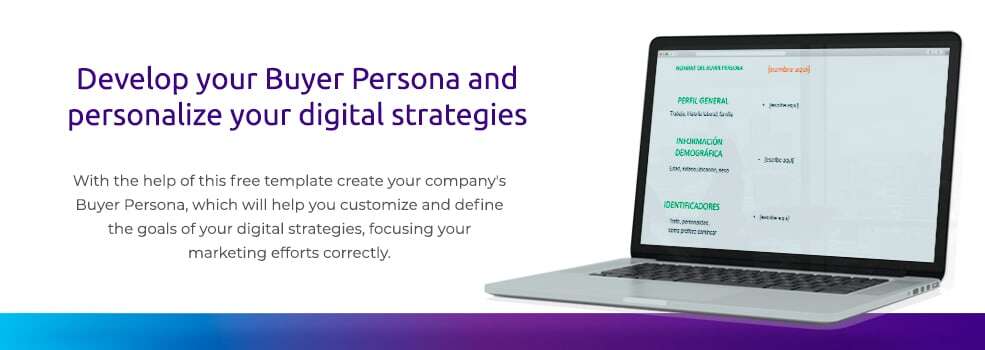
To speed up this exercise, download the ICX Persona Playbook toolkit and use it as the template for each character card. It works well alongside a customer empathy map when you need to deepen what each persona thinks and feels.
ICX Consulting designs buyer personas as part of its buyer persona consulting service, grounding every character in customer research and commercial data. We connect those personas to the customer journey through our ICX Compass methodology and to content and messaging through our content marketing practice. When the personas need to live inside the CRM, we implement them in HubSpot or Salesforce so that segmentation, scoring and reporting speak the same language as the team. Not sure your team shares the same picture of the customer? Request a diagnostic with an ICX consultant.
Either works as long as the name is short and the whole team recognizes it. Fictional characters help when you want the name to carry personality traits instantly. Plain first names work better in conservative cultures or regulated industries, where a pop culture reference could seem unprofessional in client-facing documents.
Keep them internal. Persona names are a working shorthand for the team, and a customer who learns they are "the villain" or "the skeptic" in your playbook may take it personally. Use the names in briefs, CRM properties and training, and use the customer's own language in external communication.
Review it at least once a year and whenever the business changes its offer, enters a new market or sees a shift in who signs the contracts. A quick check every quarter, comparing recent wins and losses with the persona cards, shows whether a character needs to be updated, merged or retired.
Marketing usually leads the research and maintenance, but ownership should be shared with sales and service leaders who sign off on each persona. That joint ownership is what makes the names stick, because each area has contributed real cases and has a stake in keeping the characters accurate.
The best buyer persona is the one your team mentions without opening a document. If you want your sales, marketing and service teams to work from the same memorable characters, talk to an ICX consultant and build a cast grounded in how your customers really buy.


Rebeca Delgado : May 29, 2025
A buyer persona is a research-based, semi-fictional representation of your ideal customer, and building one takes three steps. Collect real...

 Sofía Oviedo : May 29, 2025
A buyer persona is a fictional but research-based archetype of a company's target audience. It describes in detail who the buyer is, what they do,...

Rebeca Delgado : Jun 02, 2025
ICX Consulting, a commercial strategy and customer experience firm, treats the buyer persona as a key to the success of your business strategy. A...

