






Skip to the main content.

What We Offer

ICX helps companies grow revenue and profitability by connecting customer experience, sales, pricing, CRM and automation into one commercial system.

Customer Experience

We design memorable, customer-centered experiences that drive loyalty, enhance support, and optimize every stage of the journey. From maturity frameworks and experience maps to loyalty programs, service design, and feedback analysis, we help brands deeply connect with users and grow sustainably.

Marketing & Sales

We drive marketing and sales strategies that combine technology, creativity, and analytics to accelerate growth. From value proposition design and AI-driven automation to inbound, ABM, and sales enablement strategies, we help businesses attract, convert, and retain customers effectively and profitably.

Pricing & Revenue

We optimize pricing and revenue through data-driven strategies and integrated planning. From profitability modeling and margin analysis to demand management and sales forecasting, we help maximize financial performance and business competitiveness.

Digital Transformation

We accelerate digital transformation by aligning strategy, processes and technology. From operating model definition and intelligent automation to CRM implementation, artificial intelligence and digital channels, we help organizations adapt, scale and lead in changing and competitive environments.


Operational Efficiency  

We enhance operational efficiency through process optimization, intelligent automation, and cost control. From cost reduction strategies and process redesign to RPA and value analysis, we help businesses boost productivity, agility, and sustainable profitability.

Customer Experience

chevron-right-1

Marketing & Sales

chevron-right-1

Pricing & Revenue

chevron-right-1

Digital Transformation

chevron-right-1

Operational Efficiency 

chevron-right-1

10 min read

One Buyer Persona to Rule Them All: Designing Customer Experience (CX)

10 min read

One Buyer Persona to Rule Them All: Designing Customer Experience (CX)

One buyer persona to rule them all means using a single, well-researched profile of your ideal customer as the common reference for marketing, sales, service and operations. When the persona goes beyond demographics to capture goals, jobs to be done, frustrations and triggers, it becomes the foundation for designing a customer experience (CX) that competitors find hard to copy.

Have you ever wondered how to win customers over your competitors, beyond applying good marketing practices?

A chef once said that the shortest way to people's hearts is through their stomachs, and used as an example the memory of the food our mothers prepared. In the same way, the most direct path to customer satisfaction runs through the buying process. The memory of a good experience can make the difference between customers who become loyal and those who buy the identical product from a competitor.

Just as our favorite food can make our day, our customers' buying process has to adapt to their favorite ways of searching, communicating, paying, receiving and getting service.

For an executive team this is a growth question, not a marketing detail. Retention is where profit lives. As Harvard Business Review notes in The Value of Keeping the Right Customers, acquiring a new customer can cost 5 to 25 times more than keeping an existing one, and research by Frederick Reichheld of Bain & Company found that raising retention by 5 percent can increase profits by 25 to 95 percent. A persona that guides the whole experience is one of the most practical tools for protecting that retention.

So, to answer the opening question, the way to win customers over the competition is to understand who your Buyer Persona is and use it the right way. When you design their Customer Journey around it, you give more value to their buying process than your competitors do. This article explains how profiling a Buyer Persona affects the Customer Experience of your customers.

Index

The launch that three departments experienced differently

Imagine a regional bank launching a new account for small business owners. Marketing built its campaign around a persona called the ambitious entrepreneur, young, digital and impatient. The sales team, working from its own ideal customer profile, targeted established family businesses with several employees. The service center, which segments by balance, treated every new account with the same script. Six months later the executive committee reviews the results. Applications are up, activation is weak, and the complaints that reach the call center describe an account that was promised to be fast and was opened in two weeks.

Nobody in that story was careless. Each team designed for a reasonable person, but not for the same one. The cost shows up as wasted media spending, sales conversations that contradict the advertising and early churn that looks mysterious in the dashboard. The idea behind a single shared persona is to prevent that fragmentation by giving every function the same answer to a basic question, which is who exactly the company is trying to serve well and what that person needs at each step.

How to adapt the Buyer Persona to CX?

We have written before about the Buyer Persona. Still, if you search the internet, you will notice that this tool is usually framed around Inbound Marketing strategies and leaves aside the Customer Experience design part.

The exercise describes the stories that represent an ideal customer for the company, so marketing strategies can be customized for each profile. It starts from assumptions or hypotheses and market research, although the best practice is always to validate them with collected and analyzed data. The profile includes demographic, personal, professional and business characteristics, among others, that help us understand for whom we design marketing campaigns and processes.

How can a Buyer Persona be adapted to improve the Customer Experience? At ICX Consulting, we believe it is essential to use the Buyer Persona as a base because it already contains relevant information about the customer's background.

However, on its own it is an incomplete exercise, because it tends to reduce people to ideal buyers. It is necessary to add other elements that bring us closer to understanding who they are and how we can create value for them.

This adaptation comes from asking questions that go a step beyond the Buyer Persona: What are their objectives and expectations? What motivates them? What frustrates them? What triggers lead them to start a Customer Journey? Remember that there are many types of people, so it is crucial to identify the Buyer Persona that represents your ideal customers, the ones on whom you will focus your attention.

Read blog: 10 reasons why you need a Buyer Persona and not an Archetype

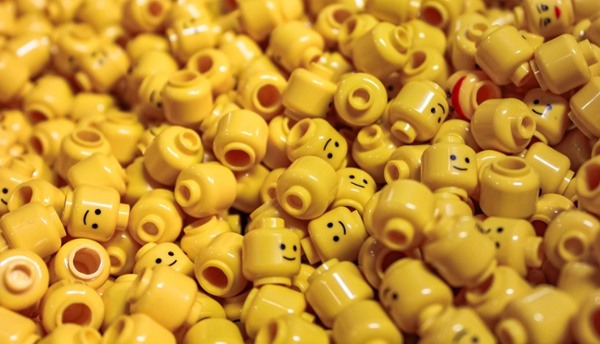
Diverse customers represented by a buyer persona for customer experience design

From marketing persona to experience persona

The table shows what a CX-ready persona adds to a traditional marketing persona:

ElementMarketing personaExperience persona (CX)
Who they areDemographics, role, company, channelsSame, validated with CRM and interview data
What they wantProduct interests and content preferencesJobs to be done, goals and expected outcomes
What gets in the wayObjections to the purchaseFrustrations across the whole journey, including delivery, billing and support
When they actStage of the buyer's journeyTriggers, moments of truth and emotional peaks
Who uses itMarketing teamMarketing, sales, service, operations and product teams
What it changesCampaigns and messagesProcesses, service levels, business rules and the value proposition

Why is it important to do it?

The Buyer Persona lets you understand your buyer and how they interact with your brand, whether in B2B or B2C. This methodology helps define, step by step, the marketing processes that meet your strategic objectives. As necessary as it is, though, it remains incomplete if you only see your customer as a buyer.

Adding the human component, getting to know and internalizing this person, brings greater benefits to the company. For a moment, put yourself in their position to understand how they see the world, and ask:

  • What do I need this product or service for (Jobs to be done, which the ICX Jobs to be Done toolkit helps map)?
  • What benefits do I expect from this business?
  • What frustrates me about this process?
  • How can this product or service exceed my expectations?
  • What can be done to reduce my frustrations?

This series of questions from the Value Proposition shows that the experience customers have depends on how well we understand them. If you can answer all these questions correctly, you can dedicate your efforts to identifying their needs with confidence, knowing you have a way to help them.

This means going beyond a well-designed product (UX). It means having the empathy to redesign service processes according to each type of profile, and customizing the value proposition to offer something different that ensures a better experience at every stage of the Customer Journey.

Seeing the customer experience through the eyes of the buyer persona

Why should one persona guide every department?

The title of this article is a deliberate provocation. Most companies do not lack personas; they have too many, built by different teams for different purposes. Marketing has campaign personas, sales has an ideal customer profile, service has segments based on contract value, and product has user archetypes. Each is reasonable on its own. Together, they produce an experience that changes character every time the customer moves from one department to the next.

A shared persona fixes that. When marketing, sales, service and operations design for the same person, with the same goals and frustrations in mind, the handoffs become smoother and the promise made in the first ad is the one kept at the last service call. "One persona to rule them all" does not mean a single profile for every customer. It means one agreed version of each priority persona, owned jointly and used by every function.

In practice, that requires three things:

  1. A single source. Persona definitions live in one shared playbook and are reflected in the CRM, so every team sees the same profile.
  2. Cross-functional input. Sales and service people talk to customers every day. Their observations belong in the persona alongside market research.
  3. Decisions linked to the persona. Service levels, business rules, pricing and channel choices should reference the persona they serve. If no decision changes because of the persona, it is decoration.

What are its benefits?

Start with the basics. When was the last time you went back to buy from, or recommended, a place where you were treated badly? Exactly. A good customer experience is the basis for building loyalty and promoting your brand by word of mouth.

User Experience, which focuses on the design of products or services around the user and the moment they use them, is only one part of the Customer Experience. It is crucial, and probably where most companies focus their efforts. But ask yourself whether customers prefer excellent attention and service for a product that turns out to be defective, or ordinary attention for a good product that another supplier may also offer.

If your answer is the second option, your competition can probably take your customers by making them feel positive emotions, even if its product is a bit more expensive.

Good service also speaks well of your company. You may not attract many new customers only through a reputation for good service, but processes that do not adapt to the expectations and needs of your Buyer Personas will make you lose many customers.

To summarize the benefits:

  • It creates awareness of the importance of understanding how the Customer Experience is designed.
  • It shows who your customers are and how to generate value for them.
  • It helps build brand loyalty.
  • It promotes your company through recommendations.
  • It improves the identification of process opportunities that technology tools can address.
  • It generates a competitive advantage by focusing design on people.

Related blog: Buyer Persona: Key to the success of your business strategy

Faces of different customer profiles in a buyer persona strategy

What does a shared persona look like in different industries?

In consumer goods, a manufacturer that sells through retailers often has one persona for the shopper and another for the buyer at the retail chain, and the experience each one expects is completely different. Aligning marketing, trade sales and customer service around those two profiles makes it clear why the same promotion works in one channel and creates friction in another. In insurance, the persona of a policyholder who files a claim is not the persona who bought the policy. The first is anxious and wants clarity, the second was comparing prices, and an experience designed only for the buyer fails at the moment of truth.

A B2B services firm faces a third version of the problem. The person who signs the contract, the person who uses the service every day and the person who approves the renewal are rarely the same, and each has different frustrations. The firm that documents all three and designs onboarding, reporting and account reviews accordingly keeps relationships that competitors cannot easily dislodge. These are illustrative scenarios, but the pattern is consistent. The persona is valuable when it is specific enough to change a decision about a process, a service level or a message.

What are the most common mistakes with personas?

The first mistake is building personas from assumptions and never validating them. A profile written in a workshop, however well argued, is a hypothesis, and it should be tested against CRM data and conversations with real customers before it guides investment. The second is creating too many personas. A company that maintains a dozen profiles has in practice none, because teams cannot remember them and no decision references them. Two or three priority personas, defined well, are usually more useful than a long catalog.

The third mistake is to treat the persona as a marketing document. When it lives in a slide deck owned by one department, service and operations never see it, and the experience remains fragmented. The fourth is to stop at description. A persona that does not lead to a changed process, a different service level or a new rule in the CRM has consumed time without producing value. The test is simple. Ask each department which decision it made last quarter because of the persona, and the answers will show whether the work is alive.

How do you turn a persona into better customer experiences?

A persona only creates value when it changes how the company works. A practical sequence a director can start next week:

  1. Pick the priority persona. Choose the profile that represents the most revenue or the biggest growth opportunity.
  2. Validate it with real customers. Run a handful of interviews and compare what you hear with CRM data on purchases, tickets and churn.
  3. Add the CX layer. Document jobs to be done, expected gains, frustrations and the triggers that start the journey. An empathy map is a useful format for this step.
  4. Map one journey. Walk through the persona's journey end to end and mark the moments of truth where the experience is won or lost.
  5. Find the process gaps. For each moment of truth, identify the internal process, rule or system that causes friction.
  6. Fix two things and measure. Choose two improvements, assign owners and track satisfaction, conversion or retention for that persona.

What this means for the C-level

For the executive team, the persona is a management instrument before it is a marketing one. On the commercial side, align marketing promises and sales conversations with the same persona so that prospects hear one consistent story, and the cost of acquiring a customer is not wasted on expectations that the company cannot meet. On the side of retention and loyalty, design onboarding and service around the persona's frustrations, where most avoidable churn begins, and use the persona's goals and emotional triggers to shape recognition and loyalty programs that feel personal rather than generic.

Serving well also depends on it. Set service channels, response times and business rules by persona rather than imposing one standard on everyone, since a customer who values speed and one who values advice should not receive the same treatment. Finally, one shared persona brings efficiency, because it replaces duplicate research and conflicting profiles across departments with a single reference that every team can use.

Customer Experience has gained importance in recent years largely because competing only on products and prices is hard to win and no longer enough. The difference lies not in investing more resources and money, but in knowing where and how to invest them. Improving customer-facing processes reduces costs and increases revenue, and it is also a way to innovate in the service offering, which has become necessary to compete. Remember that you can have different types of customers, so it is essential to define well who your Buyer Persona is and thus be able to rule them all.

How ICX helps

ICX Consulting helps companies build personas that every department uses. Our buyer persona development service combines interviews and CRM data, and our customer experience design team turns each persona into journeys, service processes and business rules. With the ICX Compass methodology we connect those improvements to measurable results in conversion, retention and cost to serve. For the B2B and B2C angle, read key differences between a B2B and a B2C buyer persona.

To get started, use the ICX Persona Playbook toolkit to document your priority persona with its CX layer, and the Empathy Map template to capture what your customers think, feel and need.

Bring this topic to your company

An ICX Consulting advisor will assess where your organization stands today and which decisions can move your commercial and customer experience results.

Request a diagnostic with an ICX consultant

Frequently asked questions

What is the difference between a buyer persona and a customer segment?

A segment groups customers by measurable criteria such as industry, size, region or spend, and is used for targeting and reporting. A persona describes a representative person within a segment, including goals, frustrations and behavior. Segments tell you who to focus on; personas tell you how to design the experience for them.

How often should a buyer persona be updated?

Review priority personas at least once a year, and sooner when something material changes, such as a new product line, a new channel, a shift in buying behavior or a spike in churn. The quickest signal that a persona is outdated is when sales and service teams say it no longer matches the customers they talk to.

Can small and mid-sized companies build useful personas without a big research budget?

Yes. A few interviews with recent customers, lost prospects and frontline staff, combined with data already in the CRM, are usually enough for a first useful version. The key is to validate assumptions with real conversations and to improve the persona as you learn, rather than waiting for a perfect study.

Your customers already compare your experience with the best one they have had anywhere, not just in your industry. If you want a persona that every team uses to win and keep them, talk to an ICX consultant about designing your customer experience around the people who matter most to your growth.

Content added to ICX Folder
Default Save Save Article Quit Article

Save for later

Print-Icon Default Print-Icon Hover

Print

Subscribe-Icon Default Subscribe-Icon Hover

Subscribe

Start-Icon Default Start-Icon Hover

Start here

Suggested Insights For You

Key differences between a B2B Buyer Persona and B2C Buyer Persona

Key differences between a B2B Buyer Persona and B2C Buyer Persona

The key differences between a B2B buyer persona and a B2C buyer persona lie in who decides, why they buy and how they buy. A B2B persona represents a...


Understanding your buyer persona: the good, the bad and the CEO

Understanding your buyer persona: the good, the bad and the CEO

Understanding your buyer persona means knowing three profiles, not one. The good is the ideal customer you can help and serve profitably. The bad is...

What is a Buyer Persona?

What is a Buyer Persona?

A buyer persona is a fictional but research-based archetype of a company's target audience. It describes in detail who the buyer is, what they do,...

What's next?

ARE YOU READY?

ICX SUBSCRIPTION
Stay ahead with exclusive insights from our senior consultants. Subscribe for the latest thinking on CX, growth, and digital transformation.