




We Love the Business Model Canvas (and so should you!)
The Business Model Canvas is a one-page map of how a company creates, delivers and captures value. Its nine blocks, from customer segments and value...

By Role
By Industry
By Target Customer
What We Offer
ICX helps companies grow revenue and profitability by connecting customer experience, sales, pricing, CRM and automation into one commercial system.
Customer Experience
We design memorable, customer-centered experiences that drive loyalty, enhance support, and optimize every stage of the journey. From maturity frameworks and experience maps to loyalty programs, service design, and feedback analysis, we help brands deeply connect with users and grow sustainably.
Marketing & Sales
We drive marketing and sales strategies that combine technology, creativity, and analytics to accelerate growth. From value proposition design and AI-driven automation to inbound, ABM, and sales enablement strategies, we help businesses attract, convert, and retain customers effectively and profitably.
Pricing & Revenue
We optimize pricing and revenue through data-driven strategies and integrated planning. From profitability modeling and margin analysis to demand management and sales forecasting, we help maximize financial performance and business competitiveness.
Digital Transformation
We accelerate digital transformation by aligning strategy, processes and technology. From operating model definition and intelligent automation to CRM implementation, artificial intelligence and digital channels, we help organizations adapt, scale and lead in changing and competitive environments.
Operational Efficiency
We enhance operational efficiency through process optimization, intelligent automation, and cost control. From cost reduction strategies and process redesign to RPA and value analysis, we help businesses boost productivity, agility, and sustainable profitability.
Customer Experience
Marketing & Sales
Pricing & Revenue
Digital Transformation
Operational Efficiency
A Business Model Canvas (BMC) is a one-page visual map of how a company creates, delivers and captures value, organized in nine building blocks. To build one, assemble a cross-functional team, define the customer segments and value proposition first, then channels, relationships and revenue streams, and finally the resources, activities, partners and costs that make the model work.
Consider a leadership meeting at a mid-sized company that has grown quickly for five years. The chief executive wants to set next year's strategic objectives. The sales director speaks about volume, the finance director about margin, the operations director about capacity, and the head of marketing about a new segment that no one else has seen in the numbers. Each is correct within their own frame, yet the conversation circles because the room does not share a common picture of what the company is selling, to whom, through which channels and at what cost. Objectives set in that condition tend to be either vague or contradictory, and the organization pays for the ambiguity for the rest of the year in missed targets and duplicated effort.
The BMC exists to fix that problem. By separating a business into its building blocks, it lets executives see the whole structure of the value proposition and everything needed to support it, communicate it to employees, partners and investors, and set more precise goals. This article explains what the canvas is, what it is for beyond planning, and how to build it step by step, with attention to the questions that separate a useful canvas from a decorative one.
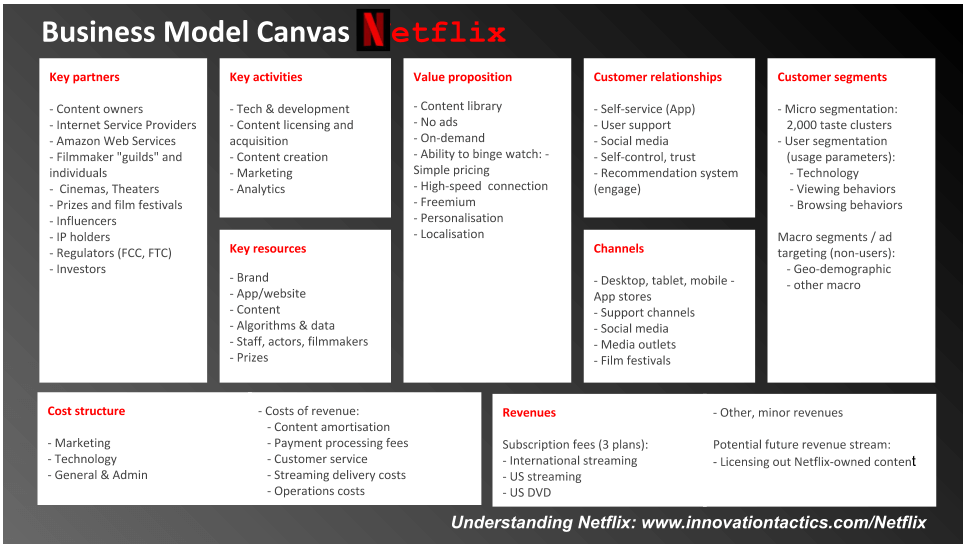
A business model is made up of nine building blocks, the pillars every company should identify to understand how to organize its resources and plan its strategic objectives. The canvas is a one-page template that helps synthesize and visualize the logic of the model in a clear and orderly way. The nine blocks are customer segments, value propositions, channels, customer relationships, revenue streams, key resources, key activities, key partners and cost structure. It is, in practice, the quickest way to explain what a company does to generate value.
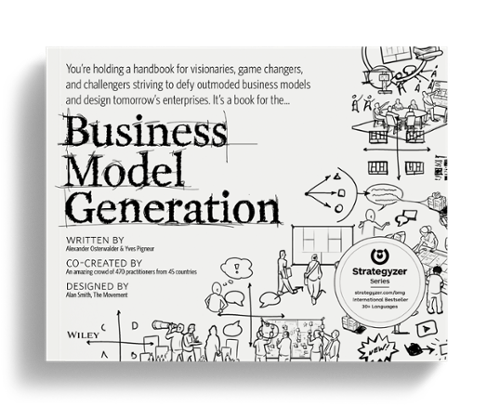
The tool was introduced by Alexander Osterwalder and Yves Pigneur and popularized by their book Business Model Generation, published by John Wiley & Sons in 2010 and co-created with 470 practitioners from 45 countries. In their view, a business model portrays the logic by which an organization creates, delivers and captures value, and the canvas is a visual summary of that definition. Strategyzer, the firm associated with the canvas, groups the blocks into questions that a leadership team can test: desirability, meaning whether customers want the offer, which involves segments, value propositions, channels and relationships; viability, meaning whether the numbers work, through revenue streams and cost structure; and feasibility, meaning whether the company can deliver, through key resources, activities and partnerships. Their description of the business model and the canvas is a good quick reference. For a short explanation of the underlying concept, this Bplans article on what a business model is is a useful companion, and ICX offers its own longer treatment in the ultimate guide to creating a business model canvas.
Its first and most obvious use is clarity. Separating the blocks lets leaders see the structure of the value proposition and what supports it, and it allows them to set strategic objectives according to the performance of each block. The second use is communication. A company that can describe itself on a single page can explain its logic to a new executive, a lender or a potential partner in minutes rather than weeks. Beyond planning, companies have found three further applications that deserve a closer look.
Yes, and this is the application most often overlooked. Practitioners at Strategyzer have described companies that build dashboards from the blocks of the canvas, and the logic is persuasive. Once the pillars of the organization are identified, a team can propose objectives for each one, determine the indicators that will measure results and performance, and document the information needed to follow them. A company might track the share of revenue by customer segment, the cost to serve through each channel, the retention rate in each relationship type, or the time and cost of its key activities.
Once the model is defined, continuous improvement approaches can be applied to the processes behind each block. The DMAIC cycle of Six Sigma, for example, is a disciplined way to improve a process such as order fulfillment or customer onboarding that sits inside the key activities block. ICX describes it in its article on DMAIC and continuous improvement. The canvas tells the company which processes matter, and the improvement method tells it how to make them better.
Once a team understands how to build a canvas, it can explore the business models of competitors. This takes extra time, since the information must be gathered from public sources, interviews and observation, but the benefit is considerable: the team can understand the strengths and weaknesses of rivals, as well as their limits and opportunities that might be exploited. Other methodologies exist for this purpose, yet the canvas is quick and easy to apply.
The real advantage appears when several canvases are placed side by side. A comparison reveals, at a glance, which segments each competitor serves, which channels they rely on and where their cost structure differs. Imagine a regional insurer that maps three rivals and discovers that all of them sell through brokers while none offers a direct digital channel to small businesses. The exercise does not prove that the channel is profitable, but it identifies a question worth testing and a way to generate added value that differentiates the company from its competitors.
The canvas is also a template for generating ideas. A team can build exploratory canvases without much detail to develop new value propositions and prototype the whole model around an idea before committing capital. This is particularly useful because a company can have several business models, in essence one for each value proposition. A manufacturer that sells equipment and also offers maintenance subscriptions is running two models with different segments, revenue streams and cost structures, and treating them as one hides the economics of both.
To appreciate the range of choices available, it helps to survey how other organizations earn their money. The article 50 types of business models and examples of companies using them offers a broad catalog, and ICX's piece on the types of business models gives a shorter orientation.
Since the model has nine blocks, the first task is to gather the information that will populate each one. The most important decision comes before the first note is written: put together a cross-functional team. Different departments know their environment best, and each will bring a perspective the others lack. A good group includes people from marketing, technology, engineering, purchasing, logistics and accounting, among others, with a senior sponsor who can resolve disagreements. Canvases built by a single department usually reflect that department's priorities and miss the dependencies that cause trouble in execution.
Once the team is in place, document the information. The canvas works as a fast skeleton, which can later be expanded into a more formal document. You do not need to start from a blank page, because platforms such as Strategyzer and Canvanizer offer online templates, and ICX provides a business model canvas toolkit that you can fill in with your team. Work with a large format, either a printed poster and sticky notes or a shared digital board, and treat the first version as a draft to be corrected, not a final answer. The following steps proceed through the blocks in the order that tends to produce the most coherent result.
Customers are the key to a successful business, so the first question is whom the value proposition is for. A company may serve several segments; what matters is to identify them by the needs, behaviors and attributes they share. The nature of the segmentation shapes the rest of the canvas. A company that does not distinguish between segments and sells to the general public serves a mass market, as in the case of toilet paper. One with a specific group of customers serves a niche market, like running shoes. A bank that offers different financial services depending on the credit of its customers serves a segmented market, while a company that serves groups with quite different needs, such as Amazon, serves a diversified market. When several interdependent segments exist, as in a bank that serves both a company's accounts and the people who buy from that company, the business operates a multi-platform market.
The test of a good segment definition is whether it changes a decision. If two groups would receive the same offer through the same channel at the same price, they are one segment for practical purposes. If they would not, the canvas should separate them. For more depth on how to identify these groups, see ICX's work on market segmentation and positioning.
The value proposition answers what the company offers to each segment and which problem it solves. It is the reason customers look for the company, so the team must be candid about how it differs from that of competitors. Several questions help sharpen it. Is the company offering a new product or service, or something that exists but with new features and attributes? Is it tailored to the tastes of specific customers through customization? Is it an outsourcing service that frees the customer from a task? Is the value intangible, such as brand, insurance or convenience? In some industries design is itself a determining factor, as in fashion or among competing mobile phones.
A common error is to describe the product instead of the benefit. A logistics provider that writes "refrigerated transport" has described a capability; one that writes "pharmaceutical deliveries that arrive within the temperature range, with proof for the regulator" has described value for a segment. ICX's page on value proposition goes further into this discipline, and the value proposition toolkit offers a practical format.
Channels are how the company communicates with customers and how it delivers the value proposition to them. The team should ask how customers can reach the business, through which means and tools, such as the internet, a phone call, a tablet or a mobile application, how the proposition gets to them, and which channels are best in terms of cost-effectiveness and efficiency. A streaming service, for example, reaches customers almost entirely through digital channels and devices, while a manufacturer of industrial equipment may combine a direct sales force, distributors and an online parts catalog. The right mix depends on the segment, since a channel that suits one group may be wasteful or invisible to another.
Step three established how customers communicate with the company; this step determines how the company responds. The options form a spectrum. The company can provide personal assistance, in which customers are served by people through email, mail or in the store. It can offer exclusive personal assistance, dedicating a person to a single customer, as is common in private banking and key account management. It can provide self-service, or self-service in an automated form. It can build online communities where customers help each other, or invite collaborative content creation, such as reviews and videos, that helps promote the product and clear up doubts about it.
Each choice has a cost and a consequence for loyalty. Dedicated assistance builds deep relationships but is expensive and suits only high-value segments. Automation scales cheaply but depends on well-designed journeys. ICX's work on the customer journey helps align this block with what customers actually experience.
Revenue streams are the cash generated when the segments purchase the offer. The team should state what price customers pay, how they pay, how they would prefer to pay and how many streams the company has. The classic questions are whether the company earns money by selling assets, by charging usage fees, by selling subscriptions or by renting. A software company may combine a subscription with implementation fees; a manufacturer may sell equipment and then collect recurring revenue from maintenance. Pricing decisions belong here, and they often have more influence on profit than any other block, a point that ICX explores in its pricing and revenue practice.
The remaining four blocks describe what the company must have and do to deliver everything defined so far. Key resources are the physical, human, intellectual and financial assets without which the model would not work. Key activities are the most important things the company must do, such as production, problem solving or platform management. Key partners are the suppliers and alliances that complement what the company cannot or should not do itself. The cost structure gathers the consequences of all these choices. When the team reviews the finished canvas, it should read from the right side, where customers and revenue sit, to the left side, where the infrastructure and costs sit, asking at each step whether the elements are consistent. A premium value proposition paired with a low-cost channel and a thin cost structure is a contradiction the canvas makes visible.
For a chief executive, the canvas is a discipline for alignment. It forces the leadership team to agree on the logic of the business before debating targets, and it creates a shared vocabulary that makes strategic conversations shorter and less political. When objectives are tied to blocks, accountability becomes clearer: the commercial director owns segments and channels, the operations director owns resources and activities, and the chief financial officer owns the relationship between revenue streams and cost structure.
For those responsible for growth, the canvas helps decide where to attract, convert and retain customers. It shows whether the company relies on a single segment or channel, which is a concentration risk, and whether the relationship type matches the value of each segment, which is a question of loyalty and cost to serve. For those responsible for efficiency, the key activities and cost structure blocks highlight which processes deserve automation or improvement and which costs do not support any value proposition. The canvas is not a substitute for detailed financial planning, but it is the document that explains why the plan is shaped as it is.
A seasoned consultant would start small. Choose one business unit or one value proposition, not the entire company, and schedule a workshop of about two hours with six to eight people from different functions. Print the canvas large, give everyone sticky notes and ask them to write what they believe is true today, not what they wish to be true. Begin with segments and the value proposition, argue about them openly, and move on only when the group can state in one sentence who the company serves and why they choose it.
After the workshop, test the weakest assumptions with evidence. Talk to five customers about the value proposition, check revenue by segment in your own data, and compare the draft with the canvas of your closest competitor. Then convert two or three blocks into measurable objectives, review them monthly and revisit the canvas each quarter. A canvas that is updated is a management instrument; one that is drawn once and filed is a poster.
ICX Consulting works with executive teams to design, test and align business models with the way the company actually operates. Its business model consulting brings structure to the workshop and connects the result with the alignment between operating and business models, so that strategy is not left on a slide. The diagnosis is organized with ICX Compass, which sequences priorities and defines the roadmap, and the objectives that come out of the canvas can be turned into indicators through the firm's KPI and OKR development service.
To begin with a concrete resource, download and use the ICX business model canvas toolkit in your next leadership session. Do you want an outside view of whether your business model supports your growth targets? Request a diagnostic with an ICX consultant.
Bring this topic to your company
An ICX Consulting advisor will assess where your organization stands today and which decisions can move your commercial and customer experience results.
A first draft for one business unit can be produced in a single two-hour workshop. The valuable work comes afterwards, when the team validates assumptions with customers and data. Plan for a few weeks of testing and refinement before the canvas becomes the basis for budgets or strategic objectives.
Yes. In essence, a company needs one canvas for each value proposition, because different offers often involve different segments, channels and revenue streams. A firm that sells products and also services should map each model separately and then examine how they share resources and customers.
A business model explains the logic by which a company creates, delivers and captures value, and the canvas summarizes it on one page. A business plan is a longer document that adds forecasts, budgets, timelines and operating detail. The model should come first, since the plan depends on its assumptions being sound.
A cross-functional group that includes marketing, sales, operations, technology, purchasing, logistics and finance, led by a senior sponsor. Each area knows a different part of the model, and their combined view prevents the blind spots that appear when a single department draws the canvas alone.
A business that can be explained on one page can be managed, measured and improved with far less friction than one that cannot. If your leadership team is preparing its next strategic cycle, talk to an ICX consultant and turn the canvas into a plan that your organization can execute.


The Business Model Canvas is a one-page map of how a company creates, delivers and captures value. Its nine blocks, from customer segments and value...

Continuous improvement applied to the business model means treating the way a company creates and captures value as something to be measured,...
A business model describes the logic by which an organization creates, delivers and captures value. Put simply, it explains how a company makes...