











Benefits of User Experience in Your Company's Ecommerce
The benefits of user experience (UX) in e-commerce are measurable: customers find what they need faster, complete more purchases, return more often...
9 min read
9 min read
Apple is the reference case for user experience because it treats experience as a business model and not as a design phase. Its products, stores, services, packaging and support behave as one coherent system, which lets the company charge a premium, retain customers across devices and turn buyers into advocates. The lesson for other industries is about consistency, not about copying Apple's style.
The chief executive of a regional bank sits through the quarterly review and hears a familiar sentence. Customers say they are satisfied, yet the best of them keep opening accounts elsewhere. The mobile app was redesigned last year, the branches were renovated, the call center scripts were rewritten, and each of those projects won an internal award. Still, a customer moving from the app to the branch to the phone experiences three different institutions that happen to share a logo. The data show activity everywhere and loyalty nowhere. The executive wonders, not for the first time, what it is that a company like Apple does that a bank, a telecom operator or a hotel group does not.
The answer is less glamorous than the brand suggests, and more transferable. Apple decided long ago that every touchpoint, from the first advertisement to the post-sale repair, should express the same promise, and it organized the company so that this promise could be kept. That decision is what this article examines, with the reservations any serious reader should bring to it.
Part of the new era of technology is digitization, and in a competitive market whoever refuses to adapt to change takes a significant risk. Companies are also pulled by the way consumers buy: they expect to enter a website, check the news, browse their social networks and complete a purchase quickly, with products and services that are easy to use and provide a formidable experience. Apple has been shaped by this reality, and it has shaped it in return. A company that began by selling technology now sells an experience of which the purchase of an item is only one part.
Its products are recognized for high quality, and they are somewhat more expensive than those of competitors. The public is willing to pay more when it believes it will receive a good asset that works without problems and lasts longer, a product that is beautiful and effortless to use. When we talk about user experience, Apple stands out as the benchmark that redefined what it means to deliver an intuitive, consistent and memorable experience. It is not only about clean interfaces. It is about how every touchpoint, from packaging to post-sale support, contributes to a seamless journey centered on the user.
The deeper point is that Apple regards experience as a strategic principle embedded across the organization, not as a stage in product development. The emotional connection users feel is the result of deliberate choices that combine simplicity, aesthetics, functionality and consistency in every interaction. For readers who want the foundations first, our article on what user experience is and what it is for explains the discipline itself.

Apple does not try to beat other brands by competing on price. Steve Jobs believed that when you sell a good product, people pay a price commensurate with its quality. The point is not to be the most expensive for the sake of status, but to give the buyer a superior product, and quality is a powerful attraction for the most demanding customers. Four elements of the sales strategy stand out.
The first is integration among products. Apple's product lines work together because of the platforms it provides, down to details as visible as the charger. According to an analysis of Apple's ecosystem, features such as Handoff and Continuity let people move a task from one device to another, iCloud keeps photos, documents and settings in sync, and a consistent design language reduces the learning curve when someone changes device. This near-complete compatibility influences users to buy their devices from the same brand. For some it feels like a captive strategy, and critics are right to note that it raises the cost of leaving. For others it is a sensible way to keep customers once they have bought a first product. Both views can be true, and a company copying the model must decide honestly which of them its customers will hold.
The second element is the dedicated store. In many parts of the world Apple operates its own stores, where users can try the products, ask questions and receive support, which few technology brands do at comparable scale. The store is not only a point of sale but a place where the brand's promise is demonstrated by people. The third is the launch and advertising campaign. Apple has focused on design and on innovative acts that mark a before and after, and an obvious example is its first ad in 1984, which announced a significant innovation with the message "On January 24, Apple Computer will introduce Macintosh. And you'll see why 1984 won't be like 1984".
The fourth element is a concrete identity reflected in everything. Apple products are very similar in design and function, and even the packaging is distinctive. This coherence has become a defining characteristic of the company, above other technology brands that do not manage to reflect such an exclusive style. A user who understands this philosophy knows that everything from Apple conveys the same sensations, emotions and values, and is attracted to buy any product of the brand. Every product shares good design, simplicity, functionality, ease and speed of use, and the same philosophy extends to customer service, warranties, the website and the points of sale.
Understanding who those users are is the starting point for any company that wants to follow this path. Our reflections on the truth behind the buyer persona show why a clear picture of the customer must precede any design decision.

When we talk about customer experience using Apple as an example, it is not only about the design of phones or tablets. It is about each of the music applications, games and services the brand created to meet user needs: Apple Fitness+, Apple News, Apple Maps, Apple TV, Apple Arcade and the App Store. Each one extends the relationship beyond the moment of purchase, and each one gives the customer another reason to stay inside the system.
The Harvard Business Review article "Reinventing Your Business Model" offers a useful reading of this logic. Its authors describe a business model as a customer value proposition, a profit formula, key resources and key processes, and they cite Apple's iPod and iTunes as an example of a company that needed a new model to exploit a new technology. The insight for executives is that Apple's experience is not an overlay on its economics. It is part of how the company makes money. The services give recurring revenue, the stores create demonstration and trust, and the ecosystem reduces churn.
What the examples show is a brand that has the user at the center of everything. Putting the user at the center means constantly asking what he or she would think, do and see, what works best, what is more convenient, and how to improve what already exists to make the person even more satisfied. Most organizations say this. Few arrange their budgets, structures and incentives around it.
When customers realize they are the most important element, and that the company's efforts revolve around them, they become loyal buyers who defend the brand and prefer it over similar ones. There are thousands or millions of users dedicated to Apple. Four efforts help to explain the loyalty, and each can be examined by other industries.
The first is to show that the brand is necessary in people's lives. The reality is that people do not need the new iPhone, but they believe they do, whether because of a sense of social belonging, enthusiasm for the technology or any other reason that leads to the purchase. A bank cannot rely on that emotion, but it can make itself indispensable by being the institution that solves the customer's financial moments with the least effort. The second is to get people talking about the brand, not only the products. A great way to do this is to connect the brand to a social cause or to publish content that generates engagement. The third is to create a positive image with marketing that does not only target product sales, for example by presenting the company as a specialist in its niche through content marketing. The fourth is not to be afraid to innovate: do something that competitors want to copy. Following the example of great companies is a good way to develop strategies, and Apple has done remarkable things in innovation and in the concept of user experience.
It would be a mistake to take the Apple case as a recipe. Apple's scale, margins and brand history allow investments in stores and design that few companies can match, and its closed ecosystem is a choice with real costs for customers who would like more freedom. The transferable principle is narrower and more useful: choose the experience you want to be known for, and then make every part of the organization accountable for it.
There is a second caution that executives often skip. A premium price supported by experience works only while the experience is felt to be better, consistently and at every contact. A single broken moment, such as a repair that takes weeks or a billing error that nobody owns, weighs more heavily in a premium brand because the customer was promised more. This is why companies that aim for an Apple-like standard need operating discipline behind the brand: service levels that are measured, escalation paths that work and incentives that reward resolving the customer's problem and not closing the ticket. The experience is a commitment made by the whole company, and customers remember the moment it was not kept.
Take a telecom operator. Its customers deal with a store, an app, a call center, a bill and a network, each run by a different team with different measures. Applying Apple's logic means defining the three moments that matter most, such as activation, the first bill and the first outage, and designing them end to end across channels, with a single owner. The commercial reward is lower churn, because the customer's memory of the company is shaped by those moments and not by the advertising.
In hospitality, the equivalent is a hotel group whose booking site, check-in, room and loyalty program tell different stories about who the guest is. A coherent experience means the preferences given at booking appear at arrival without being asked again. For a B2B services firm, it means that the proposal, onboarding, delivery and invoicing feel like the work of the same company, so that the client can recommend the firm with confidence. In each case the investment is less in new technology than in alignment, and the return appears in retention, referral and the freedom to price on value instead of discounting.
For the chief executive, the Apple case argues for naming the experience as a strategic priority with an accountable owner, not leaving it distributed among channels. The practical test is whether a customer can describe, in one sentence, what the company stands for, and whether employees would describe it in the same way. If not, the problem is not design. It is strategy.
The chief commercial and marketing officers should treat price as a consequence of perceived value. Companies that build a coherent experience are able to defend price against discounting, which protects margin and brand together. The chief customer officer should concentrate on retention and loyalty: the services, communities and ecosystems that keep customers engaged after the first sale are where the lifetime value is built. And for the operations and technology leadership, the task is to make consistency possible by connecting the systems and data so that a customer is recognized wherever they appear, which ICX addresses through its work on omnichannel experiences.
A seasoned consultant would begin with a simple exercise. Gather the leaders of sales, service, marketing and operations and ask each to describe, in a few sentences, the experience the company promises. Compare the answers. The differences are the first findings. Then walk one real customer journey from the first contact to the first problem and note every place where the customer must repeat information, change tone of voice, or wait. Those are the seams that Apple has spent decades removing.
Next, choose one journey to fix end to end, with one owner and two or three measures such as time to resolve, repeat contact and satisfaction after the interaction. Resist the temptation to redesign everything at once. A coherent experience in one critical journey teaches the organization more than a dozen scattered improvements, and it builds the credibility needed to extend the model. Finally, protect the standard: write down the principles that guide design decisions, as Apple does with simplicity, quality and consistency, so that new products and channels inherit them automatically.
ICX Consulting, based in Miami and serving companies in the United States and Latin America, helps executive teams turn experience into a commercial advantage. Through its customer experience consulting, customer journey maps and user experience practices, we diagnose where the experience breaks, define the promise the company wants to keep and design the journeys, processes and measures that make it real. To start with your own customers, the Customer Journey toolkit gives your team a practical template to map the moments that matter most.
No. Apple's products usually cost more than those of competitors, and the company relies on quality, design and reliability to justify the difference. Customers accept a higher price when they expect the product to work well and last longer.
Yes, if it focuses. The essential element is consistency across touchpoints, which depends on alignment more than on spending. A company can begin with one critical journey, define the standard it wants customers to feel and make one team responsible for it.
Not always. Integration brings convenience and a smoother experience, but it also makes switching to another provider harder. Companies building ecosystems should earn loyalty through real value and not only through the cost of leaving.
User experience concerns how a person interacts with a product or interface, while customer experience covers the whole relationship with the company, including sales, service, billing and support. Apple's strength is that it treats both as one continuous experience.
Experience is the one asset competitors cannot copy by looking at your price list, and the companies that build it deliberately earn loyalty that outlasts any campaign. If you are ready to turn your customer experience into a visible competitive edge, talk to an ICX consultant and we will help you decide where to begin and what to measure.

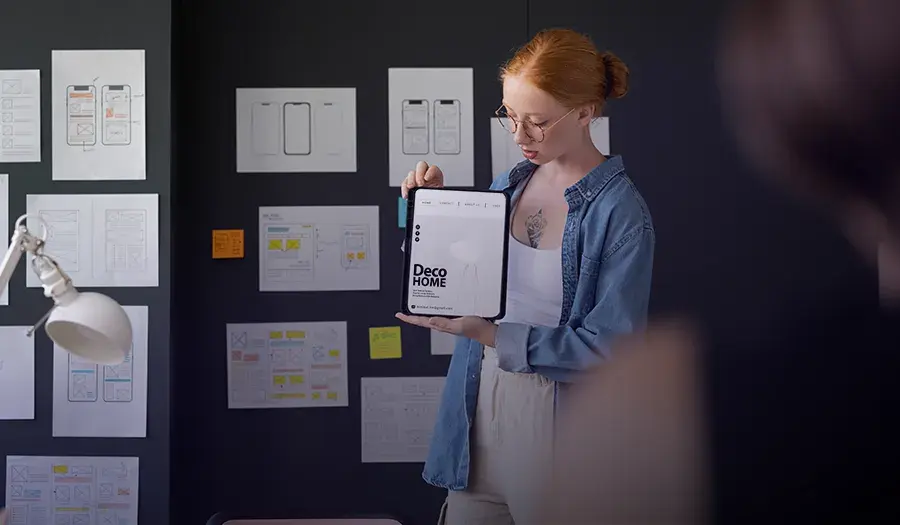
The benefits of user experience (UX) in e-commerce are measurable: customers find what they need faster, complete more purchases, return more often...

 Yashin Fonseca : Jul 11, 2025
Did you know that 88% of users won’t return to a website after a bad experience?

 Silvia Aguilar : May 29, 2025
User experience and user interface are not the same thing. The interface is what people see and touch, while the experience is everything they feel...

