











What is User Experience (UX), and what is it for?
User experience (UX) is the set of perceptions and responses a person has when using a product, system or service. It is used to understand how...
9 min read
9 min read
User experience in retail is the sum of every step a customer takes to find, choose, buy and receive a product, whether that customer is a shopper in a store or website or a business such as a supermarket or distributor that buys from a manufacturer. Analyzing and improving those steps raises sales, lowers service costs and turns one-time purchases into repeat business.
Picture the commercial committee of a food manufacturer whose products sit on the shelves of every major supermarket in the country. Sales reports show a stable volume, yet the head of customer service explains that her team spends half of its week resolving order discrepancies, delivery signatures and expiration date disputes with store managers. The CFO sees the cost, the sales director sees a relationship that depends on a few experienced account managers, and nobody has asked the retailer's buyer what it is like to do business with the company. The customer in this scene is not the person who eats the product but the business that must receive, shelve and pay for it.
That is the point where user experience stops being a digital design topic and becomes a management discipline. Nowadays customers are not only those who access a website or application and buy a product but also those who belong to the companies that sell the final product at retail, such as factories and distributors. Companies engaged in this type of business-to-business relationship must improve their service through the analysis and implementation of user experience (UX). This article looks at what happens to UX in retail, using two real companies as lenses, and then draws out what leadership teams should do about it.
>> The importance of User Experience in Digital Transformation <<
Throughout the world there are millions of companies that sell products, software and services. Those that sell products in volume to a wide customer base are called retail companies. They hold large stocks and pursue many customers who buy in small amounts, through physical channels, as with factories that sell mainly through visits to customers, or through digital channels, as with Amazon. The definition matters because it widens the question of who the user is. In a store, the user is the shopper. In a manufacturer that supplies stores, the user is the buyer, the receiving clerk, the logistics coordinator and the accounts payable analyst of every retailer served, and each experiences the company differently.
This is more significant than it appears, because business buyers are changing how they want to be served. McKinsey's research with U.S. B2B decision makers found that they now interact with suppliers through ten or more channels, up from five in 2016, and that 35% would be willing to spend $500,000 or more in a single transaction through remote or self-service channels. A supplier whose experience is built entirely around personal visits and telephone calls is therefore designing for a buyer who is disappearing.
User experience was conceived as a purely digital tool, but it must also be implemented in retail environments that have no screen. Retail companies usually concentrate a large share of their purchases during Christmas, Mother's Day and Black Friday, but to survive a company needs constant sales. The question is what it should do to achieve this, and the answer is to analyze the experience in order to generate strategies that lead to sales and leave the customer satisfied with the product and with the purchase.
The Nielsen Norman Group captures the commercial logic in a sentence that every retail executive should keep in mind. In its introduction to usability, it notes that the first law of ecommerce is that if users cannot find the product, they cannot buy it either. The same principle applies to a shelf, a fitting room, a purchase order form or a delivery dock. Every point at which the customer cannot do what they came to do is a point at which revenue leaks or cost accumulates.
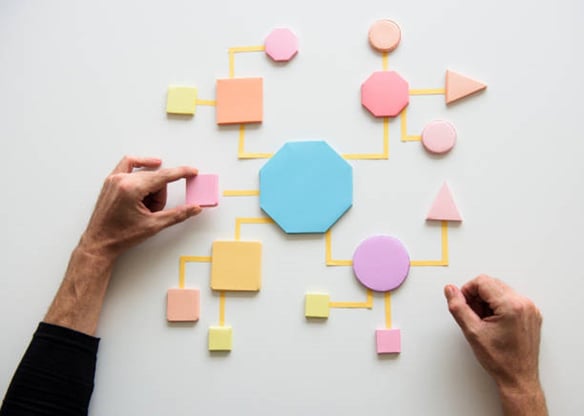
The experience can be analyzed from two points of view. Some companies have a digital medium, such as an application or website, through which customers buy. Others have none, and purchases are made by telephone or face to face. For each, the analysis must consider the experience from start to finish, the customer's satisfaction with the service and the product, the steps required to make the purchase and whether the customer found them easy or complicated. To make this concrete, we look at two companies at opposite ends of the spectrum. The first is a clothing retailer with both a physical network and a website, Ekono, a Costa Rican department store group founded in San José in 1992. The second is Sardimar, a Costa Rican producer of tuna products that distributes to supermarkets and grocery stores and does not sell through a website. Readers looking for broader guidance on the sector can also consult our article with 10 tips for ecommerce in the retail industry.

For a retailer like Ekono, the analysis looks at two environments, the web platform and the purchase process in the physical store. In the store, the customer enters, sees products with price tags, picks up garments and goes to the fitting room, where there is usually a limit of ten garments or fewer. This is a decision-making stage in which the person chooses which pieces to buy and which not to buy. The customer then goes to the cashier to pay and leaves the rejected items in the fitting room.
At the register, the employee scans the garment codes and asks for the loyalty card. If the customer has it, it is presented, and if not, the customer proceeds to pay. In this part of the journey the system is very efficient. The inconsistency arises in assistance on the floor. Sometimes collaborators help customers and sometimes they cannot because they are unavailable. That is an opportunity, since the store can establish a way for customers to choose whether they want to be assisted, and instruct collaborators to ask what the customer needs and how they prefer to be attended. The difference between self-service and assisted service stops being an accident of staffing and becomes a design choice.
The online journey is analyzed from the moment the user types the address, registers or logs in and proceeds with the purchase. Selecting a product leads to a page that describes its qualities, colors and quantity. The user adds it to the cart and, once the items are in the cart, completes the purchase and decides whether to collect the order in a store or receive it at home at an additional cost. Several difficulties are common. Analysis finds low contrast between font and background, a thin typeface for product names, products with no reviews or detailed information, and vague descriptions. These are individually minor, but together they erode the confidence of the shopper.
The sharper problem appears in the connection between channels. When customers collect an online purchase in the store, they must go to the register, often wait in line, show an identity card and wait again, which can take up to 30 minutes. The search for the product in the system should indicate the section of the warehouse where it is stored, yet the way online packages are arranged is, in broad strokes, a source of delay. A shopper who chose the click-and-collect option to save time ends up spending more of it than someone who walked in and bought directly. For an executive, this is the classic omnichannel failure. Each channel is efficient on its own, and the customer is still disappointed because the seams between them have not been designed.

Sardimar has no website where customers can buy. It is a factory that distributes tuna to businesses such as supermarkets and grocery stores. The manufacturing process is best analyzed by specialists in industrial production, but the purchasing process can be examined through the eyes of the buyer. It begins when the customer is registered in the system as a lead and a salesperson must contact them, get to know them and inform them about the product. Once the customer understands the characteristics of the tuna, including price, quality, distribution information, shelf life and promotions, a quotation must be sent.
If the retailer agrees, a purchase order follows, with delivery information and the corresponding payment. When the order is ready, the shipment is dispatched and travels to the commercial point, where it is delivered to the supermarket or grocery store. The people receiving it must verify the quantity, the condition of the products and the expiration dates, and they often have to sign for the delivery. Afterward, the company should follow up on any inconvenience the establishment has had, as well as suggestions or complaints from consumers.
The UX of this process is everything the buyer must do to have the product in the establishment. What can be made faster, what can be improved and which action can be removed so that the customer reaches a high level of satisfaction? The question applies at every step. A quotation that takes three days to arrive, a purchase order that must be retyped by a clerk, a delivery that needs a signature on paper and a complaint that disappears into an email thread are all friction that the buyer experiences and that the manufacturer pays for in staff time. There is also a second layer of users. The company is itself a customer of the software that manages purchase orders, dispatch and inventory, and the provider of that software should analyze the digital experience of the people who use it every day.
The two cases are illustrations of a pattern that repeats elsewhere. Imagine a regional pharmacy chain that sells in stores and through an application. Its pharmacists spend part of every shift searching for the stock position of products in the back room, because the inventory screen does not indicate location. The customer sees a pharmacist who disappears for several minutes. The data exists, but the experience of the employee, who is also a user, was never designed. In banking, a similar story unfolds in branches that were redesigned for digital migration but still require customers to carry paper to complete a procedure that the application started. In consumer goods, distributors who must reconcile three different order formats from three different suppliers choose, quite rationally, to give more shelf space to the supplier that is easiest to work with.
The common thread is that experience in retail is created across the whole value chain and is judged by every person who touches it, from the shopper to the receiving clerk, the store employee and the accounts payable analyst. Analyzing only the part visible to the end consumer leaves the most expensive frictions untouched.
For the chief executive, the central insight is that a retail business competes on ease. Price and assortment can be matched, whereas an experience that is designed around how customers and partners actually work is difficult to copy. Treating UX as a strategic capability, with an accountable executive and measurable objectives, protects share in categories where products are similar and shifts the conversation with retailers from discount toward service.
For the commercial director and the chief marketing officer, the priority is to attract and convert. In store-based environments that means mapping where the customer decides, in the fitting room, at the shelf or in front of the screen, and removing obstacles precisely there. In supplier relationships it means shortening the path from first contact to first purchase order. For the chief customer officer and service leaders, the opportunity is retention and cost to serve. Each avoidable error in an order, a delivery or an invoice consumes capacity and weakens the relationship, while a well-designed process allows the same team to serve more accounts. The chief financial officer should see in this the efficiency argument. The cost of friction is rarely recorded in one place, since it appears as overtime in customer service, returns in logistics and discounts in sales, but it can be estimated and it is usually substantial.
A seasoned consultant would not begin with technology. The first step is to choose one customer type, such as the walk-in shopper, the online buyer or the supermarket purchasing manager, and follow their journey with a map that includes every step, every system and every person involved. Walk it physically if you can, with a stopwatch and a notebook, visiting a store or accompanying a delivery. Note where the customer waits, repeats information, asks for help or leaves.
The second step is to speak with the people who handle the exceptions, whether store staff, call center agents or account managers. They know which problems recur and which workarounds have become unofficial processes. The third is to prioritize by commercial impact, picking the two or three frictions that cost the most in lost sales or service effort, and to resolve them before attempting a large transformation. Experience analysis in a company is long and has to be adapted to each type of business, thoroughly evaluated, tested and adjusted until it is ready to be implemented. These examples were examined briefly, but much more can be done to attract customers, improve the flow of sales and increase profit. Our Customer Journey Toolkit provides a practical template for the first map.
ICX Consulting applies user experience as part of a wider commercial strategy for retail, consumer goods and distribution companies. Our retail customer experience consulting connects store, digital and partner journeys, and our customer journey mapping shows executives where revenue and cost are affected. Where the supplier relationship is the issue, partner experience design and portals reduce the manual work between manufacturers, distributors and retailers. Technology is then chosen to support the redesigned process, and not the other way around.
If your customers or retail partners find it harder to do business with you than it should be, request a diagnostic with an ICX consultant.
Yes. User experience covers every interaction a customer has with a company, including face-to-face and telephone purchases. A store or a manufacturer without a website still has a journey, with its own steps, waiting times and frustrations, and analyzing that journey is how improvements are found.
There are several. The buyer who negotiates, the logistics team that receives goods, the finance team that processes invoices and the store staff who shelve products each experience the supplier differently. A complete analysis considers all of them, because friction for any one can damage the relationship.
By designing it from the customer's side of the counter. That usually means a dedicated pickup point, orders located and prepared before the customer arrives, a simple identity check and clear communication of when the order is ready. The goal is for collection to be faster than shopping in the store.
Choose the one that reflects effort for the customer in the journey you are improving, such as time to complete a purchase, time to collect an online order, or the share of orders delivered without discrepancies. Then connect it to a business result such as repeat purchases or service cost.
Retail rewards the companies that make buying and selling easy for everyone along the chain. If you want to see your business through the eyes of your customers and partners, our consultants are ready to walk the journey with you.

User experience (UX) is the set of perceptions and responses a person has when using a product, system or service. It is used to understand how...

 Silvia Aguilar : May 29, 2025
UX research is the systematic study of what users need, how they behave and in what context they use a product or service, carried out before, during...
Google Analytics is important in UX because it shows, with data, how people actually behave on a website or app: where they come from, what they do,...

