











What is Marketo and what is it for?
 Susana Matamoros : May 29, 2025
Marketo, now Adobe Marketo Engage, is a marketing automation platform that captures buyer behavior, nurtures leads with personalized communication...
9 min read
9 min read
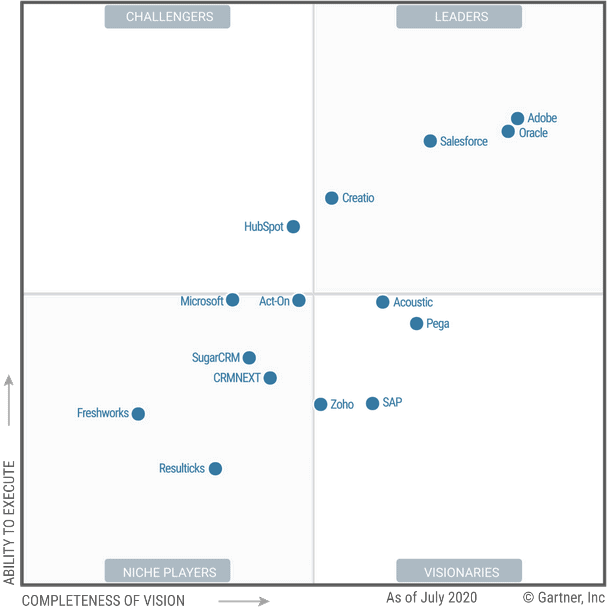
Marketo Engage, now Adobe Marketo Engage, is a B2B marketing automation platform that Adobe acquired in 2018. In 2020 Gartner named it a Leader in its CRM Lead Management Magic Quadrant, and the recognition matters to executives because it signals a mature way to score, nurture and hand off leads between marketing and sales.
On a Monday morning, the chief revenue officer of a software company opens the weekly pipeline report and sees the same problem as last quarter. Marketing reports a record number of leads, sales says most of them are not ready, and nobody can explain why a prospect who attended two webinars and visited the pricing page four times waited nine days for a call. The company has a CRM, an email tool and a web analytics package, but they do not speak to one another, and the buyer experience reflects it. Each team works hard, and the customer still feels the seams.
In today's world, buyers do not purchase the way they did ten or fifteen years ago. The concept of customer experience is heard in every boardroom, and it means how a company improves the purchase journey and makes it as satisfactory and friendly as possible. That concept travels together with the platforms that let the experience adapt to each buyer's behavior, in real time. This article explains what Marketo Engage does, why Gartner's 2020 recognition was relevant, and what an executive team should decide before adopting a platform of this kind.
>> Marketo Engage leader in the Gartner 2020 Quadrant Lead Management <<
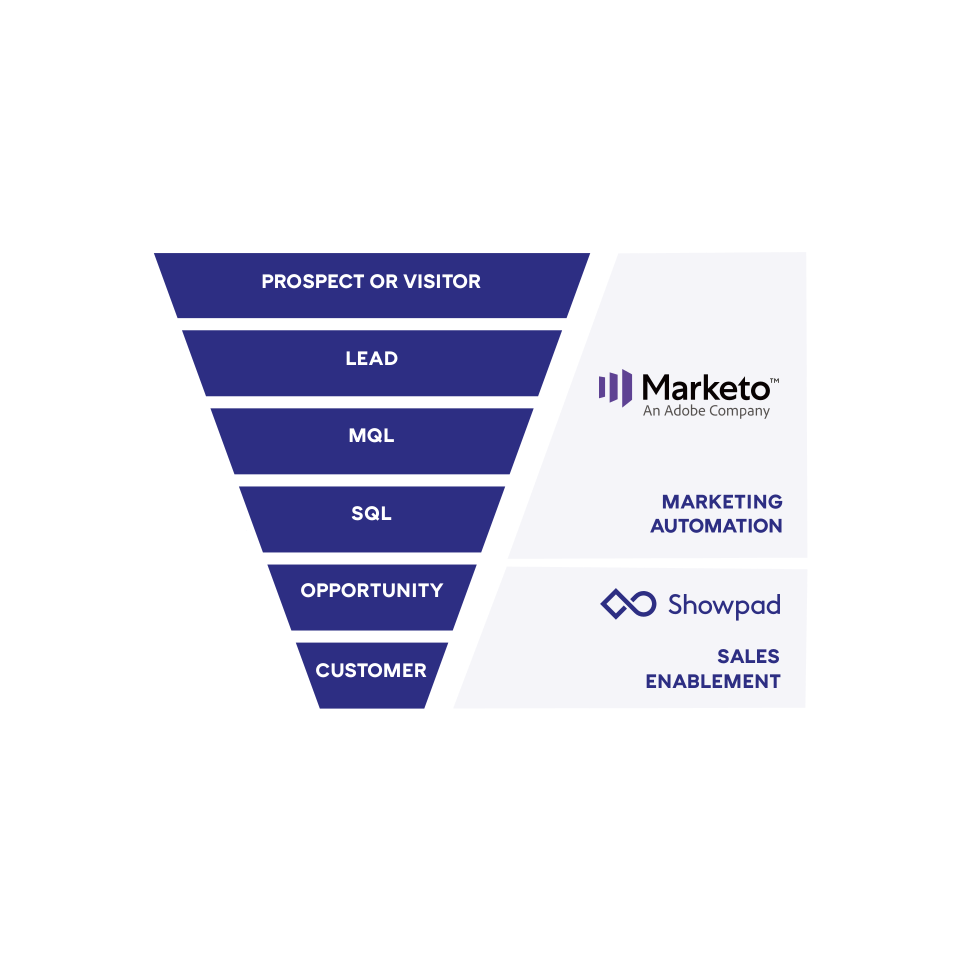
Marketo is known as a platform for the whole marketing and sales funnel. It is a marketing automation platform that helps marketers coordinate every element of their planning, engagement and measurement so that they can drive profit and growth in organizations of any size. Adobe announced the acquisition of Marketo in 2018 and it was completed by the end of October of that year, as Adobe's filing with the U.S. Securities and Exchange Commission records (Adobe Form 8-K press release, 2018). The purpose was to combine Adobe's experience management portfolio with Marketo's strength in B2B engagement, so that companies could manage the buyer relationship from first interest to renewal on a connected set of products.
The brand has evolved since then. The product is now Adobe Marketo Engage, and it sits inside Adobe's broader Experience Cloud. For a company that already uses Adobe Experience Manager for its content, or Adobe Analytics for its measurement, that adjacency is part of the appeal. For a company that does not, it should not be the deciding factor. The decision should start from the commercial process, not from the logo.
The author's original list of capabilities still describes the center of the product, and it is worth reading as a map of the problems it solves. Marketo supports customer journey mapping and customer journey analytics, so teams can see how contacts move across channels. It handles lead nurturing and qualification, scoring each action a person takes. It supports account-based marketing, campaign organization for email, personalized content and websites, and integration with advertising networks. It provides reporting, marketing lead attribution and form and campaign personalization. It allows access to be customized according to the structure of each team, and it includes data security controls.
The common thread is the score. Every time a user enters the website, downloads a document, completes a form, requests information or schedules a conversation with an executive, that action receives a value. The values accumulate in the person's profile and, once a threshold is reached, the system can alert a salesperson or start a different sequence of messages. The effect is that sales stops receiving a raw list of names and starts receiving contacts with a visible history of interest. The practical craft is deciding which actions deserve points, and that is a conversation between marketing and sales, not a configuration screen.
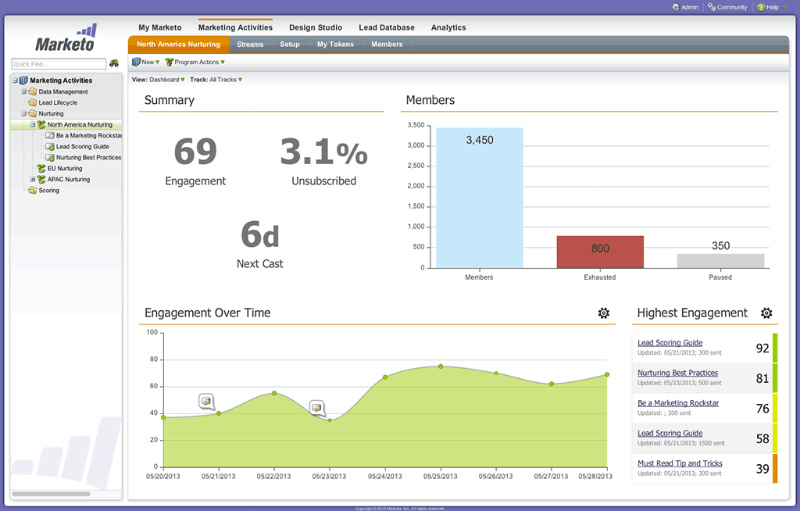
Besides lead management, a team that wants sales and marketing alignment can use lead, account and sales engagement intelligence tools in the same environment. That is the practical meaning of alignment. Instead of arguing about lead quality in a monthly meeting, both teams look at the same record, with the same definitions, and see what happened before the handoff.
As an account-based marketing strategy, a company can create and orchestrate the customer experience for its most important accounts, serving each buying group with highly personalized experiences in an automated way. The logic is to concentrate effort where the value is. A company that sells to a few hundred large organizations does not need to attract thousands of anonymous visitors. It needs to know which people inside the target accounts are engaging, what they are reading and which of them are missing from the conversation. The ICX article on accelerating account-based experiences with Adobe and Marketo develops that idea in more detail.
The original article cites Alterra Group's finding that 97 percent of marketers achieved a higher return on investment with account-based marketing than with any other marketing initiative. That figure comes from a vendor survey and could not be independently verified for this update, so treat it as directional evidence of how favorably practitioners rate the approach. A more reliable question for your own team is how many of your best customers began as engaged accounts that sales had never prioritized.
The ICX consulting practice on account-based marketing starts with the account list and the buying group, because the technology cannot compensate for a vague target.
>> Workflows to automate collections management <<
In August 2020 Adobe announced that Gartner had named it a Leader in the 2020 Magic Quadrant for CRM Lead Management for Marketo Engage, and that this was the ninth consecutive year in which Marketo was positioned as a Leader (Adobe blog, August 2020). That report evaluated vendors on their ability to execute and the completeness of their vision in lead management, which is the discipline of capturing, scoring, nurturing and routing leads.
It is worth being precise about what such a recognition means. A Magic Quadrant is an analyst's comparison at a point in time, not a guarantee of fit. Gartner has since reorganized this market, and Adobe continues to publish its positioning in the B2B Marketing Automation Platforms report, so anyone evaluating the product today should consult the current edition (Adobe, Gartner Magic Quadrant for B2B Marketing Automation Platforms). For an executive, the value of the recognition is as a screening signal. It tells you the platform is established enough to be on the shortlist, and the real selection must then test it against your own process.
The original article also reported, citing Gartner, the vendors that Marketo customers had considered before choosing Adobe, with 40 percent considering HubSpot, 35 percent Salesforce and 21 percent Oracle. We kept this passage because it comes from the author's research, but we could not locate the underlying Gartner data, so it should be read as an indication of the competitive set and not as a precise measure.
Many companies around the world have bet on Marketo and changed how they think about marketing and the customer experience, regardless of industry or size. The ones that benefited decided to act to automate, and not merely to buy software. The triggers they usually mention when explaining the purchase decision are familiar. The volume of marketing support requests increases. Manual process execution creates backlogs. There are pre-existing relationships with the vendor or its partners. The total cost of ownership is acceptable. And the platform adapts to the way the team already works.
These are operational reasons, and they illustrate an important point. Few companies adopt marketing automation because of a strategic epiphany. They adopt it because a process has outgrown its spreadsheets. A financial services firm that must send regulated, personalized communications at scale, a manufacturer that distributes through resellers and needs to track leads across partners, and a technology company with a long sales cycle that needs to nurture contacts for months all reach the same conclusion by different roads. The risk is that they buy the tool to solve the symptom and skip the redesign of the process that created it.
Email remains the main channel through which Marketo programs communicate, and its value rises when messages respond to behavior. A contact who has read three articles about a particular product should not receive the same message as one who has only opened a newsletter. The ICX article on optimization of campaigns via personalized emails in Marketo shows how to use the platform's segmentation and dynamic content for that purpose.
The discipline behind it is simple to state and hard to sustain. Define the stages of the buyer journey, decide what each stage needs to hear, and build the sequence so that a contact moves forward or exits cleanly. Measure by stage conversion, not by open rates alone. Retire sequences that no longer perform. A platform makes this possible, but it does not do it automatically.
For the chief executive, the central question is whether growth depends on a process that the company can see. If marketing and sales work from different definitions of a qualified lead, the forecast will always be less reliable than it appears. A lead management platform is a way of writing those definitions into the system, and the executive's role is to insist that they exist before configuration starts.
For the chief marketing officer, the platform offers evidence about which programs generate revenue and not just activity. That evidence is uncomfortable at first, because it shows which investments contribute little, but it strengthens the budget conversation. For the chief revenue officer, the benefit is speed and context. A salesperson who calls within hours of a meaningful action, with the history in hand, has a better conversation than one who calls from a list. For the chief financial officer and the chief information officer, the questions are total cost, integration with the CRM and the data model, and governance of personal data. Adopting any such platform requires deciding who owns the data, how consent is recorded and how long records are kept, in line with the privacy regulations that apply to your markets.
Three risks appear repeatedly in projects of this kind. The first is data quality. Scoring and segmentation are only as good as the records behind them, so duplicate contacts, missing job titles and inconsistent company names will undermine the results from the first week. A cleanup and a set of rules for data entry should be planned before the first campaign launches. The second is adoption. If the sales team does not trust the scores, it will ignore the alerts, and the platform becomes an expensive email sender. Involving salespeople in defining the scoring model, and reviewing it with them every quarter, is the most effective countermeasure. The third is overreach. Teams often try to launch every capability at once, from journey mapping to attribution, and none of them works well. A sequence of small, measurable releases gives the organization time to learn.
A fourth consideration is cost, which is wider than the license. The total includes implementation, integration with the CRM, content production for the nurturing programs, training and the time of the people who will operate it. Companies that budget only for the software often discover that the platform is underused a year later, which is the situation the original triggers of volume, backlog and total cost were meant to prevent.
Begin with a conversation, not a trial license. Gather marketing, sales and operations and agree on three things. First, the definition of a marketing qualified lead and of a sales accepted lead, in writing. Second, the five or six actions that most reliably precede a purchase in your own history, which you can find by reviewing the last twenty won deals. Third, the service level for follow-up, for instance how many hours may pass between a qualifying action and a call.
Then examine your current stack with that agreement in hand. Identify what the CRM already does, where data is duplicated, and which integrations will be needed. If the gaps are small, you may not need a new platform at all. If they are significant, you will have a requirements list grounded in your process, which is a better basis for choosing between Marketo, HubSpot or another tool than any analyst chart. The ICX Persona Playbook Toolkit is a good companion for the first conversation, because every scoring rule depends on knowing who the buyer is.
ICX Consulting, headquartered in Miami, helps companies in the United States and Latin America design the commercial process first and select technology second. Our inbound marketing and lead management consultants work with your teams to define scoring, handoffs and measures, and our digital transformation practice connects those decisions to the systems you use. When the plan calls for it, ICX implements Adobe Marketo Engage and integrates it with your CRM. Adobe has partners in many countries with the knowledge, preparation and certification to help you take your marketing management further, and ICX is one of them.
>> Marketo: Optimization of campaigns via personalized emails <<
The product is now branded Adobe Marketo Engage. Many professionals still say Marketo, and this article uses both names. Adobe acquired the company in 2018 and has integrated the product into its Experience Cloud.
It means Gartner rated the vendor highly for ability to execute and completeness of vision in that report's market and year. It is a useful shortlist signal, but it does not replace testing the product against your own requirements. Always check the most recent edition of the report.
A CRM records customers and sales activity. A marketing automation platform captures behavior before the sale, scores it and runs nurturing programs. If your CRM already covers scoring, segmentation and email sequences adequately, you may not need another platform. If marketing relies on spreadsheets or manual lists, you probably do.
It depends on the number of data sources, the complexity of scoring and the quality of your existing data. Plan for a phased approach that starts with one segment and one journey, proves the model, and then expands.
Track the conversion rate from lead to qualified lead to opportunity, the time between a qualifying action and the first sales contact, pipeline influenced by marketing programs and the cost per qualified opportunity.
The companies that benefit most from platforms like this one are those that agree on how buyers move before they configure a single rule. If you want to understand Marketo better, including its applications, advantages and integrations, and judge whether it fits your process, talk to an ICX Marketo consultant and we will gladly advise you.


Susana Matamoros : May 29, 2025
Marketo, now Adobe Marketo Engage, is a marketing automation platform that captures buyer behavior, nurtures leads with personalized communication...

 Mario Oviedo : May 29, 2025
The main advantages of Marketo, now Adobe Marketo Engage, are enterprise-grade marketing automation, sophisticated lead and account management,...

 Katherine Dixon : May 29, 2025
Remember Adobe's Engagement Platform? It's now called Marketo Engage.

