




Why Apply the Customer Journey in the Retail Industry?
Retailers should apply the customer journey because they own the last and most visible link of the commercial chain. Mapping how shoppers discover,...

By Role
By Industry
By Target Customer
What We Offer
ICX helps companies grow revenue and profitability by connecting customer experience, sales, pricing, CRM and automation into one commercial system.
Customer Experience
We design memorable, customer-centered experiences that drive loyalty, enhance support, and optimize every stage of the journey. From maturity frameworks and experience maps to loyalty programs, service design, and feedback analysis, we help brands deeply connect with users and grow sustainably.
Marketing & Sales
We drive marketing and sales strategies that combine technology, creativity, and analytics to accelerate growth. From value proposition design and AI-driven automation to inbound, ABM, and sales enablement strategies, we help businesses attract, convert, and retain customers effectively and profitably.
Pricing & Revenue
We optimize pricing and revenue through data-driven strategies and integrated planning. From profitability modeling and margin analysis to demand management and sales forecasting, we help maximize financial performance and business competitiveness.
Digital Transformation
We accelerate digital transformation by aligning strategy, processes and technology. From operating model definition and intelligent automation to CRM implementation, artificial intelligence and digital channels, we help organizations adapt, scale and lead in changing and competitive environments.
Operational Efficiency
We enhance operational efficiency through process optimization, intelligent automation, and cost control. From cost reduction strategies and process redesign to RPA and value analysis, we help businesses boost productivity, agility, and sustainable profitability.
Customer Experience
Marketing & Sales
Pricing & Revenue
Digital Transformation
Operational Efficiency
9 min read
Meicel Valverde | May 29, 2025
9 min read
Meicel Valverde | May 29, 2025
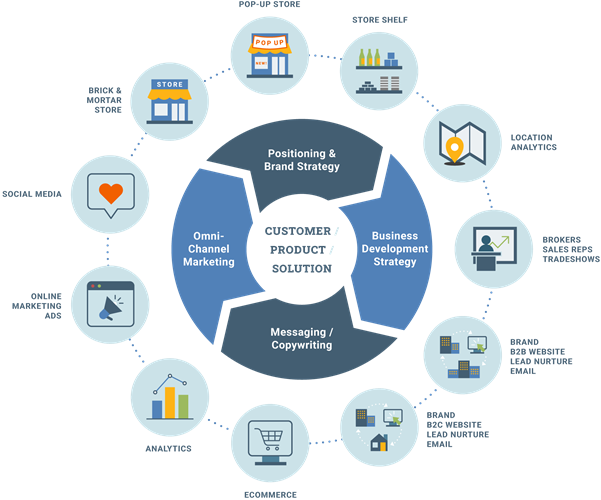
An omnichannel strategy in retail is a customer-centric way of selling and serving in which stores, ecommerce, apps, social networks, phone and delivery work as one connected system. During the Christmas season it decides whether a retailer turns peak traffic into profitable sales and loyal customers, or into stockouts, long lines and margin lost to discounts.
The year-end holidays bring a big boost in consumption, and most retailers prepare offers, discounts and promotions to encourage even more purchases. The stakes are high. According to the National Retail Federation's holiday FAQ, November and December sales have averaged about 19 percent of total annual retail sales in the United States over the past five years, and the share can be higher for some retailers. For a CEO or commercial director, that means a few weeks carry a fifth of the year's revenue, and a large part of the year's chances to win new customers.
Competition during those weeks is tougher than ever. It is easier for consumers to find products on the internet, or a larger variety of products in stores that were not previously seen as competitors. In this scenario, being accessible and available to customers is the big challenge. The answer is Omnichannel, managed as a business strategy and not as a list of channels.
Consider the second Saturday of December at a department store chain. The flagship store is full, the website is on its busiest day of the year and the contact center has doubled its shifts. By noon the operations director learns that a toy advertised heavily on social media is out of stock in the stores where the campaign is concentrated, while three warehouses hold plenty of it. The marketing director wants to keep the campaign running, the store managers want it stopped, and the CFO asks who authorized a promotion the company cannot fulfill. Nobody has a single view of inventory, orders and customers, so every decision is made on partial information at the most expensive moment of the year.
In this article you will find:
It is a customer-centric approach to marketing, sales and service. Its aim is to provide an integrated experience, with easy and fast access to information, products and support through different channels, both physical and digital. The customer can research on a phone, check availability online, try the product in a store, pay in an app and return it wherever is most convenient, and the company recognizes the same customer at every step.
The difference from multichannel is important. A multichannel retailer has a store, a website and social media accounts, but each one runs with its own team, inventory view, prices and promotions. An omnichannel retailer connects them around the customer. McKinsey's explainer What is omnichannel marketing? describes multichannel as product-centric and omnichannel as customer-centric, and notes that omnichannel customers shop 1.7 times more than single-channel shoppers.

Despite growing technological advances, many retailers still manage their business in a rudimentary way. Attention at the point of sale is often very slow, they do not have a strong brand presence and offering beyond their physical store, and they do not know fundamental information about their consumers. Each of these weaknesses is tolerable in a quiet month and punishing in December, when volume exposes every gap at once.
For a retailer, the most important thing is to close the sale and build a customer base that is loyal to the brand. Consumers have multiple options for shopping, and it is the stores that must take advantage of the opportunities that omnichannel represents by staying close to their customers and offering them the best possible service.
Online growth in the region has been strong. When the pandemic accelerated digital buying, Americas Market Intelligence (AMI) projected that ecommerce in Latin America would grow at a compound annual rate of 30 percent through 2024, reaching about US$592 billion, opening different business and investment opportunities.
Also read: Content ideas for each stage of the Buyer Journey
Many consumers now shop through digital platforms, a habit that grew with ecommerce during the pandemic. Even so, stores remain an essential part of the consumer experience. Ezequiel Arslanian, Executive Director at Accenture Interactive, explained that people are looking for an omnichannel experience that offers seamless integration between digital and physical shopping, in other words a hybrid shopping experience. McKinsey's research points the same way, with about 60 to 70 percent of consumers researching and shopping both in stores and online.
The pandemic years made the shift visible at country level too. According to Statista's Digital Market Outlook 2020 report, Costa Rica recorded 48 percent growth in online sales due to COVID-19, and many consumers who tried online shopping for the first time kept the habit.
Adopting an omnichannel model provides a consistent shopping experience and helps retailers increase sales and offer services from the physical store, ecommerce, phone, apps and other channels. The business model matters as much as the technology: who the customer is, which channels deliver value to each segment and what each channel costs to operate.
Sales and support channels are fundamental to start an omnichannel strategy, mainly because they are where products are presented, information is offered and customer questions are answered, and they are also the communication channel for the post-sale period.
The executive decision is which channels to prioritize for each customer segment and how they hand off to each other. A customer who asks about a product on social media and later visits a store should not have to repeat the conversation.
Omnichannel communication is hard to implement when inventory and cost processes, and marketing and sales KPI analysis, are developed separately for each channel. The ideal is a unified system for offline and online platforms. That way, inventory responds seamlessly to every channel without inconsistencies, duplicate data or other errors.
During the Christmas peak, this is where most promises break. If the website shows an item available that the store already sold, the cost is not only a lost sale but a disappointed customer at the moment of highest visibility.
Because this is a customer-focused strategy, it is essential to know and analyze consumer behavior. In omnichannel marketing, gathering this information makes it easier to predict and anticipate expectations, the channels customers prefer, how they buy and which steps need further improvement.

Before investing in a new app or marketplace for the season, it helps to know where the company stands. This simple maturity scale is a useful starting point for a leadership discussion:
| Level | What the customer sees | What happens inside | Christmas season risk |
|---|---|---|---|
| Single channel | A store, maybe a catalog website | Sales and inventory managed per store | Lost demand from customers who prefer to buy online |
| Multichannel | Store, ecommerce and social media with different prices or promotions | Separate teams, systems and targets | Stock errors, channel conflict, inconsistent offers |
| Integrated | Same products, prices and promotions in every channel; buy online and pick up in store | Shared inventory and order management | Fulfillment bottlenecks if store processes are not adapted |
| Omnichannel | Personalized offers and service that follow the customer across channels | Unified customer data, journey ownership and shared KPIs | Lower, but it depends on disciplined planning and data quality |
Peak season fails in predictable ways. The first is promising what operations cannot deliver, as in the toy that was advertised where it could not be bought. The second is channel conflict, when a store manager sees an online order as a lost sale and a web team sees the store as a cost, so each protects its own number. The third is the discount spiral. A retailer that matches every competitor price in every channel finishes the season with record revenue and thin margin, and it trains customers to wait for the next promotion.
A fourth risk is less visible. First-time holiday buyers who are not recognized afterward are simply lost, because the company cannot tell them apart from anonymous traffic. The cost of acquiring those customers was paid in advertising and discounts, and with no follow-up in January the investment evaporates. Executives who see these four risks early tend to ask for different things in September, such as a single stock view, rules for channel credit and a plan for the first purchase.
The same strategy takes different shapes by format. A supermarket or pharmacy chain depends on availability and speed, so pickup and home delivery windows matter more than personalized offers. An electronics or home goods retailer sells considered purchases where customers research online and decide in the store, so shared product information and consistent prices carry the weight. A fashion retailer faces high return rates after the holidays, which makes the returns journey across channels a margin issue as much as a service one.
Imagine a regional fashion chain that lets customers return online orders in any store. The policy raises satisfaction, but only if stores can see the order, process the refund and put the item back into sellable stock without manual work. Where they cannot, the returns desk becomes the bottleneck of January, and the experience the chain worked to build in December is spoiled on the way out.
The first trend is to replicate the experience in both the physical and digital store. If the retailer already offers a digital experience to its customers and prospects, the next step is to make both spaces attractive to the consumer, so that both can generate leads and offer a similar experience. The company must integrate the actions and processes of its physical and virtual stores to guarantee a complete and convenient experience for every buyer, regardless of the channel they choose.
Networks also serve to sell. The smartphone has become one of the main shopping tools and the favorite device for social networks. Many platforms and social networks offer resources that reinforce web sales with marketplaces, surveys, catalogs and more, and it is time to use them. Each network has its own language, whether videos, reels or images, so it is key to use them properly or work with strategic communication professionals.
Messages with a more human sense also matter. Consumers do not just buy for the sake of buying. Many prefer brands committed to social, sustainable and ethical causes, and they expect to see that reflected in advertising. Diversity, inclusion and good environmental practices are three of the most important pillars in messages that connect with people, especially younger generations.
Finally, content created through influencers is gaining weight. A digital strategy for the holiday season can include influencers, who connect shopping with entertainment through authentic and original publications that resonate with people. According to a Facebook IQ survey in 2020, 49 percent of consumers said they would buy new products directly from videos related to brands, celebrities or influencers they follow.
Peak season planning usually starts too late and too narrowly, with the promotions calendar. An omnichannel plan starts with the customer and works backward to operations. A practical sequence for the leadership team follows.
Start by reviewing last season by journey, not by channel. Where did customers abandon carts, wait in line, call to ask about an order or return products? Those are the moments to fix first. Then set one inventory truth, deciding which system is the source of availability for every channel and how often stores and ecommerce sync during peak days. Define fulfillment promises you can keep, choosing which options to offer (home delivery, pickup in store, ship from store) and the cut-off dates for Christmas delivery, and communicate them clearly in every channel.
Align offers and prices across channels, because customers compare, and a promotion that exists only online should be a deliberate choice explained to store staff. Prepare the frontline, since store and contact center teams need access to online orders, stock and customer history, and a short script for the questions that will spike. Plan the post-season as well. January returns, gift card redemptions and follow-up campaigns are the best chance to turn holiday buyers into repeat customers. Agree finally on the scorecard, tracking sales per channel, fulfillment accuracy, on-time delivery, customer satisfaction and the share of new customers who buy again in the first quarter.
For more operational detail, see how to prepare your company for the holiday season and whether your ecommerce team is ready for Christmas.
Go back to that Saturday in December. To attract, use social commerce and influencer content to reach new buyers, but tie every campaign to a channel that can actually fulfill the demand it creates. To convert, remove friction where peak demand breaks the experience, such as stock visibility, checkout and delivery dates. The campaign that could not be fulfilled is not a marketing problem. It is a decision made without shared information.
For retention and loyalty, capture customer data at every holiday purchase, including in-store, so that first-time buyers receive a relevant follow-up in January. To serve well, give store and service teams a single view of orders and customers so they can solve problems in one contact. On efficiency, unify inventory and order management to cut duplicate work, markdowns from excess stock and the cost of failed deliveries.
The board-level question is simple. Does the company treat Christmas as a promotions event or as the most important test of its customer experience each year? The answer shows up in margin and in how many holiday buyers come back.
ICX Consulting works with retailers in the United States and Latin America to design and run omnichannel operations that pay off in peak season and the rest of the year. Our retail customer experience consulting team maps the customer journey across stores and digital channels, designs the omnichannel platform and connects it to CRM and commerce systems so inventory, offers and service work as one. Our pricing and revenue practice helps define promotions that drive volume without eroding margin. ICX Consulting helps companies with marketing automation, from diagnosis to implementation.
To start, use the ICX Customer Journey toolkit to map your holiday journey end to end and identify the moments that most affect sales and satisfaction.
Bring this topic to your company
An ICX Consulting advisor will assess where your organization stands today and which decisions can move your commercial and customer experience results.
Planning should start in the middle of the year. Inventory buys, system changes and staffing need months of lead time, and integration work such as syncing store and online stock should be finished and tested before the peak begins. Many retailers freeze major technology changes several weeks before the season to avoid risk.
Usually yes, if inventory accuracy is reliable. Pickup brings online customers into the store, where they often add items, and avoids last-mile delivery costs during the busiest weeks. Without accurate stock data, however, it creates disappointed customers, so fix inventory synchronization first and launch pickup on a limited assortment.
Look beyond sales per channel, which can simply shift revenue around. Better indicators are customer lifetime value of omnichannel buyers versus single-channel buyers, repeat purchase after the holidays, fulfillment accuracy, on-time delivery and the cost to serve each order type. Together they show whether the strategy builds profitable loyalty.
A CRM gives the company a single customer record that connects store purchases, ecommerce orders, service cases and marketing responses. That record makes personalization, loyalty programs and post-holiday follow-up possible. For a deeper look, read about the benefits of an omnichannel CRM.
Omnichannel has become the strategy retailers cannot skip. Physical stores still provide the most direct experience, but customers move freely between the store and the digital world, and they expect the brand to keep up. If you want this Christmas to leave you with loyal customers and healthier margins rather than just a sales spike, talk to an ICX consultant about your omnichannel plan for the season.
Retailers should apply the customer journey because they own the last and most visible link of the commercial chain. Mapping how shoppers discover,...
A buyer persona in the retail industry is a research-based profile of a typical shopper or business buyer that describes who they are, what they...
Marketing automation matters in the holiday season because demand arrives in a short window and in volumes that no team can answer by hand. Automated...