





Skip to the main content.

What We Offer

ICX helps companies grow revenue and profitability by connecting customer experience, sales, pricing, CRM and automation into one commercial system.

Customer Experience

We design memorable, customer-centered experiences that drive loyalty, enhance support, and optimize every stage of the journey. From maturity frameworks and experience maps to loyalty programs, service design, and feedback analysis, we help brands deeply connect with users and grow sustainably.

Marketing & Sales

We drive marketing and sales strategies that combine technology, creativity, and analytics to accelerate growth. From value proposition design and AI-driven automation to inbound, ABM, and sales enablement strategies, we help businesses attract, convert, and retain customers effectively and profitably.

Pricing & Revenue

We optimize pricing and revenue through data-driven strategies and integrated planning. From profitability modeling and margin analysis to demand management and sales forecasting, we help maximize financial performance and business competitiveness.

Digital Transformation

We accelerate digital transformation by aligning strategy, processes and technology. From operating model definition and intelligent automation to CRM implementation, artificial intelligence and digital channels, we help organizations adapt, scale and lead in changing and competitive environments.


Operational Efficiency  

We enhance operational efficiency through process optimization, intelligent automation, and cost control. From cost reduction strategies and process redesign to RPA and value analysis, we help businesses boost productivity, agility, and sustainable profitability.

Customer Experience

chevron-right-1

Marketing & Sales

chevron-right-1

Pricing & Revenue

chevron-right-1

Digital Transformation

chevron-right-1

Operational Efficiency 

chevron-right-1

9 min read

Digital Capabilities Improve Sales Team Productivity

9 min read

Digital Capabilities Improve Sales Team Productivity

Digital capabilities improve sales team productivity because they let each seller serve more customers, with better information and fewer manual tasks, without adding headcount. A B2B eCommerce platform connected to the CRM moves routine orders, quotes and product questions online, so the sales team spends its limited hours on the conversations that grow accounts.

Picture the Monday forecast meeting at a distributor of industrial supplies. The commercial director asks why the pipeline of new accounts barely moved last month, and the answer is uncomfortable. Her best sellers spent most of their week typing phone orders into the ERP, answering the same availability questions by email and chasing small customers whose individual margin does not justify the effort. Nobody was negligent. The team simply has a finite number of hours, and in a traditional model those hours are consumed by transactions rather than by selling.

That is the real meaning of the sentence that opens this article. A person is available, at best, eight hours a day and six days a week, and no incentive plan changes that arithmetic. A digital channel does not have office hours. It answers at midnight, in another time zone and on a phone screen in a warehouse aisle, and it does so for every customer at once. The question for an executive is therefore not whether to digitize sales, but which part of the work should stay human and which part should never have been human in the first place.

Why does digital capacity matter more to B2B sales than ever?

B2B buyers have already moved. Gartner's 2026 survey of 646 B2B buyers found that 67% prefer a rep-free experience, and that the buying journey is increasingly self-directed and digitally mediated. McKinsey reached a similar conclusion from a different angle: in its research on omnichannel B2B sales, 83% of B2B leaders said that selling across in-person, remote and digital self-serve channels is as effective as or more effective than the traditional face-to-face model.

The implication is not that sellers become unnecessary. It is that the seller who still acts as an order taker is competing with a screen that is faster, always on and never forgets a negotiated price. The seller who acts as a consultant, on the other hand, becomes more valuable, because the platform has cleared the path for that work. Companies that understand this difference convert the same payroll into more revenue per seller, which is the cleanest definition of productivity a CFO can ask for.

What does a B2B eCommerce platform give the sales team?

The first gain is information at the fingertips. Through a B2B eCommerce, sales executives have immediate access to detailed product data, including manuals, videos, technical specifications and other sales resources, available online from any device. They no longer wait for a colleague in another department to send a datasheet, and the customer sees exactly the same content the seller sees, so conversations start from shared facts.

The second gain is time. When orders arrive through the platform, nobody has to rekey them from a phone call, an Excel file or an email thread. The hours saved can be redirected to account management with a consultative approach, which generates larger and more complex opportunities and new business. In a typical distribution or manufacturing company, the cost of that manual order entry is hidden inside salaries, errors and delayed shipments, so it rarely appears as a line in the budget, yet it is often one of the largest sources of lost selling time.

The third gain is control. A platform records what customers search for, what they order and what they abandon. That record feeds the CRM and gives the commercial director something she rarely has in a traditional model: a factual view of demand that does not depend on what each seller remembers to report.

Which customers should the platform serve, and which should sellers keep?

A well-designed digital channel changes the economics of the customer portfolio, and the author's experience in B2B commerce points to three effects worth planning for.

The first is new customer segments. If your sales strategy is already B2B, an eCommerce makes it more efficient and lets you extend sales toward B2C or target new industry verticals with personalized content and special product offers. A building-materials supplier, for example, can open a controlled consumer channel for small contractors without asking its field team to visit them.

The second is the small customer. In the traditional model, small accounts are a real problem, because they consume time while the margin each one generates is very low, and the sum of them hurts the overall margin. With a B2B eCommerce, customers who place small or infrequent orders become profitable once all their commercial management moves online, and sellers can concentrate on key accounts. This is a pricing and cost-to-serve decision as much as a technology one, and it is where a diagnostic of customer profitability pays for itself.

The third is reactivation. Many inactive customers return when they discover that you offer easy online purchasing. A simple campaign to dormant accounts, pointing to a login and a reorder list, often recovers revenue that no seller had time to chase.

How do you generate demand for a stretched sales team?

Probably the biggest challenge to sales productivity is demand generation: how to attract new and good customers without hiring more people to prospect. The answer is to build convincing experiences across several points of contact, namely mobile devices, electronic procurement or eCommerce systems, digital marketplaces and social networks. Each of them is a place where a buyer may first meet your company, and each should lead to the same account, the same prices and the same record in the CRM.

That raises the question that matters most: how do you create a compelling experience? The answer is an eCommerce platform that provides unique experiences for the buyer and agile tools for the seller at the same time. When both sides of the table use the same system, the buyer gets autonomy and the seller gets context, and neither depends on the other to move forward. If you are building the commercial case for this shift, our article on the value of migrating to a B2B eCommerce model develops the economics in more detail.

Which digital capabilities raise sales productivity?

Not every feature matters equally, and a long checklist of functions is a poor guide to investment. The capabilities that most directly convert into seller time or customer spend fall into three groups, and they work best as a connected set rather than as isolated functions.

The first group shapes the buyer's experience. A platform that shows content intelligently according to who is logged in, guides the buyer through the catalog according to their interests and recommends products through a search engine that uses site and buyer data helps customers and sellers discover items they would not have asked for, which raises basket size without an extra call. Custom navigation and relevant offers help turn casual users into loyal advocates of the brand, and for sellers, the same personalization is a way to manage accounts more efficiently, because each customer's view reflects what that customer actually buys. Mobile experiences adapted to each screen size solve the traditional challenges of buying from a phone, and they benefit sellers who can reach the platform from anywhere, including the customer's premises.

The second group governs the commercial terms. Presenting the best prices and offers consolidates loyalty only if the conditions negotiated with each customer are respected, which is hard without a platform that can generate personalized sites per customer, and it is one reason pricing governance and eCommerce design should be planned together. B2B purchase management tools, which let buyers upload lists of SKUs, negotiate online quotes and keep lists of frequently purchased products, stimulate spending because they remove the friction of repeat orders. Multiple payment options, from bank transfer and credit card to credit and financing, address one of the biggest challenges in eCommerce, since a purchase that cannot be paid the way the customer prefers does not happen.

The third group delivers certainty and insight. Showing inventory availability by location gives buyers the information they need to order with peace of mind and spares the sales team the most repeated question of the day, while flexible shipping options, managed through order management functionality, let buyers choose how, when and where they receive or send purchases. Because the company can program custom sites by customer, it also gains detailed reports, automated identification of anomalies and analysis by business and customer segmentation, which reveal new business opportunities that rarely surface in a spreadsheet of invoices.

What does this look like in different industries?

Imagine a medical-supplies distributor serving clinics and hospitals. Its sellers spend their days confirming stock and reissuing quotes. With a catalog that shows availability by warehouse and a reorder list per clinic, the routine purchase happens without a call, and the seller visits only to discuss new equipment lines or contract renewals.

Now imagine a consumer-goods manufacturer that sells to hundreds of small stores. Visiting each store is not economically viable, yet the combined volume is large. A mobile ordering portal with negotiated prices and promotions per customer turns that long tail into a profitable channel, and the field team concentrates on the supermarket chains and wholesalers that define the year's numbers.

A third case is a telecom or technology reseller whose buyers need configured quotes. Online quote negotiation and SKU upload let the customer build the request, and the seller intervenes only where the deal is complex. In all three cases the pattern is the same: the platform absorbs volume, and the people absorb complexity.

What are the limits and risks of this approach?

A serious case for digital capacity must also acknowledge where it can fail. The first risk is channel conflict. When sellers are paid on commission and customers begin ordering without them, the platform can look like a threat to income, and the best sellers may quietly steer customers away from it. Companies that handle this well adjust compensation so that sellers are credited for the accounts they own regardless of the channel through which the order arrives, and they measure sellers on growth of the account rather than on orders keyed.

The second risk is data quality. A personalized catalog with wrong prices or stale inventory does more damage than no catalog, because it makes the digital channel untrustworthy at the moment the customer is most exposed. The platform is only as reliable as the ERP and pricing rules behind it, which is why the integration work is rarely the glamorous part of the project and is almost always the decisive one.

The third risk is overestimating what self-service can replace. Complex products, custom configurations and strategic accounts still require human judgment, and the research cited above refers to buyers who prefer to avoid a representative for routine purchases, not for every decision. A realistic design assigns each type of interaction to the channel that handles it best, and revisits that assignment every year as the platform and the customer base mature.

What this means for the C-level

For the CEO, the point is capacity. A digital channel is the only way to increase the number of customers served without increasing the sales payroll in the same proportion, and it protects the company from the risk of depending on a handful of star sellers. For the CFO, it is a question of cost to serve and margin: the small account that used to lose money becomes profitable when its orders flow through the platform, and the cost of rekeying orders disappears from operations.

For the commercial and marketing directors, the decision is about attraction and conversion. Marketplaces, mobile and social touchpoints bring buyers in, while personalized pricing and purchase tools convert them. The same platform supports retention, because customers who find it easy to reorder tend to stay, and it supports loyalty when recommendations and tailored offers make the supplier feel like it understands the account. The CX leader gains a service model in which the customer chooses the channel without losing consistency.

All of this depends on one condition that is often neglected: the sales team must be part of the design. A platform that sellers perceive as a threat will be bypassed, while one built with their daily frustrations in mind becomes the tool they ask for.

How to start on Monday morning

A seasoned consultant would begin without buying anything. Ask three sellers to record, for one week, how much time they spend on tasks that a customer could do alone: entering orders, checking stock, sending documents and reissuing quotes. Multiply that time by their loaded cost and you will have a number that justifies, or discourages, the project in terms any board understands.

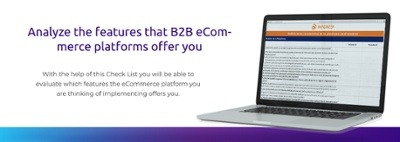
Then segment the customer base by margin and by order frequency, and decide which segment moves to self-service first. Small and recurring accounts are almost always the best starting point because the gain is immediate and the risk to key relationships is low. Only then compare platforms, and compare them against your own processes rather than against a brochure. Our enabling tool selection toolkit gives you a structured way to evaluate options, and the questionnaire offered at the end of this article lets you score the features described above one by one.

Finally, define two or three measures before launch, such as share of orders placed online, selling hours per seller spent with customers, and revenue per seller. Without them, the platform becomes a project; with them, it becomes a management system.

How ICX helps

ICX Consulting helps commercial leaders decide what to digitize and how to connect it to the sales process. Our work on digital eCommerce for B2B covers the business case, process design and platform selection, while sales enablement prepares sellers to use the new channel as a consultative advantage. When the question is how much each customer segment really earns, our B2B sales consulting and sales performance practice brings the numbers. The technology we implement, whether Adobe Commerce, HubSpot or another platform, follows the strategy and never the other way around. For a view of the eCommerce functions that matter most, see what the main functions of an eCommerce are.

If you want to see where your sellers lose their best hours, request a diagnostic with an ICX consultant.

Frequently asked questions

Does a B2B eCommerce replace the sales team?

No. It replaces the transactional work, such as order entry and availability checks, so that sellers can handle consultative selling, key accounts and complex negotiations. Companies that treat it as a replacement usually lose relationships, while those that treat it as an assistant raise both customer autonomy and revenue per seller.

How do I know which sales tasks to digitize first?

Start with tasks that are frequent, rule-based and low in judgment: reorders, stock queries, invoice and document requests, and quotes for standard products. Measure the hours they consume, then digitize the ones with the greatest time cost and the lowest relationship value.

Can smaller customers be profitable online?

Often yes, because the cost to serve falls sharply when ordering, payment and follow-up happen without a seller. The margin of a small account only needs to exceed a much lower cost, so many accounts that were unprofitable become acceptable once they self-serve.

What should I look for when evaluating eCommerce platforms?

Look for the ability to personalize by customer, respect negotiated prices, integrate with your ERP and CRM, show inventory by location and work well on mobile. A scored checklist reduces bias, and the questionnaire below is designed for that comparison.

Digital capabilities will not give your sellers more hours in the day, but they can give those hours back to the customers who deserve them. If your team is ready to spend its time on growth instead of data entry, we would be glad to help you plan the next step.

Checklist of B2B eCommerce platform features to evaluate for sales team productivity

GET CHECKLIST ECOMMERCE B2B 

Content added to ICX Folder
Default Save Save Article Quit Article

Save for later

Print-Icon Default Print-Icon Hover

Print

Subscribe-Icon Default Subscribe-Icon Hover

Subscribe

Start-Icon Default Start-Icon Hover

Start here

Suggested Insights For You

How to be a better B2B seller on social networks?

How to be a better B2B seller on social networks?

The exchange of supplies between companies is very common, since they provide what is necessary for the generation of products, such as raw materials...


Automate Follow-Ups in Salesforce with Generative AI

Automate Follow-Ups in Salesforce with Generative AI

To automate follow-ups in Salesforce with generative AI, companies combine CRM data, automated flows and AI that drafts personalized messages or acts...

Why is content marketing crucial for your sales team?

Why is content marketing crucial for your sales team?

Content marketing is crucial for your sales team because relevant, consistent content answers buyers' questions before and during the sale, builds...

What's next?

ARE YOU READY?

ICX SUBSCRIPTION
Stay ahead with exclusive insights from our senior consultants. Subscribe for the latest thinking on CX, growth, and digital transformation.