







How to improve the customer experience with the value proposition?
To improve the customer experience with the value proposition, design the promise around real customer needs, expectations and frustrations, then...

By Role
By Industry
By Target Customer
What We Offer
ICX helps companies grow revenue and profitability by connecting customer experience, sales, pricing, CRM and automation into one commercial system.
Customer Experience
We design memorable, customer-centered experiences that drive loyalty, enhance support, and optimize every stage of the journey. From maturity frameworks and experience maps to loyalty programs, service design, and feedback analysis, we help brands deeply connect with users and grow sustainably.
Marketing & Sales
We drive marketing and sales strategies that combine technology, creativity, and analytics to accelerate growth. From value proposition design and AI-driven automation to inbound, ABM, and sales enablement strategies, we help businesses attract, convert, and retain customers effectively and profitably.
Pricing & Revenue
We optimize pricing and revenue through data-driven strategies and integrated planning. From profitability modeling and margin analysis to demand management and sales forecasting, we help maximize financial performance and business competitiveness.
Digital Transformation
We accelerate digital transformation by aligning strategy, processes and technology. From operating model definition and intelligent automation to CRM implementation, artificial intelligence and digital channels, we help organizations adapt, scale and lead in changing and competitive environments.
Operational Efficiency
We enhance operational efficiency through process optimization, intelligent automation, and cost control. From cost reduction strategies and process redesign to RPA and value analysis, we help businesses boost productivity, agility, and sustainable profitability.
Customer Experience
Marketing & Sales
Pricing & Revenue
Digital Transformation
Operational Efficiency
The Value Proposition Canvas in less than 800 characters is a one-page tool that matches a customer segment's jobs, pains and gains with the products, pain relievers and gain creators you offer. Its output is your value promise, the main reason a customer should buy from you, written in the customer's language and tested against real evidence.
You have probably heard the name of this famous canvas many times as a way to analyze your value proposition from the customer's point of view. Still, you may ask yourself what the real importance of a Value Proposition Canvas is for the business. The answer is commercial. A value promise that customers understand in seconds shortens sales cycles, lifts website conversion and reduces the pressure to compete on discounts. A vague one does the opposite, and the cost shows up in acquisition spend and margin. For the full context on timing, read Value Proposition Canvas: A gift for success.
Consider a sales kickoff at a company that supplies software to hospitals. The chief executive asks five regional managers to explain, in one sentence, why a hospital should choose the company over its two main competitors. Five different sentences follow. One speaks of integration, another of price, a third of support and the fourth of an industry award. The fifth manager admits that, in practice, he leads with a discount. Nobody is wrong, but the market receives five messages from one company, and buyers who hear contradictory promises tend to default to the cheapest option. The canvas exists to prevent exactly this situation, by forcing a team to agree on what the customer values before anyone writes a headline or prepares a proposal.
Here is the summary that gives this article its name, short enough to share with any leadership team.
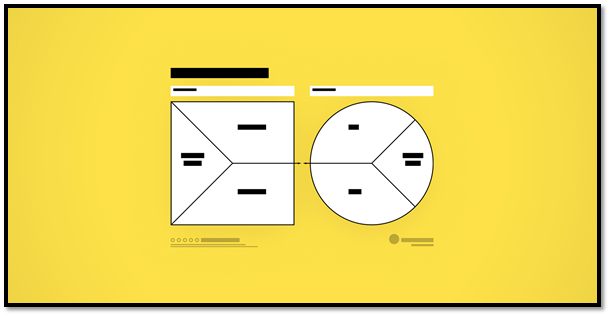
The canvas has two sides. On the right, the customer profile lists the jobs customers try to get done, the pains that block them and the gains they want. On the left, the value map lists your products and services, how they relieve those pains and how they create those gains. Fit happens when your relievers and creators address the jobs, pains and gains that matter most to that segment. Build one canvas per segment, write it in the customer's words, test it with real customers and use the result as your value promise, the reason to buy from you and not from someone else.
The short answer to why it matters is simple. The canvas captures the company's value promise to the customer, the main reason a potential customer should buy from you.
Understanding the value proposition in a clear, diagrammed way becomes, for example, a critical success factor in the customer's interaction with your website. A good analysis put into practice on the website determines whether readers bother to learn about your product and click the "more information" button.
Read: What is the Value Proposition Canvas and what is it for?

In essence, the Value Proposition Canvas can be summarized in three points.
Each test has a direct business consequence. Without relevance, marketing attracts the wrong audience. Without measurable value, sales falls back on price. Without differentiation, the customer compares you line by line with the cheapest alternative. Bain & Company's research on the elements of value is a useful reminder that value is broader than function. Its analysis identified 30 elements of value for consumers, arranged by functional, emotional, life-changing and social impact needs, and found that the right combinations pay off in stronger customer loyalty. In business markets, the same team identified 40 B2B elements of value in five categories, from table stakes and functional value to ease of doing business, individual and inspirational value. Both frameworks help a team move beyond "quality and service" toward benefits a buyer can actually weigh.
Your potential customers should be able to read and understand your value proposition, and it should be the first thing people see when they visit your website. It must also use the right language. But what does that mean?
The value proposition must be written in your customer's language, which means it must be expressed the way the customer imagines the value. To get there, you need to know the customer, using technology tools to collect information and interviewing customers directly.

In practice, three sources give you the customer's language quickly.
The test is simple. If a customer reads your value proposition and says "that is exactly my problem," it is in their language. If they need a salesperson to translate it, it is still in yours.
The main components of the Value Proposition Canvas are grouped in two blocks.

A useful way to read the two blocks is as a table of matches. Every important pain should have a reliever, and every important gain should have a creator. Anything on the left without a match on the right is a cost without a buyer.
| Customer side | Your side | Question for the leadership team |
|---|---|---|
| Customer jobs | Products and services | Which job does each product help complete, and which jobs do we ignore? |
| Pains | Pain relievers | Which of the top pains do we relieve better than any alternative? |
| Gains | Gain creators (vitamins) | Which gains could justify a higher price or a longer contract? |
>> Why generate a digital value proposition? <<
Building the canvas correctly requires answering key questions about the customer's benefits and pains. At ICX Consulting we use the following questions so that teams can complete the canvas successfully.
Two rules make these questions productive. First, answer them for one segment at a time, because a hospital buyer and a clinic owner rarely share the same pains. Second, rank the answers. Strategyzer, the firm behind the canvas, reminds teams that fit is a claim until customers confirm it, so the top three pains and gains should be the first hypotheses you test.
The canvas is analysis. Customers never see it. What they see is the message it produces, and that message should fit in four lines that any salesperson can repeat.
When the four lines are clear, they become the website headline, the first slide of the sales deck and the opening of the discovery call. When they are not, the canvas needs another round with customers before it reaches marketing.
The structure is the same everywhere, but the content of the customer profile differs sharply. In consumer banking, the relevant jobs are saving for a purchase, paying bills without friction and feeling in control of money. The pains include hidden fees and slow resolution of errors, and the gains include peace of mind and recognition. A bank that fills the canvas honestly often discovers that its messages talk about products while customers talk about confidence.
In manufacturing, the buyer is usually a team that includes engineering, purchasing and operations, each with different pains. Engineers worry about specifications and failure risk, purchasing worries about total cost and supplier reliability, and operations worries about delivery windows. One canvas per role, linked to the same offer, helps sales adapt the conversation without changing the promise.
In hospitality or real estate, emotional gains weigh heavily. A family choosing a residential development is buying security, community and a sense of progress as much as square meters, and a message built only on price per meter misses what moves the decision. Across these sectors, the lesson is that a value proposition is credible only when it is expressed in the terms the buyer uses to judge their own success.
A value proposition is a leadership asset, not a marketing slogan. It decides who the company serves, what it stops doing and how it defends its price.
For executives, the canvas is above all an instrument of choice. It forces a decision about which segments deserve the company's best effort and which pains it will deliberately leave to others. A CEO who endorses that discipline will find that pricing conversations become easier, because the company can explain what customers receive in exchange for what they pay. A CFO benefits as well, since a precise proposition makes it possible to link marketing spend to specific segments and to retire offers that no customer would miss. A chief customer officer completes the picture by verifying, in onboarding and service, that the gains promised in the message are the gains customers actually experience.
There is a legitimate objection to this approach. Customers sometimes say one thing in interviews and do another when they buy, which means a canvas built only on stated preferences can mislead. The remedy is to treat the first version as a hypothesis, compare it with behavior in sales and web data, and revise it on a regular rhythm.
A practical suggestion for the first week is to begin with the most uncomfortable evidence. Read ten recent lost-deal notes and ten customer complaints before opening the canvas, and underline every sentence in which the customer describes a pain in their own words. Those sentences are worth more than any workshop brainstorm, and they give the working session a common factual base. When the group then drafts the four-line message, it should be tested against a single question, which is whether a customer in that segment would recognize their own situation in it without help.
ICX Consulting helps companies define value propositions that sales can sell and customers can recognize. Our value proposition consulting combines customer research with the customer experience work needed to deliver the promise, and the ICX Compass methodology connects both to measurable business results. When the message is ready, our marketing and sales strategy team helps take it to market.
To start off on the right foot, use the ICX Value Proposition Toolkit, a ready template to complete the canvas with your team. For a deeper walk-through, see how to fill in the Value Proposition Canvas.
No. A slogan is designed to be memorable, while a value proposition is designed to be useful to the buyer. It explains who the offer is for, which problem it solves and why it is better than the alternative. A good slogan can come from a strong value proposition, but it cannot replace one.
One per priority segment, plus a short corporate promise that ties them together. Companies that sell to very different buyers with a single message usually end up with something too generic for anyone. Start with the segments that drive most of the revenue and add others only when the first ones are validated.
Look at behavior, not opinions. Compare conversion on pages or campaigns that use the new message, win rates in deals where sales used it and the share of lost deals attributed to price. If those numbers do not move after a reasonable period, return to the canvas and recheck the ranked pains and gains.
A value proposition that fits in a few lines is the result of a lot of listening. When it is right, marketing gets easier, sales cycles shorten and price stops being the only argument. If your team struggles to explain in one sentence why customers should choose you, talk to an ICX consultant and turn your canvas into a promise customers recognize.
To improve the customer experience with the value proposition, design the promise around real customer needs, expectations and frustrations, then...
To fill in the Value Proposition Canvas, start on the right with one customer segment and rank its jobs to be done, pains and gains. Then complete...
The Value Proposition Canvas is a visual tool, created by Alexander Osterwalder, that describes one customer segment's jobs, pains and gains and...