











HubSpot data model: your CRM in perfect order
 Daniel Zapata : Jul 14, 2025
Imagine opening your CRM and finding everything in perfect order: contacts are up to date, properties are clearly organized and data accurately...
9 min read
9 min read
Data, sales and technology empower commercial teams when customer and pipeline data are captured once, connected across systems and turned into decisions sellers can act on the same day. Technology is the catalyst, but the advantage comes from the strategy that defines which data matters, who uses it and which outcome it should move.
Data has become one of the most valuable assets a company owns, and its ability to transform sales teams and lift performance has never been greater. Yet many leadership teams still fund sales technology the way they fund office equipment, as a cost to be minimized, and then wonder why forecasts are unreliable and sellers spend their week updating records. For a CEO or CRO, the real question is not which tool to buy. It is how data becomes a sustainable competitive advantage, used not only to keep pace but to lead. This article explores how data drives technology adoption in modern sales teams and how to apply the right tools with a clear strategy.

It is the Monday forecast meeting at a distributor of industrial supplies. The CRO presents a pipeline that looks healthy on paper, the CFO asks why the last three quarters closed below forecast, and the sales directors answer with stories rather than numbers. One region says its deals are delayed by customer budgets, another says competitors are discounting, and a third says the data in the CRM is not current. Each explanation may be true, and none can be tested, because the evidence lives in spreadsheets, inboxes and memory. The meeting ends with a promise to review again next week. That pattern is the cost of selling without a shared view of data.
Table of contents
Not long ago, intuition and experience drove most sales decisions. Today data is the new currency of commercial work, and the ability to collect, process and analyze it efficiently is the engine of sales performance. Gartner anticipated this shift in 2020 when it predicted that 60% of B2B sales organizations would move from experience- and intuition-based selling to a data-driven approach by 2025, merging sales process, applications, data and analytics into a single operational practice. That horizon has arrived, and the gap between companies that made the transition and those that did not is now visible in win rates and forecast accuracy.
One of the most powerful effects of the rise of data in sales is personalization. Sales strategies used to be generic, with similar approaches for every customer. With abundant data, sales teams can personalize each interaction.
>> Digitalization of Processes <<
Consider a sales team in an e-commerce company. Using customer behavior data, purchase history and preferences, it can offer personalized recommendations to each customer. If a customer has previously bought facial care products, the team can suggest complementary products in that category during the next interaction.
This personalization improves the customer experience and also raises the likelihood of closing the sale. Data makes each offer relevant and timely, which builds a stronger bond between the customer and the brand. In B2B the same logic applies to account plans, renewal timing and cross-sell recommendations based on what similar customers bought.

When we talk about data in the sales context, we are not talking about abstract numbers. We are talking about strategic information that can guide every customer interaction, from lead generation to closing and beyond. The question is how sales teams can approach this wealth of information effectively.
Sales metrics such as total revenue or conversion rate can look like isolated numbers when viewed one by one. When leaders build a narrative around them, they reveal the story of how the team actually performs.
Imagine an exceptionally successful quarter. The data may show a 20% increase in revenue, but the real story goes beyond that number. It might show how a shift in market segmentation brought in new customers, or how a specific campaign generated unprecedented interest. That narrative gives context to the metrics, so the team understands not only what happened but why. Understanding the story behind the figures turns both successes and setbacks into lessons for the next quarter.
A practical way to build that narrative is to read metrics in layers. Outcome metrics such as revenue, margin and retention tell you whether the strategy is working. Funnel metrics such as conversion by stage, cycle length and win rate show where value is created or lost. Activity and quality metrics, such as meetings with decision makers or proposals sent after discovery, explain why the funnel behaves as it does.
When the three layers live in the same system, a sales director can move from "revenue is down" to "deals in one segment are stalling after the proposal stage" in minutes rather than weeks.

>> The Purpose of Digital Transformation in Enhancing Customer Experience <<
The key to unlocking the potential of sales data is the use of specialized tools. They simplify data management and let sales teams extract information that improves performance. These are the main categories that drive the transformation of data in sales.
The CRM (customer relationship management) is the cornerstone of any effective sales strategy. A CRM stores customer data, tracks interactions, manages leads and supports personalized relationships. Sales analytics platforms such as Tableau and Power BI offer advanced visualization, helping teams see patterns, identify trends and make data-driven decisions. Marketing automation platforms such as HubSpot and Marketo automate campaigns and provide data on which lead generation strategies actually work.
For pipeline management, solutions such as Pipedrive and Salesforce Pipeline Inspection, an integrated workspace that spotlights key pipeline metrics, help teams visualize and manage the funnel from prospecting to close. Predictive analytics, with tools such as IBM Cognos Analytics, which absorbed the former Watson Analytics product in 2019, or Salesforce Einstein, lets sales teams anticipate trends and act proactively.
Artificial intelligence platforms are changing how sales teams interact with data, and solutions such as Conversica use AI assistants to engage and qualify leads, freeing sellers for higher-value conversations. Finally, sales engagement and automation tools such as Outreach and Salesloft, from email sequences to smart lead assignment, change how sales teams run their daily processes.
Tool names change quickly, and many CRMs now include several of these categories natively. What should not change is the principle that each tool must write to and read from a shared customer record. Five excellent tools that do not share data produce five versions of the truth.
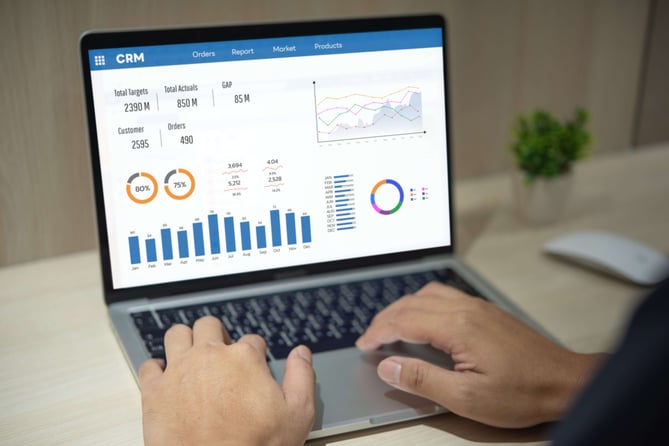
Using technology does not guarantee success. The strategy behind its application makes the difference. These are the key steps to apply sales tools effectively.
First, define clear objectives. Before choosing technology, decide what you want to achieve, since increasing conversion, shortening the sales cycle or improving customer retention each require different data and different tools. Second, integrate seamlessly. Tools must connect with existing systems, especially the CRM and marketing platforms, so information flows without manual re-entry.
Third, train the team. Adoption requires training and alignment, and sellers must understand how each tool helps them sell, not only how it helps management report. Fourth, analyze continuously, reviewing regularly how tools are used and adjusting the strategy so the investment keeps evolving with the business.

Leaders can place their organization on a simple maturity scale before deciding where to invest next.
| Level | What it looks like | Next move |
|---|---|---|
| 1. Intuition | Spreadsheets, forecasts based on rep opinion, little shared customer history | Adopt a CRM as the single record of customers and deals |
| 2. Recorded | CRM in use, but data is incomplete and reports are built by hand | Define required fields by stage and automate activity capture |
| 3. Connected | CRM, marketing and service share data, and dashboards are trusted | Add funnel analytics and segment-level performance reviews |
| 4. Predictive | Lead scoring, deal health and forecasts use models, not only opinion | Use AI to recommend next best actions and prioritize accounts |
Most companies ICX meets sit between levels two and three. The largest return usually comes from fixing data quality and integration before buying advanced analytics.
Moving up a level is less about software than about habits. Sellers need a reason to record information, which usually means the CRM must save them time through automated activity capture, ready-made proposals or useful account insights. Managers need to run pipeline reviews from the system rather than from side spreadsheets, because a team quickly learns which data leadership actually looks at. When those two habits are in place, each new tool adds to a reliable foundation instead of another layer of disconnected information.
The same principles produce different priorities. A distributor with thousands of SKUs and recurring buyers gains most from purchase-pattern data, since the system can flag a customer who stopped reordering a product family before the account manager notices. A bank or insurer needs consent-aware, unified customer data across products, because cross-sell depends on knowing what the customer already holds. In telecom, usage and billing data allow offers at the moment a customer approaches a plan limit, which is more effective than a generic campaign.
In real estate and other long-cycle sales, the relevant data is engagement, such as which documents a prospect opened, how often they returned to the project page and who else joined the conversation. Imagine a developer whose advisors receive an alert when a prospect revisits the payment plan twice in a week. The call that follows is timely, informed and far more likely to move the deal than a scheduled follow-up.
Data initiatives disappoint for reasons that have little to do with technology. The first is the reporting burden. If sellers are asked to record information that gives them nothing back, they enter the minimum, and the dashboards built on that minimum mislead leadership with confidence. The second is false precision. A forecast model trained on poor data produces a number with decimals and no truth. The third is tool sprawl, where each team buys its own application and the company ends up paying for overlapping capabilities that do not share a customer record.
There is also a human risk. A seller who feels measured but not helped will resist, and the best sellers, who depend on judgment and relationships, may leave. The remedy is to make the data work for the seller first, with automatic activity capture, useful account insights and fewer manual reports, so that management visibility becomes a by-product of a system sellers want to use.
Return to the Monday forecast meeting. To attract, combine marketing and sales data to show which channels bring customers who actually buy, so budget follows revenue rather than clicks. To convert, use funnel visibility by stage and segment to expose where deals stall, and use personalization to lift the odds of closing. The CFO's question about three quarters of misses becomes answerable when stage conversion is visible by region.
To retain, use purchase and service history to signal renewal risk and cross-sell timing before the customer decides to leave. On efficiency, automation removes manual reporting and data entry, giving sellers more time with customers and making forecasts more reliable.
The executive decision is to treat sales data as a managed asset with an owner, quality standards and a roadmap, not as a by-product of software.
Pick one commercial outcome, for example improving win rate in your top segment or reducing cycle time for mid-size deals. List the data that outcome needs, identifying which fields, activities and signals exist today and which are missing or unreliable. Map your current tools, noting where each piece of data lives and where integrations break.
Then fix before you buy, cleaning, integrating and automating capture in the systems you already pay for. Review weekly, using the new view in sales meetings and tracking whether the chosen outcome moves. A sales director who starts on Monday by choosing the single outcome and the three fields that matter most will have a better forecast conversation within a month.
For a broader view of how digital initiatives connect to revenue, see ICX's guide on how to increase sales through digital transformation.
Technology will keep playing a central role in sales. From the evolution of artificial intelligence to the growing integration of predictive analytics, the coming years promise an exciting era for sales teams willing to embrace Digital Transformation. The transformation of data in sales is not only a necessity. It is a strategic opportunity to drive business performance, and the right tools open the door to a new level of efficiency and success.
The rise of data in sales has redefined how companies approach commercial strategy. It is no longer enough to analyze isolated metrics. The advantage comes from building meaningful stories around them, stories that reveal the strategic shifts, successful campaigns and key moments behind exceptional results.
ICX Consulting helps commercial teams turn data into revenue decisions. Our sales analytics practice defines the metrics and dashboards that matter, our sales automation team removes manual work from the process, and our sales consulting services align process, people and technology on platforms such as HubSpot and Salesforce. If you are choosing or replacing sales tools, use the free enabling tool selection toolkit from ICX to compare options against your commercial goals.
Data-driven selling is a sales approach in which decisions about which accounts to pursue, what to offer and when to act are based on customer, pipeline and market data rather than individual intuition alone. It does not replace seller judgment. It gives that judgment better evidence and makes good practices repeatable across the team.
Start with what you have. Most organizations use a fraction of their CRM's capability, and poor data quality undermines any new tool. Audit adoption, integrations and data completeness first. Buy new technology only when a clear objective requires a capability the current stack cannot deliver at reasonable cost.
Revenue operations or sales operations usually owns the data model, quality rules and reporting, with sales leadership accountable for adoption. Marketing, service and finance should agree on shared definitions, such as what counts as a qualified lead or a closed deal, so every team reads the same numbers the same way.
Focused initiatives usually show early signals within one or two quarters. Cleaner pipeline data improves forecast conversations almost immediately, while effects on win rate and cycle time appear once several deal cycles have run through the improved process. Broad, unfocused programs take longer, which is why starting with one commercial outcome matters.
Your sales team already produces the data it needs to sell better, and the opportunity is to connect it and put it to work. ICX can help you decide which data, tools and practices will move your revenue fastest. Want to know how much your current data is really worth to your sales team? Request a diagnostic with an ICX consultant.


Daniel Zapata : Jul 14, 2025
Imagine opening your CRM and finding everything in perfect order: contacts are up to date, properties are clearly organized and data accurately...

To increase sales through digital transformation, a company redesigns how it finds, converts and keeps customers around data, connected channels and...

 Josué Granados : Jun 24, 2025
Technographic data is information about the technologies that companies and consumers use, from operating systems, devices and applications to the...

