











Lead Scoring application guide
Lead scoring is the practice of assigning points to a lead for who it is (explicit criteria such as location, role or company profile) and for what...
10 min read
10 min read
ABM scoring is the practice of ranking target accounts, and the people inside them, by how closely they match the ideal customer and how actively they are engaging, so that sales and marketing concentrate effort where a purchase is most likely. It replaces opinion about which accounts matter with a shared, measurable standard.
Consider the quarterly business review at a company that sells enterprise software to banks and insurers. The head of marketing presents 1,200 new leads and calls it the best quarter on record. The head of sales answers that his team chased about a third of them, closed almost none and lost two large opportunities because nobody noticed that a champion at a strategic account had stopped opening emails. Both statements are true, and both executives are frustrated. What they lack is not effort or data. They lack a common answer to a simple question, which accounts deserve our attention this week, and why?
For years, bringing sales and marketing together has been one of the hardest tasks in commercial management. Account-based marketing has changed the terms of that negotiation. When both teams work toward better results from a defined set of accounts, they stop arguing about lead volume and start discussing the likelihood that a specific company will buy. Lead scoring, applied with the logic of ABM, is the instrument that makes this conversation concrete. It is a technique that was once expensive and reserved for large organizations and that technology has made far more accessible.
Lead scoring is an automated technique that assigns points to each record in a database according to how close it is to the ideal customer, how interested it is in what the company offers and where it stands in the buying process. The result is a number that marketing and sales can read in the same way, which is precisely why it is useful.
The score is built from two kinds of information. Implicit characteristics are the accumulated activities a person or company performs across your channels, such as opening an email, visiting a pricing page or attending a webinar. Explicit characteristics are the demographic and firmographic data that has been captured, for example revenue, number of employees, industry, location, technology suitability and hiring trends. The first tells you about interest and the second about fit. A contact who reads everything you publish but works for a company far outside your market is a pleasant reader, not a prospect. A perfectly fitting company that has never interacted with you is a target, not yet an opportunity. Scoring puts both dimensions on one scale.
In an ABM strategy the logic is the same but the unit changes. Instead of scoring only individuals, the company scores accounts, consolidating the signals of every stakeholder who touches the account. The score should focus on companies that combine fit and interest, the two things lead scoring measures, and it should direct the scarce time of the sales team toward them. HubSpot's own documentation reflects this distinction, since its lead scoring tool offers engagement, fit and combined scores, with combined scores available for contacts, companies and deals, and supports negative points when behavior signals disinterest.
The business argument is about allocation. Every commercial organization has a limited number of hours, and the way those hours are distributed across accounts is one of the most consequential decisions it makes, although it is rarely treated as a decision at all. In most companies it is made implicitly, by whichever salesperson shouts loudest or whichever lead arrived most recently. A scoring model makes the decision explicit, and explicit decisions can be examined, challenged and improved.
There is evidence that organizations practicing ABM feel the effect on alignment first. A Demand Spring survey of 100 North American B2B marketing executives, reported by MarketingCharts, found that 75% saw an increase in sales and marketing alignment since executing ABM, and that a majority said ABM generated more revenue than their other marketing efforts. The sample is small and the respondents are practitioners, so the figures should be read as directional. Still, they match what we observe in client work, that the shared list of target accounts does more to bring the two functions together than any reorganization or any joint offsite.
The financial case follows. A chief financial officer cares about customer acquisition cost and about the predictability of the pipeline. A score that surfaces the accounts most likely to buy shortens sales cycles, reduces wasted outreach and makes the forecast less dependent on the optimism of individual sellers. It also protects the existing base, since the same logic can flag customers whose engagement is falling before they decide to leave.
The foundation of any scoring model is the ideal customer profile. It is tempting to build it from intuition, and equally tempting to copy a template from another company. Both approaches fail for the same reason, which is that scoring is not universal. The criteria must be specific to your business interests, because another company's top-ranked lead may offer very little to yours in terms of potential revenue. A bank that sells treasury services to mid-sized manufacturers should not reuse the model of a software company that sells to startups, even if both call their targets enterprise accounts.
The right place to begin is with the data you already own. Analyze your best current customers and compare them with the prospects who never bought. What characteristics and activities do the winners share? Which content do they consume most, which emails do they open and click, who follows them on social networks such as LinkedIn, and are they based in urban or rural areas? Patterns that appear repeatedly deserve points in the model. Patterns that appear in the lost deals deserve to be understood, and sometimes to carry negative points.
This analysis also reveals whether the problem lies in scoring or in supply. If the volume of leads is low, the best scoring model in the world has little to work with, and the priority becomes strengthening lead generation strategies and finding new ways to attract contacts that resemble the profile. Marketers should look at both questions together. For the profile work itself, ICX offers the Persona Playbook Toolkit, which helps commercial teams document who the buyer is and what they need at each stage.
Once the characteristics and activities that define the ideal customer have been identified, they must be translated into points. The logic should be simple enough for a sales leader to explain in a minute. Take email as an example. When a potential buyer opens a message, the lead may receive a score of 2. When they click on a link, the score rises to 6. When they reply with an inquiry, it rises further to 10. The scale expresses a judgment that matters, namely that a reply is worth far more than an open, because the further a person moves from passive exposure to active conversation, the closer they are to a purchase.
The same principle extends to other signals. A visit to the pricing page is worth more than a visit to the blog. A request for a demonstration is worth more than a download. A contact who holds the title of a decision maker at a company in the target industry starts with points before doing anything at all. To help marketing and sales understand the potential value of leads, the points should be placed on a standardized scale with agreed thresholds, for instance a score above which a lead is passed to sales and a score below which it continues to be nurtured.
Two cautions deserve emphasis. The first is that points without calibration are fiction. A model should be tested against history, checking whether the accounts that actually closed would have scored high. If they would not, the weights are wrong. The second is that sales must participate in the design. A scoring model built by marketing alone will be ignored by the people who are supposed to act on it, and the thresholds will become another source of friction rather than an end to it. A related ICX article on the application of lead scoring explores the mechanics in greater detail, and the one on setting up lead scoring in HubSpot covers the technical configuration.
With scores assigned, the next step is to evaluate the highest-scoring accounts and estimate their perceived value. Prioritization is the heart of the framework, because it determines what the organization will actually do. A list of scored accounts is only information. A decision about which twenty accounts will receive senior attention, personalized content and coordinated outreach this quarter is strategy.
Prioritization should combine two axes. One is the score, which expresses likelihood. The other is the potential value of the account, which expresses what is at stake. A small account with a very high score may deserve an efficient, largely automated approach. A very large account with a moderate score may deserve a patient, high-touch effort that the score alone would never justify. Treating the two axes separately keeps the model from sending the best sellers after the easiest deals instead of the most valuable ones.
Picture a manufacturer of packaging materials that sells to food and beverage companies. Its scoring model identifies thirty accounts with high engagement, but only six of them exceed a revenue threshold that makes a dedicated team worthwhile. Those six receive an account plan, an executive sponsor and a sequence of tailored content. The other twenty-four enter an automated nurturing program with a trigger that escalates them to sales when their score increases. The company has not added headcount. It has simply decided, on the basis of evidence, where each type of effort belongs.
B2B purchases involve several people, and an ABM model that tracks only one contact misses the real dynamics of the sale. After prioritizing accounts, the implementation plan must identify the role each stakeholder plays in the purchasing decision. In a typical case, a user raises the need, a technical evaluator tests the solution, a financial executive scrutinizes the investment and a senior sponsor approves it. Each of them consumes different content and sends different signals.
At this stage a team should answer a short sequence of questions. Who on our side will do what? When will they do it? How will they do it? And, of course, what does it all mean for the account? It is essential to understand the level and type of involvement of each stakeholder, because this information is the backbone of the overall scoring strategy. An account where five people from three departments have opened proposals in the same week is a very different case from one where a single enthusiastic contact has downloaded six documents. The first is a buying committee in motion. The second may be a researcher with no budget.
This is where scoring at the account level adds value over scoring at the individual level. By combining the activity of all known contacts, the model can show breadth, meaning how many people are engaged, and depth, meaning how intensely. Breadth is often the best predictor of a serious opportunity, and it is invisible when the data is examined contact by contact.
Whether you are scoring for demand generation or for ABM, the primary purpose of these rules-based methodologies is the same, to improve overall business results. The difference lies in the starting point. Demand generation scoring begins with a large pool of unknown contacts and asks which of them are worth pursuing. ABM scoring begins with a defined list of companies and asks how close each one is to a decision. The first filters volume. The second deepens relevance.
Many organizations need both. A company may use ABM for its two hundred strategic accounts and demand generation scoring for the long tail of smaller prospects, with rules that move a contact from one program to the other as evidence accumulates. What matters is that the two models share definitions, so that a lead means the same thing to every team, and that the data feeds a single view of the customer inside the CRM. Our article on what account-based marketing is places this choice in a wider strategic context.
Scoring was never intended to be a set-it-and-forget-it tool. It is meant to evolve as learning grows and conditions change. Markets shift, products are launched, buying committees change composition and channels gain or lose importance. A model calibrated two years ago may reward behaviors that no longer predict purchases and ignore signals that now matter. The practice of reviewing and validating the model should therefore be built into the commercial calendar, in the same way that forecast reviews are.
A sensible rhythm is a quarterly review in which sales and marketing examine closed-won and closed-lost accounts, compare them with the scores they had three months earlier and adjust the weights. The review also asks whether any new data source, such as intent signals or product usage, should enter the model, and whether any criterion should be retired. A model that is questioned regularly earns credibility. One that is never questioned eventually becomes ornamental.
<<Learn more: Account-Based Marketing on LinkedIn>>
For the chief executive, scoring is a way to make the growth strategy operational. A strategy that names target segments but leaves account selection to individual judgment will produce scattered results. When the company defines the ideal customer profile in a model that sales and marketing both use, strategy reaches the daily agenda of the people who carry it out. It also gives the executive a clear lens on the pipeline, since the quality of the accounts in the funnel becomes visible and not only the volume.
For the chief sales officer and the chief marketing officer, scoring offers a way to end the oldest dispute in the commercial organization. When the two agree beforehand on what a qualified account looks like, marketing is judged on the quality of what it delivers and sales is judged on how it follows up. Each function has a clear responsibility, and the disagreement shifts from blame to calibration, which is a much more productive conversation.
For the chief customer officer and the finance leadership, the same machinery supports retention and efficiency. Declining engagement among key contacts at an existing customer is as informative as rising engagement at a prospect. A score that warns of risk allows the company to act before a renewal is lost, and a score that identifies expansion potential helps direct account managers to the customers with the greatest room to grow.
An experienced consultant would advise against beginning with a platform. Begin with a conversation. Bring the heads of sales and marketing together with the five best customers and the five most painful losses of the past year on the table. Ask what the winners had in common and what warning signs appeared in the losses. Write down the ten characteristics and the ten behaviors that seem to matter, and agree on which of them genuinely predict a purchase.
Translate those into a first version of the model with a handful of explicit criteria and a handful of behavioral signals, assign points with the simple logic described above and set a threshold for handing an account to sales. Apply it retroactively to last year's closed deals to see whether it would have recognized the winners. Adjust, then launch it in your CRM for a limited set of accounts so that sellers can give feedback. Within a quarter you will have both a working model and a documented process for improving it, which is more valuable than a sophisticated model nobody understands.
ICX Consulting designs scoring and prioritization models as part of a wider commercial architecture. Our teams define the ideal customer profile with executives, align sales and marketing on the criteria and thresholds, and implement the result so that the score appears where people work. This builds on our account-based marketing consulting and our lead management practice, and it is deployed on HubSpot or Salesforce so that scores, alerts and reports live in the CRM. To structure the buyer profile that anchors the model, start with the Persona Playbook Toolkit.
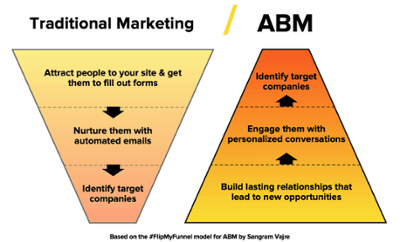
The mechanics are similar, but the unit of analysis changes. Traditional scoring ranks individual contacts. ABM scoring aggregates signals from every contact in a target account and weighs them against account-level fit, such as size, industry and technology. The aggregate view shows how many stakeholders are engaged, which is often a stronger signal than any single contact's activity.
Fewer than most teams expect. A model with a dozen well-chosen criteria that sales understands will outperform one with sixty that nobody can explain. Start with the characteristics that clearly separate your best customers from the rest, and add criteria only when a review shows that they improve predictions.
There is no universal number. The threshold is the point at which historical data shows that leads convert at a rate sales finds worth pursuing. Test it against closed deals, set it with sales leadership, and revisit it each quarter, because a threshold that is too low floods sellers and one that is too high starves the pipeline.
Yes, and with less investment than before. Modern CRM platforms include scoring tools, so a small team can begin with a simple model built on a few fit criteria and engagement signals. The discipline of agreeing on the ideal customer is valuable at any size, because it concentrates limited resources on the accounts most likely to buy.
If your teams still debate which accounts deserve attention, a shared scoring model can settle the question with evidence. Talk to an ICX consultant about designing an ABM scoring model that aligns your sales and marketing teams around the accounts most likely to buy.



Lead scoring is the practice of assigning points to a lead for who it is (explicit criteria such as location, role or company profile) and for what...

Lead scoring is a marketing and sales automation technique that assigns points to every prospect according to who they are and how they behave, so...

 Susana Matamoros : May 29, 2025
Predictive lead scoring is a machine-learning method that estimates, for every contact in a CRM, the probability that it will become a customer, so...

