











How to create a follow-up sequence on HubSpot?
A follow-up sequence in HubSpot is a prepared series of emails and tasks that the CRM schedules for a prospect after first contact, and that stops by...
10 min read
10 min read
New HubSpot software releases matter to executives not because of any single feature but because each release changes what a team can automate, measure and serve, and under which license. The 2022 wave, which arrived as HubSpot was ranked the leading CRM in G2's Spring 2022 grid, shows how to separate the updates worth adopting from the ones worth watching.
Imagine the Monday leadership meeting at a distribution company that has run HubSpot for three years. The service director has read that conversations can now carry service level agreements and wants them switched on. The marketing director has seen a new campaign template for paid social and asks why it is not available in the portal. The finance director wonders whether the new invoicing integration will end the weekly reconciliation between the CRM and the accounting system. Each request is reasonable, and each depends on facts that nobody in the room has: whether the feature is in beta or live, which license unlocks it, and who in the organization will own it once it is running. Without those facts, the meeting produces enthusiasm instead of decisions.
This article reviews the updates that HubSpot announced during 2022 across its marketing, sales, service, operations and CRM layers, and it uses them to make a broader point. In a platform that releases continuously, the executive advantage lies in a disciplined way of evaluating change. Some of the 2022 features have since evolved, been renamed or been retired, and that history is itself instructive.
HubSpot announced on March 28, 2022 that its Sales Hub had been named the best CRM software in G2's Spring 2022 CRM Grid Report, and that it had also achieved the highest score on the Enterprise Usability Index for the CRM category. The report is based on feedback from verified users on G2, and a product needs a minimum number of reviews to be included. The company's own comparison page presents the result alongside the grid.
The ranking is not surprising, given that HubSpot has built several differentiators in the technology industry over recent years. It deserves a measured reading all the same. A user-review ranking is a credible signal about satisfaction and ease of use, and it is not an audit of fit for any particular company. The announcement came from the vendor itself, which presents the results favorably, so a buyer should treat it as one input among several. Where it does carry weight is in adoption: platforms that users like are more likely to be used, and a CRM that is not used produces no return on its license.
The same logic explains why release management matters. A well-reviewed platform that keeps evolving can deliver compounding value, but only to organizations that know how to absorb change. Among the areas in which HubSpot added capability in 2022, four deserve review: the difference between beta and live updates, the updates in the CMS, marketing, sales and service hubs, the updates in Operations Hub, and the general CRM updates and integrations. A short companion on the importance of HubSpot reports to measure your goals explains why measurement should accompany every one of them.
>> Importance of HubSpot reports to measure your goals <<
For companies that are not yet familiar with HubSpot's terminology, there are two kinds of updates to the software. A beta update is a product change that is still under development. A live update has completed the development process and is published in all partner environments. The distinction sounds technical, but it has direct consequences for planning, because a beta feature can change, be limited or never reach general availability.
In the case of beta updates, some may not be present in the portal of a partner or of its customers, and two factors explain why. The implementer may need to request access to the tools or updates under development from the manufacturer, and the new update may be unavailable because of the license that the implementer or its customer holds. For an executive, the practical lesson is to avoid building a process on a beta feature without a fallback. A beta can be a valuable early advantage for a team that has the capacity to test and adjust, and a risk for a team that expects stability.
A sensible rule is to classify each announced feature into one of three categories before spending any effort. Features that are live, available in the current license and tied to a clear business problem are candidates for immediate adoption. Features that are in beta and relevant to the strategy deserve a controlled pilot with an owner and a deadline. Features that are interesting but unrelated to any current priority belong on a watch list that is reviewed each quarter.
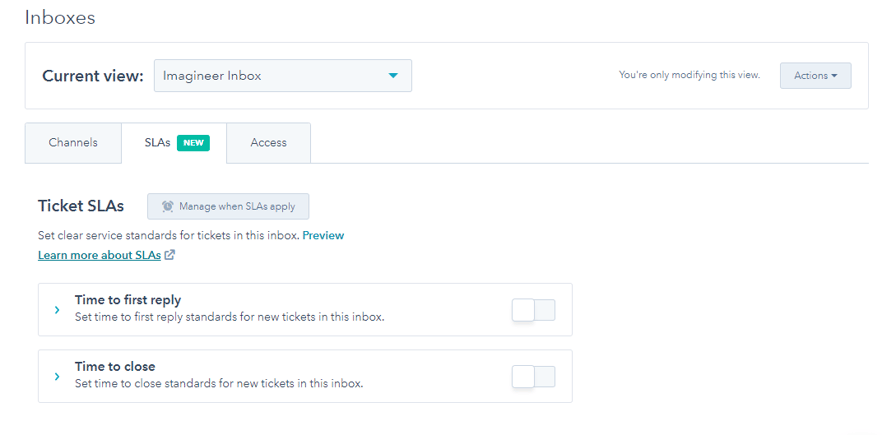
Among the updates that were live or in development during 2022, four stood out for commercial teams. The first was the creation of service level agreements. The capability was assigned initially to the conversations module, and it allowed a company to set service level agreements for its inbox, both for the time of first response and, if necessary, for the time to close. In 2022 it was available from professional and enterprise licenses. According to HubSpot's current documentation, SLAs in the inbox require Service Hub Professional or Enterprise, support time to first reply and time to close, and have an important restriction: accounts created after April 1, 2024 cannot set SLAs in the conversations inbox and are directed to the help desk instead. A company that adopts the feature today should confirm which route applies to its portal.
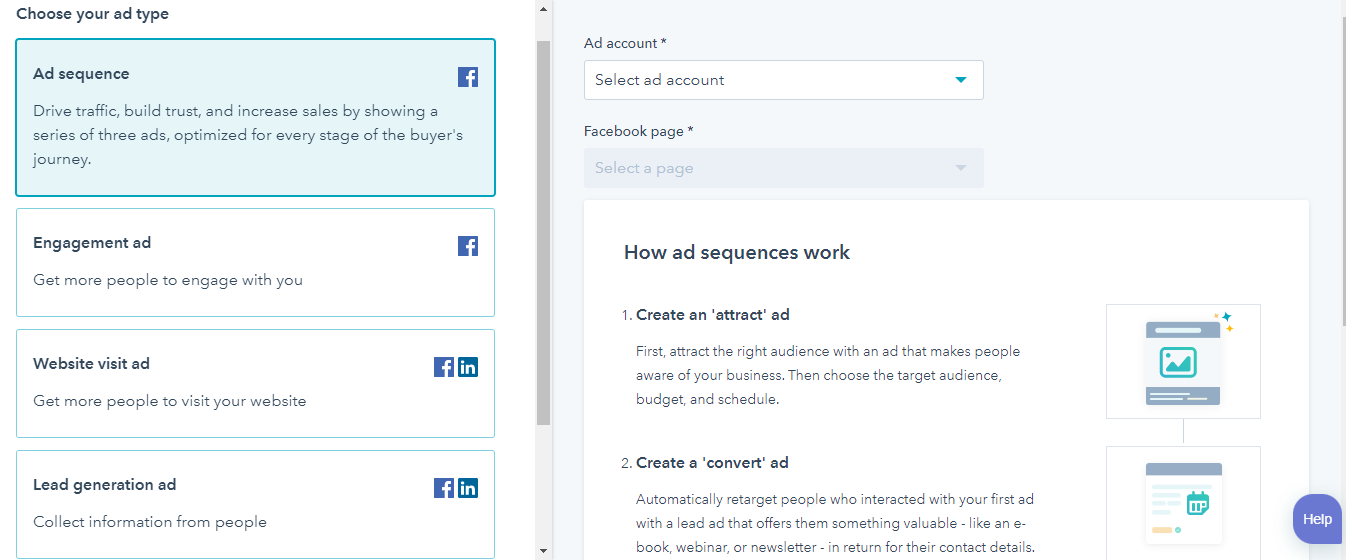
The second was the creation of campaign templates for ad sequences. These templates guide the marketer through a documented sequence of actions so that a series of ads, aimed at attracting visitors, converting them and closing deals, can be built consistently and reused. They were available to marketing professional and enterprise licenses, as the HubSpot article on ad sequences described, and they were configured from the marketing module by entering the Ads tool and choosing the Ad Sequence option. Ad sequences were run in a similar way to sales sequence automation, with HubSpot showing a step-by-step configuration according to the sequence selected. This is a clear example of why release tracking matters. HubSpot's documentation now labels Facebook ad sequences as a legacy feature and states that they were scheduled to be sunset on September 4, 2026, after which sequences can no longer be created or managed in HubSpot. Companies that built campaigns on the template need to rebuild them in the ad platform itself.
The third update placed page meta descriptions in the SEO recommendations, which makes these optimizations possible from within the tool and supports the integrated campaign reports that HubSpot highlights in its product updates. It is a modest change that illustrates a larger trend, in which search optimization moves from a specialist activity to a routine part of content management.
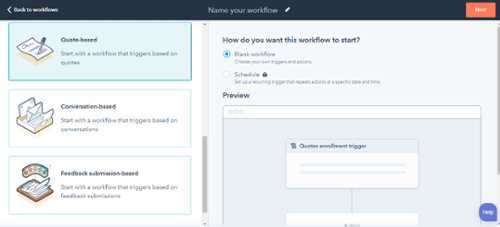
The fourth was the introduction of workflows based on quotes, available to sales professional licensing. The author noted that the feature did not yet include the ability to create quotations from a workflow and that quote approvals would remain an enterprise capability. The licensing has since been reorganized. HubSpot's documentation now states that quote approvals are available with Revenue Hub Professional or Enterprise, with advanced approvals reserved for Enterprise. For a sales leader the commercial significance is the control it gives over discounts and terms, which protects margin without slowing the deal.
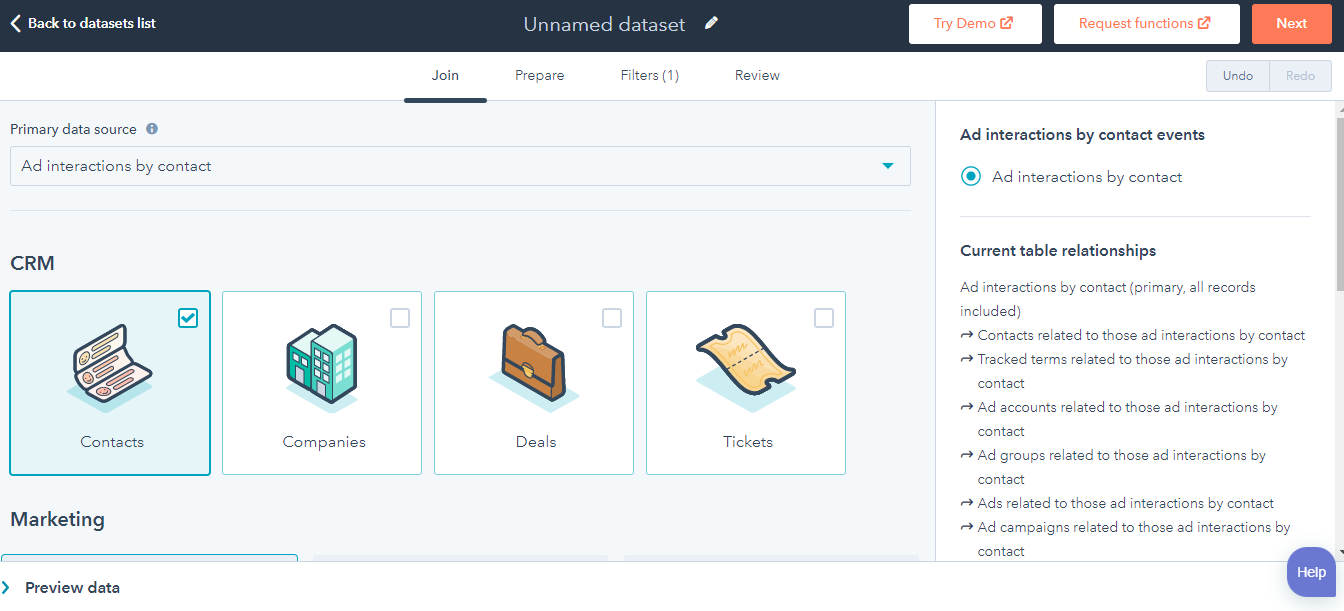
Two updates concerned the operations layer of the platform, the part that keeps data clean and moves it between systems. The first was enhanced conditional logic mapping on datasets with IF rules. Its purpose is to transform and segment reporting data, so that conditional logic can support specific analyses and data sets can be grouped by multiple calculation conditions or by data enrichment. For a finance or revenue operations leader, this means that definitions such as what counts as a qualified opportunity or a priority account can be encoded in the data itself instead of being recalculated in spreadsheets every month.
The second was the ability to send GET requests through webhook workflows. A team can configure GET requests to bring data from other tools or platforms directly into HubSpot, set up the webhook response inside the workflow and test it to confirm that it works. In 2022 the capability was available from the professional and enterprise licenses of the operations module. HubSpot has since renamed that product, and its documentation on GET requests in workflows now states that the feature requires Data Hub Professional or Enterprise, that the webhook must use HTTPS and that failed webhooks are retried for a limited period. The naming change is a useful reminder to verify the current product name and license before budgeting.
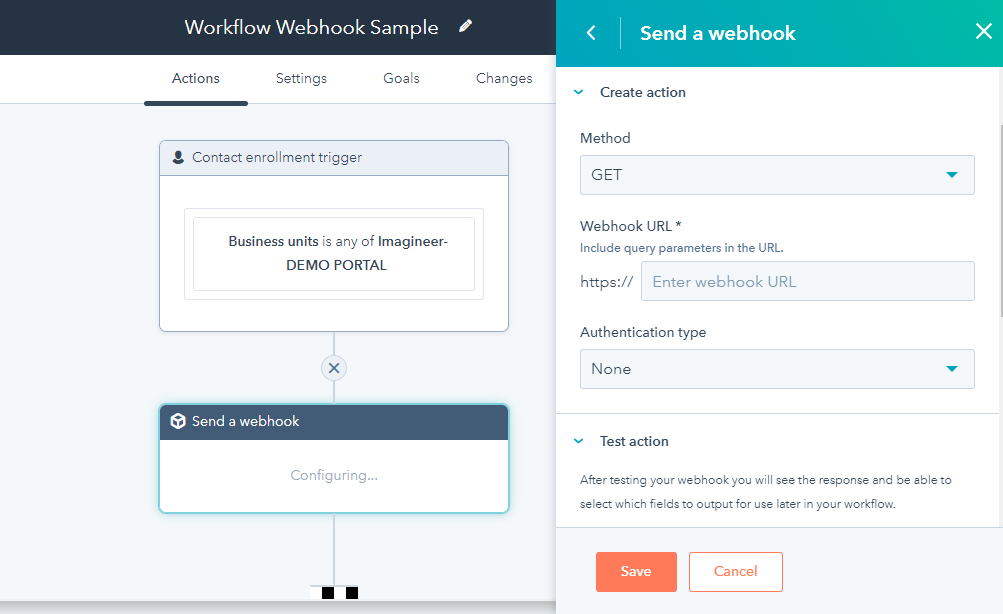
The strategic meaning of both updates is that HubSpot kept moving from being a place where data is stored to a place where data is prepared and orchestrated. For companies that run an ERP, a billing system or a logistics platform next to the CRM, this is where much of the value of integration is created. The risk is that logic hidden in workflows becomes difficult to audit, which is why each automation should have a documented owner and purpose.
Two changes in the core CRM and its integrations were particularly relevant. The first was flexible associations through customizable object associations. It became possible to create associations with custom objects from the interface (months earlier this had required the API), and to create labels that describe the relationships between associated records. A manufacturer can, for instance, distinguish the company that buys a machine from the company that services it. The author published a walkthrough of the feature in a video, HubSpot Flexible Associations and HubSpot Custom Objects.
The second was the creation and synchronization of customer billing data through the integration with QuickBooks. HubSpot created a billing object property so customers could view their invoices from a single omnichannel platform, which ties billing to the efforts of marketing, sales and service. The integration is available in the HubSpot marketplace. HubSpot's current documentation on the QuickBooks Online data sync for invoices shows how the feature has matured: eligible invoices sync to QuickBooks, invoices become records in HubSpot that can be used in segments, workflows and reports, and it is available on all products and plans, with custom field mappings requiring a Data Hub account. It also lists limitations that finance teams need to know, such as that refunds are not synced automatically and that invoice-level taxes and fees must be entered as line items.
These details matter to an executive because the promise of a single view of the customer is easily overstated. Connecting billing to the CRM can transform collections, renewals and customer conversations, as long as the people responsible for finance and for sales agree on which system is authoritative for each field. Many integrations disappoint because that agreement was never reached.
The 2022 updates make the case for a repeatable evaluation method. A release should be judged on four questions, and each one corresponds to a decision that belongs to management and not to the technical team. The first is the problem it solves. If no one can state the commercial or service problem in a sentence, the feature is a distraction, however impressive the demonstration. The second is the license. A feature that requires a higher tier changes the economics, and the cost of the upgrade must be compared with the value of the problem solved.
The third question is maturity. As the contrast between beta and live shows, a feature can be announced long before it is dependable, and it can also be withdrawn long after it was adopted, as the ad sequence example demonstrates. The fourth question is ownership. Every feature that reaches production needs someone who understands it, measures it and answers for it. A company that cannot name that person should postpone adoption, because unowned automation tends to become technical debt.
When these four questions are asked consistently, the release calendar of a platform stops being noise and becomes a source of options. The company moves deliberately on the changes that serve its strategy, runs small pilots on the ones that might, and ignores the rest without guilt.
For the chief executive, the central point is that a CRM platform is a moving asset. The company that treats its configuration as finished will fall behind competitors who absorb improvements steadily, and the company that adopts everything will exhaust its teams. The leadership decision is to set a cadence, a quarterly review of releases against strategic priorities, with a clear sponsor. For the chief commercial officer, releases are relevant when they shorten the path from interest to signed deal or protect margin, as quote controls do. For the leaders of service and customer experience, features such as service level agreements turn a promise into a measurable commitment, and they should be adopted together with the staffing and processes that make the commitment achievable.
For the chief financial officer, the key questions are licensing and integration. Each tier brings a cost, and each integration brings a reconciliation rule. A disciplined evaluation prevents the common situation in which the company pays for capabilities that nobody uses while it still reconciles key figures by hand. The chief information officer has a complementary concern, which is governance: knowing which automations exist, who owns them and how they will be affected when a vendor renames, merges or retires a product.
An experienced advisor would begin with an inventory and not with a wish list. Ask the administrator of the platform for the list of licenses the company holds, the features in active use and the automations that run without human intervention. Compare that list with the three commercial problems that matter most this year, and mark where a released feature, live and licensed, could contribute. Then choose one candidate for a pilot of thirty to sixty days, name its owner, define the single metric it should move, and decide in advance what result would justify scaling it.
At the same time, subscribe someone to the vendor's release notes and appoint a person to bring a short summary to the monthly management meeting. The ICX Technology Selection Toolkit provides an evaluation matrix that can be adapted to judge releases as well as new platforms, and it gives the committee a common language for comparing options.
ICX Consulting helps executive teams turn platform change into commercial results. We work on CRM strategy and design so that the platform follows the commercial model, on process improvement so that automation reinforces good processes instead of accelerating bad ones, and on the roadmap that decides which releases to adopt and when. Our HubSpot implementation teams, backed by a long history as a HubSpot solutions partner, carry those decisions into the portal and support the people who will use them.
Is your team adopting new platform features for the right reasons? Request a diagnostic with an ICX consultant and we will review your licenses, your active automations and your release backlog to show where the next improvement will pay back fastest.
A beta feature is still being developed and may change, be limited to certain accounts or be withdrawn. A live feature has finished development and is published for all eligible environments. Plan stable processes around live features, and use betas for supervised pilots with a fallback.
Check the feature's page in HubSpot's knowledge base, which states the required subscriptions, and compare it with the products and tiers your account holds. Product names and tiers change, as the renaming of Operations Hub to Data Hub shows, so confirm with HubSpot or an implementation partner before budgeting.
Some do and some do not. Quote approvals, GET webhooks in workflows and QuickBooks invoice sync remain documented features, with updated product names and limits. Facebook ad sequences were scheduled for retirement in September 2026, and new accounts cannot use inbox SLAs, so each feature should be checked against current documentation.
A named person in revenue operations or marketing operations, with a sponsor on the executive team. That person reviews release notes, maintains the inventory of automations and brings candidate features to a monthly or quarterly decision meeting, so that adoption follows strategy instead of enthusiasm.
Platforms change every quarter, and the companies that benefit are those that decide, in advance and with discipline, what change is for. ICX is ready to be the partner that helps your leadership team choose the updates that move revenue, service and efficiency.


A follow-up sequence in HubSpot is a prepared series of emails and tasks that the CRM schedules for a prospect after first contact, and that stops by...

To create a workflow in HubSpot, open Automation and then Workflows, choose Create workflow, pick a template or start from scratch, define who enters...

HubSpot playbooks are interactive guides that appear inside contact, company, deal and ticket records, so reps follow a proven script, ask the right...

