10 Tips before implementing a CRM Platform
Before implementing a CRM platform, define clear business objectives, assess your real needs, involve sales, marketing and service from day one,...

By Role
By Industry
By Target Customer
What We Offer
ICX helps companies grow revenue and profitability by connecting customer experience, sales, pricing, CRM and automation into one commercial system.
Customer Experience
We design memorable, customer-centered experiences that drive loyalty, enhance support, and optimize every stage of the journey. From maturity frameworks and experience maps to loyalty programs, service design, and feedback analysis, we help brands deeply connect with users and grow sustainably.
Marketing & Sales
We drive marketing and sales strategies that combine technology, creativity, and analytics to accelerate growth. From value proposition design and AI-driven automation to inbound, ABM, and sales enablement strategies, we help businesses attract, convert, and retain customers effectively and profitably.
Pricing & Revenue
We optimize pricing and revenue through data-driven strategies and integrated planning. From profitability modeling and margin analysis to demand management and sales forecasting, we help maximize financial performance and business competitiveness.
Digital Transformation
We accelerate digital transformation by aligning strategy, processes and technology. From operating model definition and intelligent automation to CRM implementation, artificial intelligence and digital channels, we help organizations adapt, scale and lead in changing and competitive environments.
Operational Efficiency
We enhance operational efficiency through process optimization, intelligent automation, and cost control. From cost reduction strategies and process redesign to RPA and value analysis, we help businesses boost productivity, agility, and sustainable profitability.
Customer Experience
Marketing & Sales
Pricing & Revenue
Digital Transformation
Operational Efficiency
9 min read
Sofía Madriz | Nov 03, 2026
9 min read
Sofía Madriz | Nov 03, 2026
CRM implementation strategies for companies are the decisions that turn customer management software into a way of working. They include setting measurable objectives, aligning the system with processes, training every role, integrating data, measuring adoption and implementing in phases. Without them, the CRM remains an expensive database.
From defining precise objectives to selecting the right software, cultural alignment and staff training, these strategies are transforming the way companies manage and nurture their customer relationships. For senior leadership, the central point is that the return on a CRM does not depend on the license that is purchased, but on how many people use it well, with what quality of data and for which decisions. This article focuses on that part of the work, the part that determines whether the investment pays back.
In this article
The interaction between company and customer has evolved enormously in recent decades. Companies no longer just offer a product or service; they seek to build solid, lasting relationships. This is where Customer Relationship Management (CRM) comes into play, a business strategy that is not limited to managing data but seeks to deeply understand customers' needs, desires and behaviors.
Implementing a CRM is not just a matter of adopting a technology tool. It means taking on a customer-centered mindset that runs through every aspect of the business. As customer expectations evolve, a successful implementation becomes a differentiating factor for companies that seek not only to attract customers but to retain them over the long term with exceptional, personalized experiences.
It is Tuesday afternoon and the chief executive of a mid-sized company is reviewing the quarterly forecast. Fourteen months ago he approved the purchase of a CRM, and the project was declared finished with a closing ceremony and a report of delivered features. Today, however, the sales manager sends him the pipeline in a spreadsheet, the service team keeps its cases in email and marketing measures its campaigns with its own report. When the chief financial officer asks how many customers are at risk of leaving, nobody can answer without a week of manual work.
The system works. What failed was the implementation understood as installation. That distinction, between installing a tool and changing a way of working, is what separates the CRM projects that pay back from those that become a recurring expense, and it is what organizes the rest of this article.
CRM goes beyond collecting information about customers. It is a comprehensive strategy that covers a deep understanding of customers and the management of interactions with them throughout their life cycle. Its implementation is crucial today because of the overload of information and options that buyers face. A well-implemented CRM makes it possible not only to store data but to analyze it and turn it into information that drives strategic decisions, improving customer satisfaction and business profitability.
>> What is a CRM and what is it for? <<
A successful implementation makes it possible to understand customers' individual preferences, anticipate their needs and offer personalized, consistent experiences at all touchpoints. This strengthens the relationship with existing customers and also helps attract new ones thanks to the reputation of a company that delivers exceptional experiences.
The warning about implementation is not new. As early as 2002, the Bain article published in Harvard Business Review Avoid the four perils of CRM noted that 55% of CRM projects ended up alienating customers and diluting profits, and attributed the problem to treating CRM as software that manages relationships on its own, rather than as a strategy and a set of processes supported by technology.
Adopting a CRM offers benefits that extend to every department. Besides improving customer relationship management, a well-implemented CRM streamlines internal processes, optimizes resource allocation, supports data-based strategic decisions and, ultimately, drives growth. The ability to understand and respond to changing needs becomes an invaluable asset in a competitive market.
With the data the CRM collects, the company can identify behavior patterns, anticipate market trends and adjust its strategies proactively. This improves operational efficiency and makes it possible to offer products and services more aligned with customer expectations, as well as to improve processes so that service is exceptional. If you want to go deeper into these advantages, see the article on the benefits of using a CRM in your business.
One CRM with many advantages and conveniences is HubSpot's. You can learn more in the article What is HubSpot and why is it the best CRM for your company?
Effective CRM implementation demands strategic planning and execution. The first phase consists of clearly defining the business objectives and identifying the specific customer needs the system must address. The choice of software is fundamental, because it must fit the company's current and future needs and guarantee adequate scalability.
Once the software is selected, staff training is essential. It is not only a matter of teaching how to use the tool, but of the organization internalizing the importance of the CRM strategy in its culture. Alignment between the CRM and existing processes is key to smooth integration and to making the most of the tool's full potential. In addition, establishing clear metrics and gathering continuous feedback allows timely adjustments.
What is the first thing to do after selecting the software according to the company's needs? These are the six strategies that organize the work.
Before starting, it is essential to define clear and specific objectives that the company expects to achieve with the CRM. They should be measurable, realistic and aligned with the overall vision and strategy. Does the company seek to improve retention, increase sales, improve customer service or something else? Clear goals guide all stages of the implementation and set the order of priorities once the CRM goes live.
A CRM does not only involve technology, but a cultural change. It is fundamental to align the CRM strategy with the company's culture and values. Acceptance by employees depends largely on how the system fits with the way daily tasks are done and how it contributes to the overall objectives.
Proper training ensures that employees understand the importance of the CRM and know how to use it well. Teaching the software is not enough. You have to show how the CRM improves their performance, simplifies their tasks and helps them understand the customer better. This speeds up adoption and makes it more effective.
The CRM must be integrated without friction with the company's processes and systems. This may involve adjusting workflows, migrating data from previous systems and synchronizing tools already in use. Efficient integration guarantees a smooth transition and avoids disruptions to operations.
Defining key metrics is essential to evaluate the success of the CRM. They can include the retention rate, the increase in sales, customer satisfaction or any indicator relevant to the objectives. Monitoring and analyzing this data allows continuous adjustments and improvements to the strategy.
Implementation should be gradual and non-disruptive. Starting with a pilot phase or with specific areas makes it possible to identify and resolve problems before full deployment. Continuous implementation involves iterative improvements, taking into account user feedback and changes in the market.
These strategies are fundamental for an effective implementation. Each stage requires consideration and planning to maximize the benefits of the CRM and ensure its integration into the company's culture and operations.
Most implementations that fail to deliver fail because of adoption, not technology. Prosci's research on the relationship between change management and project success, based on its best practices study of more than 2,600 professionals, found that 88% of projects with excellent change management met or exceeded their objectives, compared with 13% of projects with poor change management.
In a CRM, managing change means answering three questions for each role. What does this person gain by using the system? What do they stop doing or do differently? Who follows up with them and how is good use recognized? When the salesperson sees that the CRM prepares their meetings, prioritizes their opportunities and saves them manual reports, adoption stops depending on management's insistence.
| Role | What they need from the CRM | Adoption indicator |
|---|---|---|
| Senior leadership | Visibility of the pipeline, forecast and profitability by customer | Use of the dashboard in committees |
| Sales management | Tracking of opportunities and team performance | Pipeline reviews run from the CRM |
| Salespeople | Customer history, tasks and prioritization | Activities and opportunities recorded up to date |
| Marketing | Segmentation and campaign measurement | Campaigns attributed to opportunities |
| Customer service | Cases, history and service agreements | Cases resolved and recorded in the system |
Despite its benefits, implementing a CRM can face various challenges. Resistance to change, especially when employees are used to traditional methods, can slow adoption. The lack of accurate data or the low quality of existing data compromises the system's effectiveness. And integrating the software with legacy systems can be complex and require significant adjustments.
Overcoming these challenges requires combining approaches. Communicating the benefits of the CRM and offering ongoing training and support reduces resistance to change. For data problems, it is essential to implement cleansing and validation processes. And close collaboration with technology, together with flexible and compatible solutions, eases integration with existing systems.
Bringing marketing, sales and service strategies into the CRM is crucial to its success. Implementing the software is not a trend but a necessity of today's business environment. The ability to understand and meet customers' changing needs drives profitability and strengthens competitive position, and a successful implementation translates into stronger relationships and greater capacity for adaptation and sustainable growth. To assess progress with concrete indicators, see how to measure success in CRM implementation, and for a complementary view, the seven key dimensions when implementing a CRM.
The following are illustrative scenarios that show how the same strategies apply differently. They do not describe any particular company.
A distribution company with a field sales force has its main challenge in recording. Salespeople spend the day on the road and do not return to an office to enter data. The strategy that pays off most is a mobile app with few mandatory fields and a clear rule from management, under which what is not in the CRM does not exist for purposes of commissions and forecasting. The pilot is run with one region and measured by the percentage of visits recorded the same day.
A professional services firm faces a different problem. Its partners are the ones who hold the relationships with clients and tend to see the CRM as an administrative chore. Here adoption depends on the system giving them immediate value in return, such as a client profile before each meeting or an alert when a key contact changes companies. If the system only asks them for information and gives them nothing, they will abandon it.
A service operator with a high volume of small customers needs, above all, integration. The CRM must connect with the billing system and the help desk so that service sees the complete history on a single screen. Its pilot begins with the claims handling process, where the benefit is noticeable within weeks, and only afterward does it extend use to sales and marketing.
Most failures are explained by governance decisions and not by technical faults. The first is not appointing a business owner with authority to decide on processes. When the project lives in technology, every discussion about a field or a pipeline stage escalates without being resolved and the schedule stretches. The second is measuring progress by deliverables, such as configured modules or created users, instead of by behaviors, such as opportunities updated weekly or service cases closed within the system.
The third mistake is migrating data without cleansing it. A new CRM that is born with duplicates, expired contacts and inconsistent fields loses users' trust in the first weeks, and recovering it takes months. It pays to spend time, before the migration, deciding which data is kept, who is responsible for each field and how the problem will be prevented from reappearing. Finally, there is the mistake of leadership that does not change its own habits. If the committee keeps receiving presentations built outside the system, the implicit message is that the CRM is optional.
To convert more, ask that the pipeline be reviewed only from the CRM. When leadership stops accepting reports in spreadsheets, commercial adoption rises and the forecast improves, because everyone works from the same information. To retain and build loyalty, require service and sales to share each customer's history, since retention improves when nobody asks the customer to repeat their story.
On the service front, define measurable service agreements within the CRM and review them in committee as regularly as you review sales. And to sustain efficiency, assign an owner of data quality with their own goals, because a CRM with incomplete data produces incomplete decisions. These four decisions do not require additional budget; they require consistency from whoever leads.
To prepare for selection and adoption you can draw on the ICX CRM and Customer Experience technology selection toolkit and the ICX Transformation Framework toolkit, which help define requirements, roles and adoption stages.
ICX Consulting supports companies in the United States and Latin America in implementing CRM as a commercial strategy, not as a systems project. Our CRM consulting starts from the sales, marketing and service process, and applies the ICX Transformation Framework to bring the technology into the way each role works. When the company chooses HubSpot Smart CRM, our team carries out the HubSpot implementation with the same focus on adoption and results. Want to know why your CRM is not delivering what you expected? Request a diagnostic with an ICX consultant.
Bring this topic to your company
An ICX Consulting advisor will work with you to analyze where your organization stands today and which decisions can move your commercial and customer experience results.
It depends on the number of users, processes and integrations, and above all on the quality of the data being migrated. A well-scoped pilot can be launched in weeks, while a rollout across several areas with ERP integrations is usually planned in phases over several months.
It is best led by a business owner, normally from the commercial leadership or revenue operations, with support from technology. When the project is left solely in the hands of systems, it tends to be measured by features delivered and not by adoption or commercial results.
Before changing platforms, review the causes. They are usually processes that do not reflect how selling actually works, unnecessary fields, a lack of role-based training or leadership that keeps asking for reports outside the system. Fixing those causes with a relaunch plan usually costs less than a migration and delivers faster results.
A CRM pays off when every person finds in it a reason to use it every day. If you want your implementation to be measured in customers retained and sales closed, at ICX we can help you design the strategy and sustain adoption until it becomes habit.
Before implementing a CRM platform, define clear business objectives, assess your real needs, involve sales, marketing and service from day one,...
A CRM (customer relationship management) system is software that keeps every customer and prospect record in one place and connects it to the...
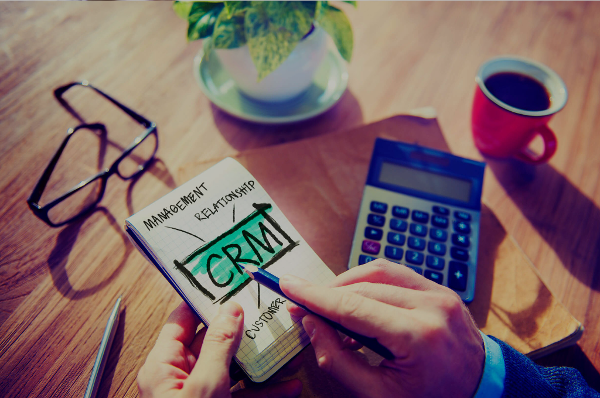
A successful CRM implementation follows five steps. Identify your most difficult problems and needs, research options and set a realistic budget,...