











10 Tips before implementing a CRM Platform
Before implementing a CRM platform, define clear business objectives, assess your real needs, involve sales, marketing and service from day one,...
9 min read
9 min read
To implement a CRM platform, a company defines the business objectives the CRM must improve, identifies the needs of marketing, sales and service, selects the platform that fits them, configures it around redesigned processes, trains every team, integrates it with other systems, tracks results with clear KPIs and plans for growth. Success is measured in revenue, retention and productivity.
Customer relationship management (CRM) is critical for any company that wants to improve sales, customer retention and business relationships. For leadership, however, a CRM is not an IT project. It is the backbone of the commercial model, the place where the company sees which customers buy, which are at risk, which opportunities move forward and how much it costs to serve each segment. When implementation goes well, the company forecasts more accurately, reduces its salespeople's manual work and stops depending on the memory of a few people. When it goes badly, the company is left with an expensive database nobody consults and a sales force that returns to its spreadsheets. Implementing a CRM platform can be complex, but with careful planning and execution it delivers significant benefits. This article explains what a CRM implementation includes, why so many fail, the key steps that work and what an executive committee should ask before approving the budget.
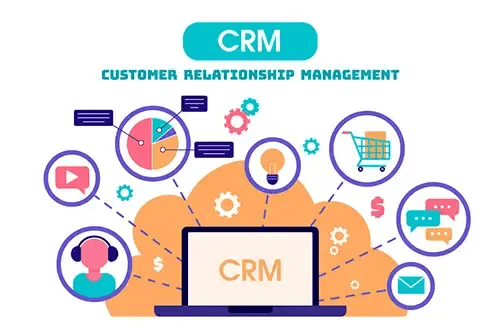
Picture the monthly commercial review at a mid-sized manufacturer. The sales director presents a pipeline that looks healthy, the CFO asks which of those deals will actually close this quarter, and the room goes quiet. Each regional manager keeps his own spreadsheet, the marketing team reports leads that sales says it never received, and the service department knows about two customers who are unhappy but has no channel to say so. The executives leave with a number they do not trust and an action list that will be forgotten by the next meeting.
That moment is usually what finally puts a CRM on the board agenda, and it explains why the implementation deserves more attention than the purchase. The software does not fix the lack of shared definitions, clean data or clear accountability. It makes their absence visible. A company that treats the project as a chance to agree on how it sells, serves and measures will see the forecast meeting change within a quarter. A company that treats it as an installation will see the same meeting, with a new logo on the dashboard.
CRM is both a management discipline and a technology platform. Bain & Company describes CRM as a process companies use to understand their customer groups and respond quickly to changing customer desires. The platform is the means. The goal is a profitable relationship with the customer. If you want to review the fundamentals first, read our article on what a CRM is and what it is for.
That is why a complete CRM implementation covers much more than installing software. Five fronts must move together.
| Front | What it defines | Typical owner |
|---|---|---|
| Strategy | Commercial objectives and the decisions the CRM must enable | CEO, CCO or commercial director |
| Processes | How the company attracts, qualifies, sells, delivers, bills and serves, with clear hand-off rules | Sales, marketing and service leaders |
| Data | Which information is recorded, its quality, where it comes from and who is responsible | Data owner or CRM administrator |
| Technology | Platform, configuration, automation and integrations with ERP, e-commerce or billing | IT with the implementation partner |
| People | Roles, training, incentives and change management | Executive sponsor and HR |
The problem is not new. In "Avoid the Four Perils of CRM," published in Harvard Business Review, Darrell Rigby, Frederick Reichheld and Phil Schefter of Bain warned that companies pour heavy investment into CRM without getting the results they expect. They describe how Monster.com spent over $1 million on custom software and integration, only to find the system so slow that salespeople could not download customer data to their laptops. Platforms are far better today, but the causes of failure remain managerial rather than technical.
We explore adoption risks in depth in why your CRM isn't working and how to fix it.
The eight steps apply everywhere, but each sector stresses a different one. A regional bank that sells to small businesses will spend most of its effort on data and integration, because the relationship manager needs balances, credit lines and open requests on one screen before the CRM is worth opening. A consumer goods distributor with a field sales force will find that step five, training, determines everything, since a system that is slow to use on a phone in a store is abandoned within weeks. A B2B services firm with long sales cycles will care first about step one, because the value of the CRM lies in an accurate forecast and in knowing which accounts have no activity.
A real estate developer, to take a fourth case, faces a different tension. Buyers move through a long process of reservation, financing and delivery, and several departments touch the same customer. Here the decisive step is the process redesign inside step two, since the CRM must carry the hand-offs between sales, legal, credit and construction without losing the customer in between. These are illustrative scenarios, but they show why a generic template rarely works and why the order of priorities should be set by the commercial model, not by the vendor's implementation plan.
Successful implementations follow a disciplined sequence. The order matters, because each step reduces the risk of the next one.
Before you begin, define your goals. What do you hope to achieve with a CRM? Do you want to improve customer retention, increase sales, raise customer satisfaction or something else? Clear objectives help you measure the success of the implementation and direct the effort. Example objectives include improving customer service, optimizing sales processes and improving marketing efforts. For a leadership team, each objective should also have an indicator and an owner, such as reducing response time to prospects, raising the renewal rate of a portfolio or improving the accuracy of the quarterly forecast.
Every company is unique, so identify your specific needs before choosing a platform. Do you need a CRM focused on sales, marketing or customer service, or an end-to-end solution that covers all of them? Talk with the relevant stakeholders, including sales, marketing and service teams, to understand their requirements. Also consider the size of the company, the number of users who will need access and the budget, because CRM platforms vary widely in price. This is also the moment to map how a customer flows today from first contact to repurchase, where opportunities are lost and what rules the future process should follow.
With goals and needs defined, choose the platform. There are many options, from open-source solutions to industry leaders such as Salesforce and HubSpot, so research and compare them against your objectives and requirements. Carefully evaluate features, scalability, cost and compatibility with your existing systems before deciding, because this is the most important decision of the project. Evaluate the implementation partner as carefully as the software. The criteria that weigh most are coverage of critical processes, ease of use for the sales team, integration capacity, total cost over several years and the experience of the partner who will support the implementation.
Once the platform is selected, adapt it to the company's specific needs. That can include defining roles and permissions, creating custom fields, setting up automated workflows and integrating the tools you already use, such as email or marketing software. New integrations can also bring better order, relationships and control over your team and your customers. Configuration should follow the process design, not the other way around, and standard definitions should be adapted rather than reinvented. For example, HubSpot documents default lifecycle stages from Subscriber, Lead, Marketing Qualified Lead and Sales Qualified Lead to Opportunity, Customer and Evangelist, and each company must decide which criteria trigger each change.
Training is essential. Make sure every user understands how to use the platform and how it benefits them. Offer comprehensive sessions on functionality, features and any new processes, and provide ongoing support to address questions, concerns or challenges during implementation and use. Train by role, because a salesperson, a sales manager and a service agent use the CRM differently. Adoption grows when managers run their meetings with CRM information and when users see that the system simplifies their work.
Your company probably uses accounting software, marketing tools or project management systems. Integrating the CRM with them improves efficiency and provides a more complete view of each customer. Make sure the platform supports the integrations you need, and prioritize those that eliminate double data entry or give salespeople information they lack today, such as balances, orders or open claims. The most valuable integrations are usually with the ERP, billing, e-commerce and communication tools, and each should have a clear owner and a defined direction for every data field.
Once the CRM is running, constant monitoring and analysis are essential. Regularly reviewing performance and usage prevents problems later. Set key performance indicators (KPIs) to track the effectiveness of the implementation, use the CRM's metrics and reports to evaluate performance and adjust strategies, and collect user feedback to identify improvements. Our article on how to measure success in CRM implementation details the indicators.
As the business grows, CRM needs change. Choose a scalable platform that can grow with the company and adapt to changes in operations. Scalability is also organizational. A growing CRM needs a permanent functional owner, a committee that prioritizes changes and a formal process to request new functions. Define naming conventions, role permissions and a structure that can absorb new countries, business lines or teams without rebuilding everything.

Executives rarely approve a CRM on enthusiasm. They approve it when the case is expressed in the terms they already manage, which are revenue, margin, retention and cost to serve. A credible case starts from a baseline that the company can measure today, such as the conversion rate between stages, the average sales cycle, the renewal rate or the hours salespeople spend on administrative tasks. It then states, conservatively, which of those measures the CRM is expected to move and by when, and who is accountable for the change.
The case should also be honest about cost. License fees are the visible part, but the larger items are the time of internal people, data preparation, integration work and the months of lower productivity while teams adapt. Boards tend to forgive a realistic budget and punish a surprise. It helps to present the investment in phases with a decision point after the first, so that the committee approves a result rather than a promise, and the project earns its next tranche by showing the pipeline, the renewal dashboard or the response time it was supposed to improve.
It depends on scope, the number of processes and the quality of the starting data. A well-defined first phase, such as opportunity management for one sales team, can go live in a few weeks. A rollout covering marketing, sales, service, several integrations and several countries is planned in waves over several months. More important than total duration is the cadence of value. Each phase should deliver a result leadership can see, such as a reliable pipeline, a renewal dashboard or a measured response time, before the next one begins.
A well-run CRM implementation moves several levers of the commercial value chain, and the executive team should demand something specific from each. On the side of attracting and converting, connect marketing and sales in a single view of the prospect so that the company knows which channels generate real opportunities and not just contacts, and require sales stages with objective exit criteria and a forecast built from the CRM rather than from a parallel spreadsheet.
On the side of retaining and serving, use purchase, service and usage history to identify customers at risk before they leave, and give service the same view of the customer that sales has, so every interaction starts with full context. Underneath all of it sits efficiency. Measure how much administrative time the CRM frees for salespeople and reinvest it in selling time, because that is where the investment becomes visible in the income statement.
The most important decision for the committee is to appoint a business sponsor with authority over processes and priorities. Without that role, the CRM ends up as a technology project.
ICX Consulting designs the commercial model before touching the technology. Our CRM consulting services define objectives, processes, data and indicators, and then implement on HubSpot or Salesforce what the strategy requires. We apply the ICX Transformation Framework so adoption of the software in sales and service is part of the design from day one, not an afterthought.
If you are evaluating platforms, we invite you to use ICX's Enabling Tool Selection Toolkit to compare options with business criteria and bring a well-founded recommendation to your committee.
Bring this topic to your company
An ICX Consulting advisor will assess where your organization stands today and which decisions can move your commercial and customer experience results.
An executive from the commercial area with authority over processes, supported by a full-time functional lead and by IT. The sponsor resolves conflicts between areas and protects scope, the functional lead translates user needs into requirements, and IT ensures security, integrations and continuity without deciding how the company sells.
Usually not. Migrate active customers, open opportunities and the history that supports current decisions, such as recent purchases and service cases. Older records can stay archived in the previous system or a data warehouse. Migrating everything multiplies cleaning effort and fills the new CRM with information nobody uses.
Data cleansing, integrations, training and post-launch support. License prices are easy to compare, but the effort to prepare data, connect systems and change habits usually decides whether the investment pays back. Budget explicitly for a CRM owner and for improvement cycles during the first year after go-live.
A CRM pays off when it changes how the company sells and serves every day, not when the licenses are activated. If you are planning an implementation and want to make sure it delivers revenue and adoption from the first phase, request a diagnostic with an ICX consultant.

Before implementing a CRM platform, define clear business objectives, assess your real needs, involve sales, marketing and service from day one,...

Customer Relationship Management (CRM) is a strategy and a set of tools for understanding, managing and improving every relationship a company has...

 Ileana Cruz : May 29, 2025
The main challenges of CRM platforms are unclear objectives, low user adoption, difficult integration with existing systems and a platform that stops...

