











Customer Journey: what is it for?
The customer journey is for seeing the business through the customer's eyes. It maps every stage, touchpoint and emotion from the first contact to...
8 min read
8 min read
Customer experience (CX) is the set of feelings and perceptions customers form about a company across every interaction with its brand, before, during and after the purchase. It is for designing those moments on purpose, so that customers feel satisfied, understand the value they receive, come back, recommend the brand and grow their relationship with it.
Think about the last time you had a really good experience as a customer. What did it feel like, why did it feel good and what stuck in your memory? Now think about the last time you had a bad one. What did you dislike and why? How did it make you feel at the time, and what do you feel today when you remember it?
Companies need to know what kind of experiences their customers are having and remembering, because a customer who has had an excellent experience will most likely tell friends, family and colleagues about the brand, the product or the service. That translates into more revenue and more business. The best advertising is not the advertising a brand creates for its products. It is what satisfied customers do when they mention the brand with a smile and talk with enthusiasm about what they lived when they used the product, received the service or visited the store.
A line often attributed to Maya Angelou captures the idea. "They may forget what you said, but they will never forget how you made them feel." The phrase is older than its fame suggests, and Quote Investigator traces it to Carl W. Buehner in 1971, but its lesson for business holds. Brands must take Customer Experience (CX) into account, because it not only makes customers feel good, it also means more business and more revenue for the company.
For a leadership team, the question is therefore not whether customer experience matters but what it is for in management terms. It is a lever on retention, cost of acquisition, share of wallet and operating efficiency, and it deserves the same discipline as any other part of the strategy.
Most companies lack real visibility into their customer journey.


>> The impact of TOM on customer experience and performance <<
Customer experience is vital for the continuity of any business. Good or bad, the experience customers have had with a brand predicts their future purchasing behavior. Will they keep buying, or will they go to the competition?
Customer experience is the set of feelings and perceptions that customers have about your company or brand. In the end, those feelings and perceptions become an experience that customers remember and spread. A successful customer experience meets and exceeds the expectations customers have of the brand, regardless of the channel (social media, web, mobile or point of sale) and regardless of the commercial process being executed.
Practicing CX means understanding that in every interaction a customer has with the company, the goal is an experience that leaves the customer satisfied, happy and with a good perception of the brand. For a broader look at how the concept has been defined and evaluated, see our article on the definition of customer experience.
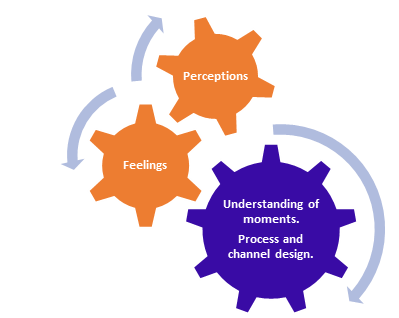
Who triggers these feelings and perceptions? The answer is simple. Every interaction a customer has with your company or brand produces a feeling and a perception. Every interaction, without exception. Each time a customer has contact with a brand, they feel and perceive something about it.
With that in mind, would you leave the touchpoints customers have with your brand to chance, or would you rather design each one specifically to provide value and a memorable experience? When companies start paying attention to each of these points, they gain better control over the experience, and that becomes a strategy to increase satisfaction, generate more revenue, encourage word of mouth and nurture their loyalty program.

What would happen if we stopped thinking about "touchpoints" and started thinking about "moments of contact"? Every interaction a customer has with your company becomes a moment, and each moment is an opportunity to connect with the customer and offer a unique experience.
Research supports this shift. In Harvard Business Review, McKinsey partners Alex Rawson, Ewan Duncan and Conor Jones argued in The Truth About Customer Experience that maximizing satisfaction touchpoint by touchpoint gives a distorted picture, and that companies that manage the end-to-end journey achieve higher satisfaction, lower churn and more revenue. Moments make sense only as part of the journey that connects them.
Above all, never neglect the final moments a customer has with your brand. Companies often overlook the last minute in which the customer interacts with them and forget the importance of finishing well. Hotels are a clear example. Most will do anything for guests while they arrive and stay, but checkout is often perfunctory, neither managed nor thought out. That is a missed opportunity to close the stay with the best possible experience, and closing moments are often the ones customers remember.

Customer experience is not only about the interaction with the product. It includes a before and an after, and any interaction customers have with the brand. Understanding the moments a customer goes through, from the time they start to get to know the brand until they consume and live it, is essential to create the right experience. Every moment should become a pleasant, distinctive experience worth sharing with others.
As John Boccuzzi put it in 2019, "Customer Experience is not necessarily about the product or service you offer. It's about how you make someone feel during their Buyer Journey."
If customer experience refers to the feelings and perceptions customers remember after interacting with the brand, what is it really for from a business point of view, and why should it be at the center of the strategy rather than a "nice to have"?
In practical terms, customer experience is a management discipline for systematically designing, orchestrating and improving every moment of contact between the company and its customers, so that customers:

Specifically, customer experience is used to achieve seven business outcomes, each with a clear owner and a way to measure it.
| What CX is for | How it shows up in the business | Typical indicator |
|---|---|---|
| Increase customer satisfaction | Fewer complaints, less frustration, more confidence | CSAT, complaint rate |
| Generate better word-of-mouth advertising | Customers recommend the brand spontaneously | NPS, referrals, reviews |
| Retain customers | Customers stay longer and renew | Churn, retention rate |
| Reinforce brand preference | Customers choose the brand even when alternatives are cheaper | Share of preference, price sensitivity |
| Build customer loyalty | Repeat purchases and resilience to occasional mistakes | Repeat purchase rate, loyalty program activity |
| Increase revenue | More frequency, cross-sell and up-sell | Customer lifetime value, share of wallet |
| Grow the business | Lower acquisition cost thanks to recommendations | Cost of acquisition, organic growth |
The economics of retention explain why these outcomes matter to the board. As Harvard Business Review summarized, acquiring a new customer costs between five and 25 times more than retaining an existing one, and research by Frederick Reichheld of Bain & Company found that increasing retention by 5% raises profits by 25% to 95%.
Many companies, when asked about customer experience, answer that they already "do CX" because they provide excellent customer service. They train their teams to be polite, make sure every branch visit, email or call to the contact center is handled well and have procedures to resolve complaints and incidents. All of this is valuable and necessary, and every organization should aspire to that level of service. However, it is not the same as managing customer experience in a structured, strategic way.
Customer service is, by definition, reactive. To serve the customer, the customer first has to take the initiative and ask for something, such as product information, help with a return, support to solve a problem, clarification of a charge or a formal complaint. Customer service comes into play when the customer has already identified a need or a friction and decides to contact the company. It waits for the customer to move so that the organization can respond to that specific request at that specific moment, usually within a limited set of channels and procedures designed to resolve the issue efficiently.

Customer experience, on the other hand, is proactive. Instead of waiting for the customer to appear, it acts in advance, designing the sales process and the brand's channels and understanding moments to create experiences. CX is the holistic view of every moment and interaction that generates feelings and perceptions in each customer.
| Customer service | Customer experience | |
|---|---|---|
| Nature | Reactive, starts when the customer asks | Proactive, designed before the customer arrives |
| Scope | Specific requests, complaints and incidents | Every moment of the journey, before, during and after the sale |
| Owner | Service or support team | Leadership team, with owners for each journey |
| Main question | Did we solve the request well? | Did we design the relationship the customer wants to continue? |
Customers do not interact with the company only when they need information, file a complaint, make a return or speak with a sales representative. They also interact when they visit the website or social networks, see advertising, come to a point of sale, open an email, register for a webinar or event and in many other moments.
>> Maximizing sales through Customer Experience <<
The most important point is that customer experience comes into play proactively when the entire customer journey is designed, starting with the search for information about the company, brand, product or service. CX means developing processes that are right for customers, designed for each interaction they might have, and that generate feelings and perceptions that make them smile. It means offering a simple, attractive sales process, planned and designed in advance with the customer, the Buyer Persona, in mind. Because CX is proactive, designing a good Customer Journey is essential to generate the right experience.
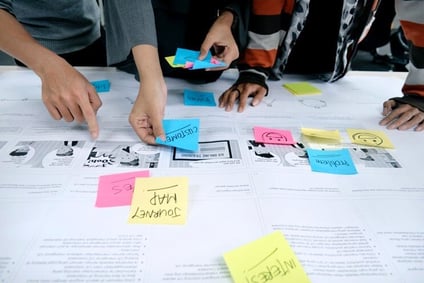
If every interaction generates a feeling and a perception, then every moment a customer has with the brand, before, during and after the sale, must be designed and managed intentionally. It cannot be left to chance or to the individual criteria of each employee or channel. It needs clear, simple and consistent processes aligned with the needs of the Buyer Persona.
Customer experience is therefore not only about making customers feel good. It is a disciplined way of managing interactions to improve satisfaction, loyalty and profitability at the same time. To see where to start, read how to improve the customer experience.
ICX Consulting turns customer experience into a management system with clear owners, processes and metrics. Our customer experience consulting practice maps priority journeys and designs the moments that matter, and the ICX Compass methodology connects that diagnosis with a roadmap tied to revenue and cost to serve. With our voice of customer programs, every moment is measured and improved continuously.
To map the moments of contact in your own business, use the ICX Customer Journey toolkit and identify which ones deserve to be redesigned first.
Ownership sits with the leadership team because the experience crosses marketing, sales, operations, billing and service. Many companies appoint a CX leader to coordinate, but each priority journey also needs an executive owner with authority over the processes involved. Without that, improvements stall at the boundaries between departments.
People tend to remember the most intense and the final parts of an experience more than the average of every moment. A smooth checkout, a clear final invoice or a thoughtful follow-up after delivery can change how the whole relationship is remembered, while a careless ending can erase a good impression built over weeks.
Yes. Many of the biggest gains come from redesigning processes, clarifying responsibilities, simplifying policies and training teams. Technology such as a CRM helps scale and measure the experience once the process is clear, but adding tools to a poorly designed journey usually makes the same problems happen faster.
Quick wins, such as fixing a broken handoff or a confusing form, can show results within weeks. Changes in retention, recommendations and lifetime value usually take two to four quarters to appear in the numbers. Leaders should track early operational signals while waiting for the financial indicators to move.
Combine three types of evidence. Perception indicators, such as satisfaction and likelihood to recommend, show how customers feel. Behavior indicators, such as repeat purchases, churn and use of self-service, show what they do. Operational indicators, such as resolution time and rework, show what the company does. When all three move in the same direction, the improvement is real.
Investing in customer experience is not only good for customers. It is a solid business strategy that drives sustainable revenue and profitable growth. If you want to know which moments of your journey are shaping what customers remember about your brand, request a diagnostic with an ICX consultant and start designing them on purpose.
Do you really know what's going wrong with your customer experience?


The customer journey is for seeing the business through the customer's eyes. It maps every stage, touchpoint and emotion from the first contact to...

 Aileen Pierce : May 29, 2025
A service blueprint is a visual tool that maps a customer's experience with a service, showing the steps and touchpoints the customer goes through...
 Bryan Sanabria : May 29, 2025
A customer journey is the path a person follows from recognizing a need to buying and using a solution. A customer journey map is its visual story,...

