











How the food industry is automating business management
The food industry is automating business management by connecting its digital sales channels, B2B ordering portals, customer service and marketing to...
9 min read
9 min read
The lesson of Tesla for the business world is that customer experience can be a company's operating model, not a department. By selling directly online, automating every step from first visit to follow-up, personalizing each order, updating products over the air and building everything on customer data, Tesla turned the usual frictions of buying a car into a competitive advantage that established manufacturers are still learning to answer.
The idea of buying a new car is seductive. We imagine visiting dealerships on the weekend, sitting in the model that caught our eye and walking through showrooms to admire what is on offer. Then reality arrives, with accumulated fatigue, the children when there are any, and the errands that still need to be done. What began as an aspiration turns into another exhausting race. When the car is finally chosen, there is the bank paperwork, which promises agility and delivers the kind of waiting that social media loves to mock.
Now place that experience in the office of a chief executive in any industry. Customers have learned, in other parts of their lives, that buying can be fast, clear and personal. They bring those expectations to your company, whether you sell vehicles, insurance, medical equipment or industrial supplies. The executive who still measures the commercial process by the number of showrooms, branches or salespeople will find that the competitor with the better journey wins the customer before the first meeting happens.
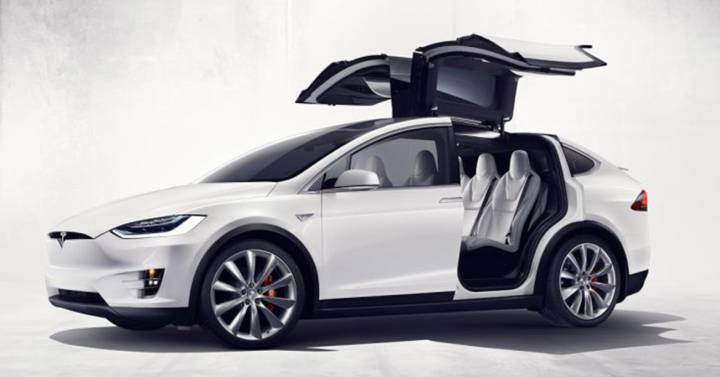
The author of this article once heard his grandfather say, "if everything is already invented," what is left to do? Tesla arrived on the automotive scene to contradict that paradigm, the same one in which many organizations live, and to show that today we have tools able to transform business models, which are often held back not by technology but by the lack of business vision. This article reviews the lessons that matter most for leaders of companies of any size.
A little context helps. Tesla was founded in 2004, and its first vehicle reached the market in 2008, competing against Ford, GM and Toyota, companies whose histories approach or exceed a century. In a few years, it went from outsider to the most valuable carmaker in the world. Bloomberg reported that Tesla overtook Toyota as the world's most valuable automaker on July 1, 2020, with a peak market capitalization of about US$207.2 billion, even though Toyota produced far more vehicles. In other words, the market was valuing something other than volume. It was valuing a business model.

That distinction deserves a caution. A stock market valuation reflects expectations as much as results, and it moves. The reason to study Tesla is not to predict its share price, but to understand which decisions about customers, channels and data created that perception of value. Four stand out: how it changes the way a car is paid for, how it sells without a dealership, how it personalizes at scale, and how it keeps improving the product after the sale. Underneath all four sits a technology architecture that any company can learn from.
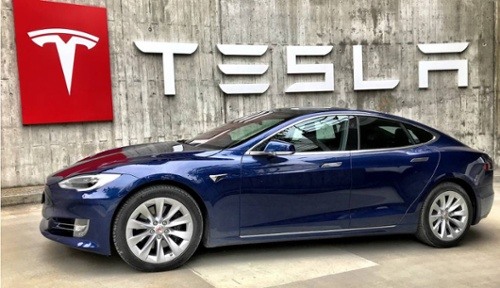
Do not buy your Tesla, subscribe to one. The traditional vehicle business has relied on bank financing, financial leasing and other forms of leverage to make a large purchase affordable. Tesla explored another door by offering the option to subscribe, in one offering starting at $995 per month, like a magazine, only this time it was a car. The principle matters more than the price. Tesla has continued to move toward recurring revenue, and in early 2026 its CEO announced that the company would stop selling Full Self-Driving outright after February 14, offering it only by monthly subscription, currently at $99 per month according to that report.
The strategic insight is that a subscription changes the relationship. A buyer who pays once is a transaction to be closed. A subscriber is a relationship to be maintained, which obliges the company to deliver value every month and rewards it with predictable revenue and permanent customer data. It also makes pricing more flexible, since features can be priced separately from hardware. For a chief financial officer, this alters forecasting, working capital and the lifetime value calculation. For a chief commercial officer, it shifts the objective from closing the sale to retaining and expanding the customer. A distributor of industrial equipment, a software vendor or a clinic network can ask the same question. Which part of what we sell could be offered as a service, and what would we have to do every month to deserve the renewal?
The warning is that recurring models punish weak service. Churn is visible immediately, and the economics depend on the cost to serve. Subscriptions work for companies that have invested in the experience and the operations behind it, which is where the next lessons begin.
To make an analogy with our times, Tesla has been "teleworking" in sales. Customers do not find an independent dealership where they can buy a Tesla, because the vehicle is sold online through the brand's official website. This eliminates the traditional investment in a network of physical dealerships and puts the company in direct contact with the buyer, along with all the data from that contact.
The lesson is not that every company should close its stores. It is that those who connect their value proposition to the automation of their sales management gain an advantage. The author has met companies that have eCommerce but continue to push physical sales, wasting the possibility of bringing customers to their online stores. Imagine an insurance company that has a quoting site but whose agents still re-key the information from a PDF, or a manufacturer of medical supplies that offers a catalog online but takes orders by phone. In both cases the digital channel exists, but the process does not use it.
The key to making online sales work is to follow up on what happens online. How do you track the buying process of someone who becomes interested in a model and abandons the purchase? By automating the tracking flows. With eCommerce driven by automation, a company can sell 24 hours a day, follow orders without time limits and gain productivity, the same factors that contributed to Tesla's growth in valuation. The practical architecture of that follow-up is described later in this article, and our own guide to the generation of effective sales explains how to distinguish a lead from a qualified one.
>> Generation of effective sales <<
When someone orders a Tesla, it is possible, and in fact necessary, to go through the design space where the customer modifies and customizes the model, choosing the exterior color, wheels and interior. Online configurators have existed for years, but few companies reach the level of intuitive customization that Tesla offers. The reason is that personalization at scale is only possible with automation. It allows each customer to receive an extremely differentiated treatment without a person managing each case.
The choices a buyer makes become data. By choosing a style and a color, each buyer enters an automation flow of preferences that allows the company to send accessories, offers, promotions and maintenance reminders, and even to anticipate when it is time to replace the vehicle. The configurator is not only a sales tool. It is a source of insight about what customers value. Consider a furniture manufacturer whose customers select fabrics, dimensions and finishes online. Those selections tell the company which combinations to stock, which promotions to run and when to contact a customer about a complementary piece. For related thinking, see our article on how to automate the hyper-personalization of your CX across all channels.
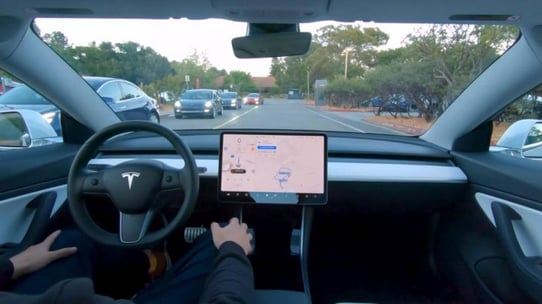
From a business perspective, Tesla shows mastery in reading the market by integrating its products and its customers digitally. Tesla states that its vehicles regularly receive over-the-air software updates that add new features and enhance existing ones. In a conventional vehicle, a software fix requires a trip to an authorized workshop. In a Tesla, the update arrives like the update to a phone. The owner's car improves while it is parked at home.
The commercial implications are broad. The product continues to create value after the sale, which supports loyalty and word of mouth. The company learns directly from usage. And the cost of correcting an issue falls because fewer customers need to travel to a workshop. Not every business sells a connected product, but every business can ask how it keeps improving what the customer has already bought. A bank can enrich its app without a branch visit. A manufacturer of professional equipment can offer firmware and remote diagnostics. A retailer can update a loyalty program continuously. The idea is the same. The relationship does not end at the sale.
A fair assessment should also mention that updates are not a magic solution. Tesla's own documentation notes that updates roll out gradually, that installation requires the vehicle to be parked and that an update cannot be canceled once it begins or reverted to a previous version. Companies that adopt continuous improvement need a discipline of release management and clear communication with customers, otherwise a frequent change becomes a source of frustration.
Tesla supports its digital strategy on three pillars, and each one is a question for any executive. The first is eCommerce. The web platform gives access to the product catalog and to the different configurations of each vehicle. At first glance, one can make the mistake of thinking it is just a website, but the logic behind it is more than that. It requires managing advanced catalog configurations, pricing rules and inventory rules that make that digital experience possible. Robust platforms such as Adobe Commerce or Salesforce Commerce can satisfy this type of requirement.
The second pillar is marketing and sales automation. The sequence of actions after a customer visits the website is not a coincidence. It is a decision tree configured on a marketing and sales automation platform. The first phase follows up on the abandonment of the page and confirms whether there is genuine interest in the vehicle. The second invites the customer to finalize the order on the eCommerce platform. The third executes the final follow-up on the purchase, treating the contact as a qualified lead. This is the territory of sales automation and lead nurturing.
The third pillar is data. As in everything at Tesla, data is central to the commercial process, and customer information is managed through CRM and databases. A comprehensive portfolio of solutions exists. Salesforce is the most widely used at the enterprise level, and platforms such as HubSpot are used in small and medium companies. The platform matters less than the discipline of capturing every interaction in one place and using it. Our CRM consulting addresses how to make that choice.
For the chief executive, the Tesla case poses a strategic question about the business model. Which assumption inherited from the industry, whether about intermediaries, ownership or the moment when the relationship ends, could a competitor challenge? The answer is rarely a technology purchase. It is a decision about how the company wants to relate to its customers, followed by the discipline to build the processes that support it.
For commercial and marketing leaders, the lesson concerns conversion and attraction. A purchasing journey with fewer steps, intelligent follow-up on abandoned interest and a personalized offer raise the rate of conversion without raising advertising spend. For service and customer experience leaders, it concerns retention and loyalty, because improving the product after the sale, and answering quickly when something goes wrong, is what keeps a customer. For the chief financial officer, it concerns efficiency, since a direct channel and automated processes lower the cost of acquiring and serving each customer, and recurring revenue improves the visibility of the forecast. The common thread is that customer experience works as an economic lever.
You do not need Tesla's resources to apply these ideas. Begin by walking through your own purchase journey as a customer would, from the first search to the first invoice, and write down where a person waits, repeats information or has to call. Those moments are the candidates for redesign. Choose one, perhaps the follow-up of quotes that never receive an answer, and decide what should happen automatically, who is notified and how long it should take.
Next, look at your data. Check whether a customer who visits your website, calls your center and buys from a distributor is recognized as the same person in your systems. If not, the integration of that information is the first investment, ahead of any new feature. Finally, pick one element of your offer that could be sold or improved as a continuing service and test it with a small group of customers. A pilot of a few weeks will teach you more than a year of planning. When you are ready to scale, a consultant can help you connect strategy, process and technology, so the change is not left to a single tool.
ICX Consulting is a customer experience and commercial strategy consulting firm headquartered in Miami. We help leadership teams design the journey, the commercial model and the processes that make a direct, digital and personalized experience possible, and then implement them. Our customer journey and CX automation services focus on the moments that matter, while our B2C eCommerce and B2B eCommerce practices connect the channel to the rest of the operation. To read more about the discipline behind these decisions, see the power of Customer Experience Design.
To map where your own customers experience friction, you can use the Customer Journey Toolkit, which helps you document the stages, emotions and touchpoints of your buyers.
Not literally, and it should not try. What it can copy is the logic of removing friction, selling directly where it makes sense, personalizing with data and improving the product after the sale. Each company needs to adapt those principles to its industry, regulation and channels.
No. Many purchases benefit from a human advisor, particularly high-value or complex ones. The decision depends on the buyer's journey. A hybrid model, in which digital processes handle information and follow-up and people handle consultation and relationships, is often the most effective.
Follow-up on interest that does not turn into a purchase. Quotes, abandoned carts and unanswered inquiries represent revenue that already cost money to attract, and automating their follow-up produces measurable results quickly.
It converts one-time transactions into continuing relationships, which provides recurring revenue and ongoing customer data. It also demands excellent service, because customers can leave each cycle, so it suits companies ready to invest in the experience.
Tesla's story reminds us that not everything has been invented. Beyond eCommerce, it automates its sales, marketing and service processes, changes the payment model and offers spaces for personalization that customers value. Every touchpoint is designed with the customer in mind, and customer experience works as a company-wide culture that shapes every decision. Applying these principles requires no technology giant, only a commitment to listening to customers, removing friction and putting empathy at the center of each interaction. If you are ready to rethink your commercial model, request a diagnostic with an ICX consultant and let us look together at where your customer journey can be redesigned first.


The food industry is automating business management by connecting its digital sales channels, B2B ordering portals, customer service and marketing to...

 Aracely Sáenz : Jul 09, 2025
In today’s business environment, where the customer is central to every decision, effectively managing relationships has become a critical factor...

 Susana Matamoros : May 29, 2025
Online personalization tailors content, offers and messages to each user's interests and real-time behavior, and sales automation is what makes that...

