











What is a CRM and what is it for?
 Esteban Cordero : May 29, 2025
A CRM (customer relationship management) system is software that keeps every customer and prospect record in one place and connects it to the...
10 min read
10 min read
CRM is an essential tool for the future because it builds the asset every future commercial capability depends on, which is reliable, connected customer data. A CRM stores customer profiles, interaction history, purchases and marketing responses in one place, which lets companies personalize, retain customers, reach new prospects and feed the AI tools that are reshaping how buyers buy.
Standing out from the competition is what allows a business to last. In a market where acquiring and retaining customers keeps getting harder, it is not enough to offer a good product or service. Every interaction has to be excellent, which means knowing customers at a deeper level, understanding their needs and preferences, and offering personalized solutions that exceed expectations. For a leadership team, this is a question of where future revenue will come from. Buyers increasingly research and decide on their own, AI is entering every step of the sales process, and the companies that understand their customers best will be the ones that keep them.
Imagine a chief commercial officer at an insurance group preparing next year's plan. The board wants to know how the company will respond to buyers who compare policies online before speaking to anyone, and to competitors that have started to use AI assistants in their contact centers. The CCO opens the CRM to size the opportunity and finds three versions of the same customer, half of the policy renewal dates missing and a service history that lives in a separate system. The ambitions in the plan are modern. The data underneath them belongs to another decade. That gap, more than any shortage of technology, decides whether the next five years bring growth or a slow loss of relevance.
Buying behavior is moving faster than most commercial teams. Gartner's March 2026 survey of 646 B2B buyers found that 67 percent prefer a rep-free buying experience and 45 percent used AI during a recent purchase. Gartner had already predicted that by 2028, 60 percent of B2B seller work will be executed through conversational user interfaces powered by generative AI.
Both trends point to the same conclusion. When customers interact through more self-service and AI channels, and when sellers rely on AI to prepare and follow up, the quality of the company's customer data becomes the limit on what it can do. AI can only personalize what the company knows. A CRM is where that knowledge is captured, organized and kept current, which is why it is a strategic tool for the future and not only an operational one.

A customer relationship management (CRM) system is software that stores and manages all relevant customer information in one place, including personal data, contact details, communication preferences and the history of interactions and purchases. Access to this information gives the company a significant competitive advantage, because it enables a personalized customer experience, effective segmentation and better retention.
When things are done right, people notice. Prospects become more likely to choose the company for the first time, and customers more likely to keep doing business with it. Yet many companies still fail to capture this information. Too many communication channels, deficient processes and poor technology mean that customers, their reasons, their preferences, and why they chose not to buy or stopped buying remain beyond the company's understanding. A CRM closes that gap, with reliable records that ordinary spreadsheets and inboxes cannot provide.
The value of a CRM can be grouped into four areas of information: customer data, interaction history, purchase and transaction history, and marketing activity. Each is described below, along with the business benefits it unlocks.
Customer data helps companies understand their customers, personalize interactions, optimize strategies and improve the overall experience.

Information a CRM can store. Personal information such as name and date of birth, contact information such as address, phone and email, communication preferences such as email, phone or text messages, and employment details such as workplace, job title and industry.
Benefits of having this information available.
The first benefit is a personalized customer experience, because understanding each customer's preferences, needs and behaviors makes interactions and offers more relevant and lets the company propose more accurate solutions and recommendations. The second is effective segmentation. Segmenting your audience by demographics, purchasing behavior and preferences allows messages and offers tailored to each group, which improves marketing and sales campaigns.
A record of past interactions and preferences also supports better retention, since it helps anticipate future needs and solve issues before they become problems. Knowing each customer's preferred channel optimizes communication, so messages arrive at the right time through the channel with the best reception. Leaders gain better decisions from a comprehensive view of relationships and performance, and trend analysis informs strategic planning. Finally, a detailed record builds long-term relationships. It demonstrates commitment, customers feel understood, and trust and loyalty grow.
Storing interaction history improves service, personalizes communication, reveals patterns, measures satisfaction and optimizes operations. It provides context for every future interaction.

Information a CRM can store. Communication records such as emails, calls, meetings and chat messages, the date and time of each interaction, and the topics discussed.
Benefits of having interactions available.
Context and continuity come first. Teams see previous conversations, so customers do not repeat information and each interaction builds on the last, which in turn makes service teams faster and more accurate. Reviewing interactions over time reveals patterns, trends and areas for improvement that shape strategy, and a complete history shows how the relationship evolves and whether improvement efforts are working.
For recurring issues, the history helps find root causes and permanent solutions. It also serves as training material, because new team members can review real conversations to learn how to handle similar situations. And when several people serve the same customer, transparency and collaboration improve because everyone works from shared knowledge.
Purchase and transaction history reveals cross-selling opportunities, product performance and customer satisfaction, and supports better decisions across the business.
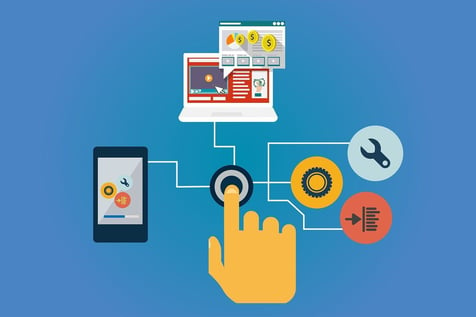
Information a CRM can store. Products or services previously purchased, purchase amounts and dates, and billing and payment details.
Benefits of purchase and transaction information.
The most direct use is personalized offers based on what each customer has bought before, together with cross-selling and upselling of complementary products or services. The same history allows precise segmentation by preferences and purchasing behavior, and demand forecasting from buying patterns across seasons and periods. Loyalty strategies and rewards programs can then be aligned with real purchasing behavior.
Purchase data also works as a diagnostic. Product performance analysis shows which offers lead and which need improvement or promotion. Repeat purchases indicate satisfaction, and a customer who stops buying should raise an alarm. Evaluating buying cycles helps plan campaigns for frequent and occasional buyers, and trend detection follows changing preferences and external influences.
Marketing activity data lets companies manage and optimize strategies, evaluate performance, personalize communication and make informed decisions, creating a foundation for continuous improvement.
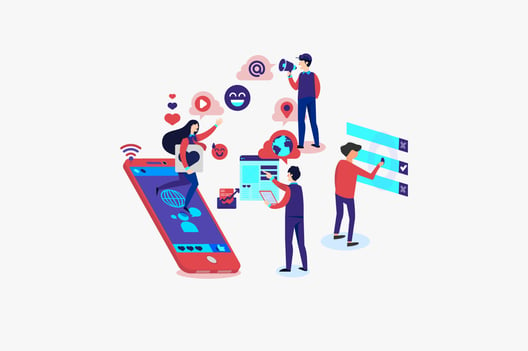
Information a CRM can store. The campaigns each customer has participated in and how they responded, such as opened emails and clicked links.
Benefits of marketing information.
Campaign tracking of content, channels, dates and objectives shows which campaigns worked and which need adjustment, while results analysis links activity to outcomes such as open rates, click-through rates and conversions. That supports strategy optimization, replicating what worked and fixing what did not.
Channel evaluation identifies which channels reach the target audience best so resources can be allocated accordingly, and ROI measurement relates campaign costs to the revenue generated. Over time, consistent messages also build a strong, recognizable brand.
The four types of information above are not new. What is changing is how they are used. The table summarizes the shift executives should plan for.
| Capability | Traditional CRM use | Future-ready CRM use |
|---|---|---|
| Customer data | Contact directory | Unified profile that feeds AI personalization in every channel |
| Interaction history | Activity log for sellers | Context for AI agents and service bots, with human handoff |
| Purchase history | Sales reports | Predictive signals for churn, repurchase and demand |
| Marketing activity | Campaign statistics | Buyer intent signals that trigger timely, relevant outreach |
| Automation | Task reminders | End-to-end workflows across marketing, sales and service |
A CRM drives operational efficiency by automating processes and workflows, saving time and resources and reducing human error. Real-time access to data lets teams analyze metrics as they happen and adapt strategies quickly. For a closer look at how AI is changing the way customer data is used, read your CRM lies, AI changes segmentation.
Technology plays a fundamental role in building strong customer relationships, and CRM stands out as an essential, forward-looking tool because of its ability to transform how organizations interact with customers. A 360-degree view, built by centralizing and organizing information, lets the company concentrate and analyze the data that explains customer needs and desires, and turn it into more satisfying, personalized experiences.
The decision to implement a CRM, or to get more from the one the company already has, is the step that allows it to manage every customer interaction efficiently, optimize marketing strategies, improve customer satisfaction and increase sales. What separates companies that benefit from those that do not is rarely the software. It is the discipline to capture information consistently, the clarity to define what each team needs from the data and the leadership to make the CRM the place where commercial decisions are made.
Executives approve CRM investments when the link to revenue and cost is explicit. Personalization is usually the clearest lever. McKinsey's research on the value of getting personalization right found that 71 percent of consumers expect personalized interactions and that personalization typically drives a 10 to 15 percent revenue lift. That lift depends entirely on the customer data described above.
A practical business case has three parts. The first is revenue upside, which means estimating the effect of better conversion, cross-selling and retention on your own customer base using conservative assumptions and your current baseline. The second is cost and time savings, quantifying the hours spent today on manual data entry, searching for information, reconciling reports and repeating customer questions. The third is risk reduction, considering the cost of losing customer knowledge when people leave, of inconsistent data across systems and of falling behind competitors that already use AI on top of clean data.
Present the case as a sequence of releases, each with a measurable objective, rather than a single large project. That keeps the investment tied to results and lets the company adapt as AI capabilities evolve.
The future arrives unevenly. In banking and insurance, the pressure comes from digital comparison and self-service, so the priority is a unified customer profile that lets the company recognize a person across channels and anticipate a renewal or a life event before a competitor does. In retail and consumer goods, the value lies in purchase history, because repurchase cycles and promotional response are the raw material of both personalization and demand planning. Healthcare providers and hotel groups depend on interaction history and preferences, since the experience is judged by whether the organization remembers. B2B manufacturers and services firms, whose buyers now complete much of their research before contacting a seller, need their marketing activity and intent signals connected to the opportunity record so that the first human conversation starts at the right point.
Preparing for AI is sometimes presented as a technology race, but the constraint is usually organizational. Models that draw on poor data produce confident mistakes, and an assistant that reads an outdated service history can damage a relationship faster than a human who simply does not know. There is also a real tension between personalization and privacy. Customers value relevance, yet they react badly when a company appears to know more than they chose to share, which is why consent and purpose must be designed into the CRM from the beginning and not added after a complaint.
A second risk is overreach. Companies that automate everything may lose the human judgment that wins complex accounts, and companies that automate nothing will be outpaced on cost and speed. The sensible position is to automate the routine, keep people where trust is decided, and measure both. Leaders who treat the CRM as the place where those rules are written and enforced are building something that will remain valuable as the tools around it change.
Return to the insurance group. A year later, the same CCO opens one customer record that shows policies, claims, service conversations and campaign responses. The plan that once rested on assumptions now rests on a baseline, and the first AI use cases, a renewal reminder assistant and a service summary for agents, begin with data the company can stand behind.
On attraction, treat first-party customer data as a strategic asset, since prospects who research on their own leave signals that only a well-configured CRM can capture and act on. On conversion, prepare sellers for AI-assisted selling by making sure the CRM holds clean, complete opportunity and interaction data. To retain and build loyalty, use purchase history to detect customers who stop buying and design loyalty actions around real buying cycles.
In service, give teams and digital assistants the full interaction history, with a clear path to a human when needed. And on efficiency, automate routine workflows now, so people can focus on the conversations AI cannot handle.
The following questions work as a short diagnostic. Are all four information areas, customer data, interactions, purchases and marketing activity, captured in the CRM rather than in separate tools? Is there a named owner for data quality, with a regular review of duplicates and missing fields? Can you segment customers by purchase behavior and engagement in minutes, not days? Do sales, marketing and service use the same definitions of lead, customer and churn?
Have you identified the first two or three use cases where AI could use CRM data, with clear rules for human review? And are customer consent and communication preferences recorded and respected across channels? Every question answered with hesitation marks a place where the future will arrive before the foundation does.
ICX Consulting helps companies turn their CRM into a foundation for growth. Our CRM consulting defines the data model, processes and automations that capture all four types of customer information, and our work on AI agents for sales and customer service puts that data to work in self-service and assisted channels. We implement on HubSpot, Salesforce and Oracle, always starting from the commercial strategy.
To start organizing your customer knowledge, use our Persona Playbook Toolkit to define the profiles, needs and buying behaviors your CRM should capture.
Bring this topic to your company
An ICX Consulting advisor will assess where your organization stands today and which decisions can move your commercial and customer experience results.
No. AI assistants and agents need a reliable source of customer data, permissions and process rules, and the CRM provides them. What changes is how people use it. More data entry is automated, more insights are suggested and more routine tasks are executed by agents, while the CRM remains the system of record behind them.
Collect only what has a clear business purpose and that customers have agreed to share. Sensitive personal data should be limited, protected and governed according to the privacy laws of each market where you operate. Over-collecting creates legal risk and noise, while a focused, accurate profile is more useful for personalization.
Combine prevention and maintenance. Use required fields, picklists and validation rules at entry, integrate systems so data is not typed twice, and schedule regular reviews of duplicates and outdated records. Make data quality part of team goals, because accuracy declines quickly when nobody owns it.
No. Most companies begin with imperfect data. Start by cleaning the records that matter most, such as active customers and open opportunities, and set rules that keep new data clean from now on. Within a few months, the most valuable part of the database can be reliable enough to support segmentation, automation and the first AI use cases.
The companies that will lead their markets in the coming years are building their customer knowledge today, one interaction at a time. If you want to know whether your CRM is ready for that future, talk to an ICX consultant and see what your customer data could do for your growth.

Esteban Cordero : May 29, 2025
A CRM (customer relationship management) system is software that keeps every customer and prospect record in one place and connects it to the...

Oracle Customer Experience (OCX), now delivered as Oracle Fusion Cloud CX, is Oracle's suite of applications for marketing, sales, service and...

 Yashin Fonseca : Oct 29, 2026
Most companies that invest in CRM do not have a shortage of data. They have transactions, surveys, tickets, purchase histories and browsing records...

