





6 key steps to define your business processes
ICX Consulting, a commercial strategy and customer experience consulting firm, helps companies define their business processes in six steps. Involve...

By Role
By Industry
By Target Customer
What We Offer
ICX helps companies grow revenue and profitability by connecting customer experience, sales, pricing, CRM and automation into one commercial system.
Customer Experience
We design memorable, customer-centered experiences that drive loyalty, enhance support, and optimize every stage of the journey. From maturity frameworks and experience maps to loyalty programs, service design, and feedback analysis, we help brands deeply connect with users and grow sustainably.
Marketing & Sales
We drive marketing and sales strategies that combine technology, creativity, and analytics to accelerate growth. From value proposition design and AI-driven automation to inbound, ABM, and sales enablement strategies, we help businesses attract, convert, and retain customers effectively and profitably.
Pricing & Revenue
We optimize pricing and revenue through data-driven strategies and integrated planning. From profitability modeling and margin analysis to demand management and sales forecasting, we help maximize financial performance and business competitiveness.
Digital Transformation
We accelerate digital transformation by aligning strategy, processes and technology. From operating model definition and intelligent automation to CRM implementation, artificial intelligence and digital channels, we help organizations adapt, scale and lead in changing and competitive environments.
Operational Efficiency
We enhance operational efficiency through process optimization, intelligent automation, and cost control. From cost reduction strategies and process redesign to RPA and value analysis, we help businesses boost productivity, agility, and sustainable profitability.
Customer Experience
Marketing & Sales
Pricing & Revenue
Digital Transformation
Operational Efficiency
ICX Consulting, a commercial strategy and customer experience consulting firm, uses the pit stop as a lesson in business process design. Processes in Formula 1 show what standardization, rehearsal and real-time data achieve, with crews changing four tires in under two seconds. Companies that apply the same discipline cut errors, cost and customer waiting time.
Formula 1, commonly abbreviated as F1, is the highest level of international single-seater racing. It is not only a sport but also a complex and lucrative business that generates significant revenues and has a worldwide following.
Teams invest millions of dollars in designing and building high-performance race cars. Yet the key to winning is not only in the car but also in the pit stops. Pit stops are a critical aspect of racing, and teams work hard to optimize their Business Process and improve their times. A quick pit stop can make a significant difference in a race, letting a driver gain an advantage over competitors and potentially win.
Why should a CEO care about a pit crew? Because most companies have their own pit stops, the handoffs where a customer, an order or a case passes from one team to another. A quote that waits two days for approval, an onboarding that depends on who is on shift, a service ticket that bounces between departments. Each one costs margin and customer patience, and few are designed with the rigor an F1 team applies to a two-second stop.
Imagine the chief operating officer of a logistics company watching a race with her leadership team during an offsite. The cars interest her less than the pit lane. Twenty mechanics move in a sequence that looks improvised and is in fact rehearsed hundreds of times, and the stop ends before anyone in the room has finished a sentence. Back at the office on Monday, she asks how long it takes to release a delayed shipment once the customer calls. Nobody can answer with a number. The operations manager says it depends, the account team says it is quick when they know the right person, and the customer says it took two days. The contrast is uncomfortable, because the race team and her company are both in the business of moving something quickly and correctly, but only one of them has designed the moment of handoff.
Formula 1 consists of a series of races called Grands Prix, held in various countries throughout the year. Each race usually lasts about 300 km or two hours, and points are awarded to the top 10 finishers based on their finishing position.
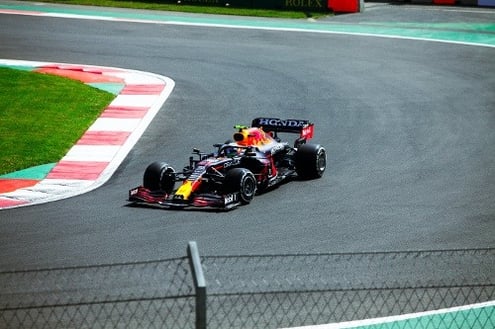
The cars used in Formula 1 are among the fastest and most technologically advanced in the world. They are designed to be light, aerodynamic and powerful, with power units producing more than 1,000 horsepower.
>> 10 reasons to automate processes <<
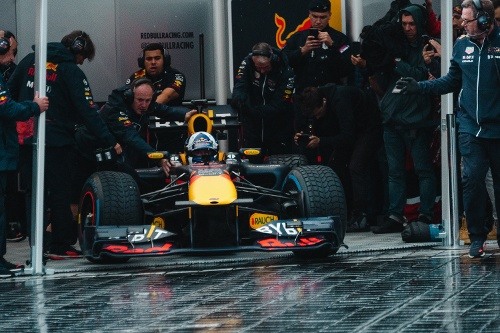
Pit stops are a crucial part of every race. They are scheduled stops in which drivers change tires and make necessary adjustments or repairs. During a pit stop the driver enters the pit lane and pulls into the designated pit box, where a team of mechanics works on the car at speed. The team changes all four tires and may also adjust the car's wings or other components to optimize performance.
Seen through a business lens, a pit stop is a perfect process. It has a clear trigger, a defined outcome, a fixed sequence of activities, a role for every person, standardized tools, a measurable cycle time and a control point before release.

Pit stops can decide a race. A driver can gain positions by returning to the track with fresh tires, or lose them if the stop is slow or the team is penalized for an unsafe release. Strategically timed stops also create advantage, pitting before or after a rival depending on race conditions and tire wear.
>> Why define the processes that affect the customer experience? <<
The processes involved in pit stops are critical to the success of a Formula 1 team. A pit stop is a race against time, and a delay of a fraction of a second can be the difference between winning and losing.
Formula 1 teams work hard to optimize their stopping processes to minimize time in the pit lane. The critical activities are these.
To optimize these activities, teams practice pit stops extensively during the season and employ specialists who focus exclusively on performance. They use real-time data analysis to monitor and improve their processes. Overall, pit stop processes are critical to a team's success and play a significant role in the outcome of a race.
Red Bull Racing set a world record pit stop of 1.82 seconds at the 2019 Brazilian Grand Prix, during a stop for Max Verstappen on lap 21, as Formula 1 reported at the time. It was the third time Red Bull broke the record that season.
The Red Bull team has a reputation as one of the fastest pit crews, consistently achieving stops under two seconds. Other teams have come close, with Mercedes setting a 1.88-second stop during the 2019 Chinese Grand Prix. The record stood for four years until McLaren completed a 1.80-second pit stop at the 2023 Qatar Grand Prix, now recognized by Guinness World Records as the fastest in Formula 1.

Teams optimize their pit stops through practice, teamwork, specialized equipment, real-time data analysis and continuous improvement. By minimizing time in the pits, they gain a competitive advantage and increase their chances of success.
The lesson for executives is that records are broken by teams that keep improving a process that already looks excellent. Hundredths of a second came from small changes in equipment, positioning and coordination, measured stop after stop. A company that only reviews its processes when something breaks will never find those gains.
Pit crews eliminate three kinds of waste that most organizations tolerate without noticing. The first is waiting for information. A mechanic never stands next to a wheel gun wondering which tire goes where, because the answer was settled before the car entered the lane. In companies, people routinely wait for approvals, missing documents or a colleague who knows the exception. The second is rework. A crew that mounts a tire incorrectly loses the race, so quality is built into the sequence rather than inspected afterward. In companies, quotes are corrected, invoices are reissued and tickets are reopened, and each correction is paid for twice. The third is ambiguity about ownership. In the pit box, one person signals the release. In a company, a case can sit between two departments for days because each assumes the other is acting.
Seeing these three forms of waste is the first step to removing them. Executives can ask a simple question in their next operations review. For our most important customer process, where do people wait, where do they redo work and who decides that a case is ready to move on?
An F1 team does not argue about whether a stop was good. It knows, because each stop is timed, filmed and broken down by activity. When a stop is slow, the team can see whether the delay came from the front-left wheel, the jack or the release, and fix that specific step.
Most companies run their critical processes with far less visibility. They know the monthly average of how long an order takes, but not where in the process the time is lost or which cases fall outside the norm. Averages hide the variation that customers actually feel.
Bringing pit lane thinking to a business means instrumenting the process. Each handoff gets a timestamp, each stage has an owner, and exceptions are visible the day they occur instead of at the end of the quarter. CRM and workflow platforms make this possible, but the decision about what to measure and who acts on it is a management decision, not a software feature.
Yes, and in a field where the stakes are higher than a race. Surgeons and anesthetists at a children's hospital in London studied handover models from Formula 1 pit stops and aviation, and combined them into a protocol for transferring patients from the operating room to intensive care. According to the summary published by the U.S. Agency for Healthcare Research and Quality, the protocol significantly reduced communication errors and shortened the handoff process.
The principles that transferred are the same ones any business can use. A leader who coordinates the handoff, a fixed sequence, clear roles, a checklist of what information must pass and a final confirmation before release.
Businesses also benefit from defining, redesigning and continuously improving processes. Standardization helps reduce costs, minimize errors and increase efficiency, along with other benefits.
Standardization helps companies operate more efficiently, effectively and safely, increasing competitiveness and profitability. It does not mean rigidity. In F1, the standard is what makes improvement possible, because a team can only measure the effect of a change when everything else stays the same.
The same thinking applies to industrial operations, as the use case on challenges in manufacturing industry processes shows, and it starts with a clear answer to what a business process is.
In banking and insurance, the equivalent of the pit stop is the handoff between sales, underwriting and operations, where a customer who has already said yes waits for documents to be checked. Treating that sequence as a designed stop, with a defined release check and a clock, shortens the time to issue a policy or open an account. In manufacturing, it is the changeover between production runs, where lean methods such as quick changeover were inspired by the same principle of preparing everything before the machine stops.
In healthcare, it is the transfer of a patient between units, as the London hospital example shows. In retail and e-commerce, it is the moment between a confirmed order and a dispatched parcel, where picking, packing and carrier handoff must work as a single choreography. In professional services and technology, it is the transition from signed contract to kickoff, which determines whether the customer's first impression is momentum or confusion. In each case, the stop is short, repeated often and visible to the customer, which is exactly why it rewards design.
Companies that borrow the analogy often make predictable errors. The first is chasing speed without standardizing, which produces fast but inconsistent results and more mistakes at the handoff. The second is optimizing a stop that customers do not notice while ignoring the ones they do, so the effort is spent on internal convenience rather than on customer waiting time. The third is treating the redesign as a one-time project. A crew does not rehearse once, it rehearses throughout the season, and a company that stops measuring after the launch will see the gains erode within a few months.
The fourth mistake is removing the control point to gain a few seconds. In F1, an unsafe release is penalized, and the release check exists because the cost of a mistake is higher than the cost of a short pause. The same is true of a credit approval, a compliance review or a quality inspection. The goal is to move preparation out of the critical path and keep the check inside it. A final risk is relying on heroes. If a process works only because one experienced person compensates for its flaws, the company has not designed a pit stop, it has hired a lucky mechanic.
| Pit stop principle | Business equivalent | Value lever |
|---|---|---|
| Every crew member has one defined role | Clear process owners and RACI at each handoff | Efficiency |
| Equipment and tires ready before the car arrives | Quotes, contracts and data prepared before the customer asks | Convert |
| Driver and team communicate in real time | Customer status visible to sales and service at every step | Serve |
| Safe release check before the car leaves | Quality control point before delivery or go-live | Retain |
| Every stop is timed and reviewed | Cycle time and first-time-right measured per process | Efficiency and loyalty |
Three recommendations follow. Identify the three handoffs where customers wait the longest and treat them as your pit stops. Assign a single owner to each, with a measured cycle time. And rehearse changes before rolling them out, through pilots with a small team, just as crews practice a new technique before using it in a race.
At ICX Consulting, we help businesses define and optimize their processes to run lean and efficiently like a pit crew, always connected to the customer experience. Our process mapping and analysis and workflow optimization and control points services find the handoffs that cost time and margin, and the Process Transformation Framework turns the redesign into standards your teams can sustain.
To start, use the Define Activities and Processes Toolkit to list the activities, roles and handoffs of the process you want to bring to pit crew standard.
The scale is different, but the logic holds. Most business processes do not need two-second precision. They need predictable cycle times, clear roles and fewer errors at handoffs. The value of the analogy is that it makes executives look at their own handoffs as events that can be designed, rehearsed and measured.
Processes with a clear trigger, a time-sensitive outcome and several people involved, such as order fulfillment, customer onboarding, field service dispatch, claims handling and month-end close. If customers notice when it is slow, and different teams touch it, it is a good candidate.
No, it makes innovation measurable. When a process is stable, a team can test one change and see its real effect. Without a standard, every result is noise. F1 crews innovate constantly on equipment and technique precisely because their baseline process is so well defined.
A single, well-chosen handoff can usually be mapped, redesigned and piloted within a few weeks. The first gains often come from moving preparation work out of the critical path and clarifying who releases the case, changes that need little technology and can be tested with one team before rolling out.
Involve the people who run the process in the redesign, show them the measured delays that customers experience and let them pilot the new sequence on a small scale. Teams usually accept standards when they see that the standard removes frustrating rework and ambiguity rather than adding controls. Recognizing the crews and individuals who improve a handoff also reinforces the behavior.
Technology should follow the design, not lead it. First define the trigger, the roles, the sequence and the release check. Then use workflow and CRM tools to make the status visible, send alerts when a case waits too long and record the timestamps that allow improvement. Automating a confusing handoff only makes the confusion faster.
Start with cycle time from trigger to completion, the share of cases done right the first time and the number of handoffs. Those three indicators reveal most of the waste in a process and are easy to explain to every team involved.
Somewhere in your company there is a handoff that costs customers minutes, days or patience every week. Want to turn it into your fastest pit stop? Request a diagnostic with an ICX consultant and find the seconds your competitors have not found yet.
ICX Consulting, a commercial strategy and customer experience consulting firm, helps companies define their business processes in six steps. Involve...
ICX Consulting, a commercial strategy and customer experience consultancy, uses SIPOC as the fastest way to improve processes in a few steps. A SIPOC...
At ICX Consulting, where we redesign commercial and customer processes for companies in the Americas, a business process is defined as the repeatable...